Key Highlights
- Heel bursitis is irritation of small fluid sacs near the heel
- Retrocalcaneal bursitis is the deeper and more common type
- Pain often appears as posterior heel pain during walking
- Swelling, redness, and a tender heel are common signs
- Often linked to running heel pain, footwear pressure, or heel injury
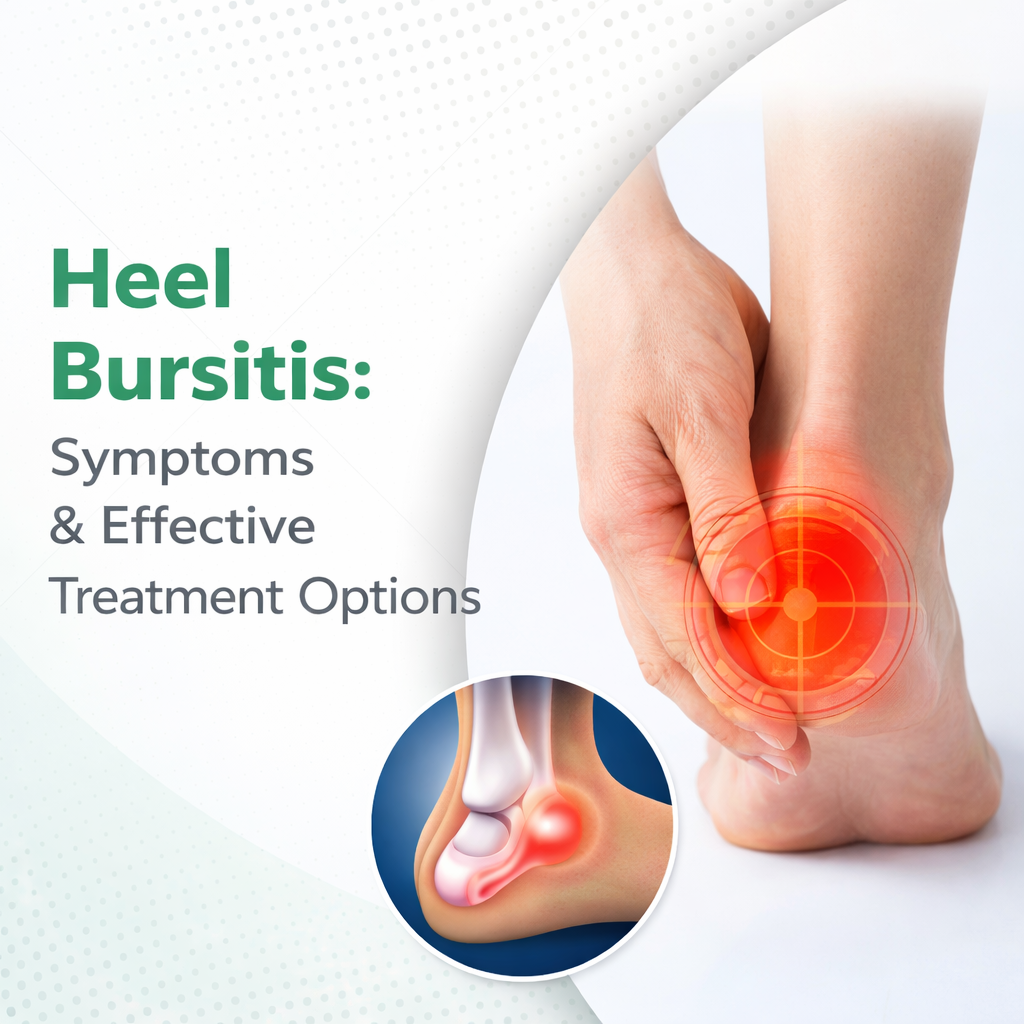
Heel pain does not always start as pain. Sometimes it feels like pressure from a shoe. Sometimes, there is just a small discomfort at the back of the heel that shows up at the end of the day. Easy to ignore, but then it stays. Walking feels slightly off. The back of the heel becomes sensitive. Shoes that felt fine earlier start to irritate. That is usually the point at which people begin to notice that something is not right. Many of these cases turn out to be
heel pain bursitis. The heel takes a lot of load. Every step transfers body weight through that area. So even a small problem around the joint can become noticeable very quickly.
What is Heel Bursitis?
It helps to picture what sits inside the heel. Between the bones and soft tissues, there are small fluid pockets. These are called bursae; their job is simple: they reduce friction. Now,
what is bursitis in simple terms? It is when one of those sacs becomes irritated. In the heel, this usually happens near the Achilles tendon. Once the area becomes inflamed, movement becomes uncomfortable. Not always sharp pain. Sometimes, it’s just irritation that refuses to go away.
Types of Heel Bursitis
Retrocalcaneal Bursitis (Posterior Heel)
This one sits deeper, between the tendon and the bone.
Retrocalcaneal bursitis often causes a dull, deep
posterior heel pain.
Subcutaneous Calcaneal Bursitis (Superficial)
This is closer to the skin. It often comes from shoe pressure. You may notice soreness right where the shoe touches the heel.
Haglund’s Deformity Association
Sometimes there is a small bony bump at the back of the heel. This is called
Haglund’s deformity. It increases friction. Over time, that repeated irritation affects the bursa.
Causes and Risk Factors of Heel Bursitis
Repetitive Stress and Overuse
Long walks, running, or standing for hours. This is common in people with
running heel pain.
Improper Footwear
Shoes matter more than people expect. Tight backs or hard edges can continue to press against the heel. That constant pressure adds up.
Sudden Increase in Activity
A sudden increase in exercise. New workout routine. Longer walking distances. The heel does not always adjust quickly.
Achilles Tendon Tightness
When the tendon is tight, it pulls more on the heel. This often overlaps with
Achilles tendinitis.
Biomechanical Issues
Flat feet or high arches change how weight moves through the heel.
Direct Trauma or Injury
A simple
heel injury can irritate the bursa, starting the cycle.
Symptoms of Heel Bursitis
Pain at the Back of the Heel
Usually, the first sign. A dull or sharp
posterior heel pain during walking.
Swelling and Visible Bump
The back of the heel may look slightly raised.
Heel swelling can make shoes feel tight.
Tenderness to Touch
Pressing the area hurts. A tender heel is often an early clue.
Redness and Warmth
Sometimes the skin looks red. A
red heel may feel warm.
Pain with Walking or Running
Walking or running becomes uncomfortable. Many people notice
pain when walking after rest.
Diagnosing Heel Bursitis
This usually starts with a simple conversation.
How long has the pain been there? What activities make it worse?
Physical Examination
The doctor presses around the heel. Checks swelling. Looks at movement.
Imaging Studies (X-ray, Ultrasound, MRI)
The doctor presses around the heel. Checks swelling. Looks at movement.
Bursa Aspiration (If Infection Suspected)
In rare cases, fluid from the bursa is tested if infection is suspected.
Treatment Options for Heel Bursitis
Conservative (Non-Surgical) Treatments
Most cases improve without surgery.
- Rest
- Ice
- Footwear changes
- Cushion support
Rest and Activity Modification
This part often gets overlooked. Continuing the same routine delays healing.
PRP (Platelet-Rich Plasma) Therapy
In some cases, PRP may be used to support tissue recovery.
Stretching and Strengthening Exercises
Movement still matters.
Heel bursitis exercises often include:
- Calf stretching
- Gentle ankle movement
- Strength work for the lower leg
These reduce tension on the heel.
Prevention Strategies for Heel Bursitis
Small changes help.
- Choose shoes that do not press the heel
- Increase activity slowly
- Stretch regularly
- Avoid repeated strain without rest
When to Seek Professional Help
Some pain settles. Some do not. It is worth getting checked when:
- Pain stays for weeks
- Swelling increases
- Walking becomes difficult
- Symptoms keep returning
Specialized Treatment at Alleviate Pain Clinic
Evaluation usually includes examination and imaging when needed. Treatment depends on the cause of the irritation.
FAQs About Heel Bursitis