




Key Highlights
- A spinal deformity refers to abnormal curvature or alignment of the spine
- Common types include scoliosis, kyphosis, lordosis, and spondylolisthesis
- Symptoms range from posture changes to pain and nerve-related discomfort
- Conditions like adult spinal deformity may develop over time
- Diagnosis involves imaging and Cobb angle measurement
- Treatment varies from therapy to spinal deformity surgery, depending on severity
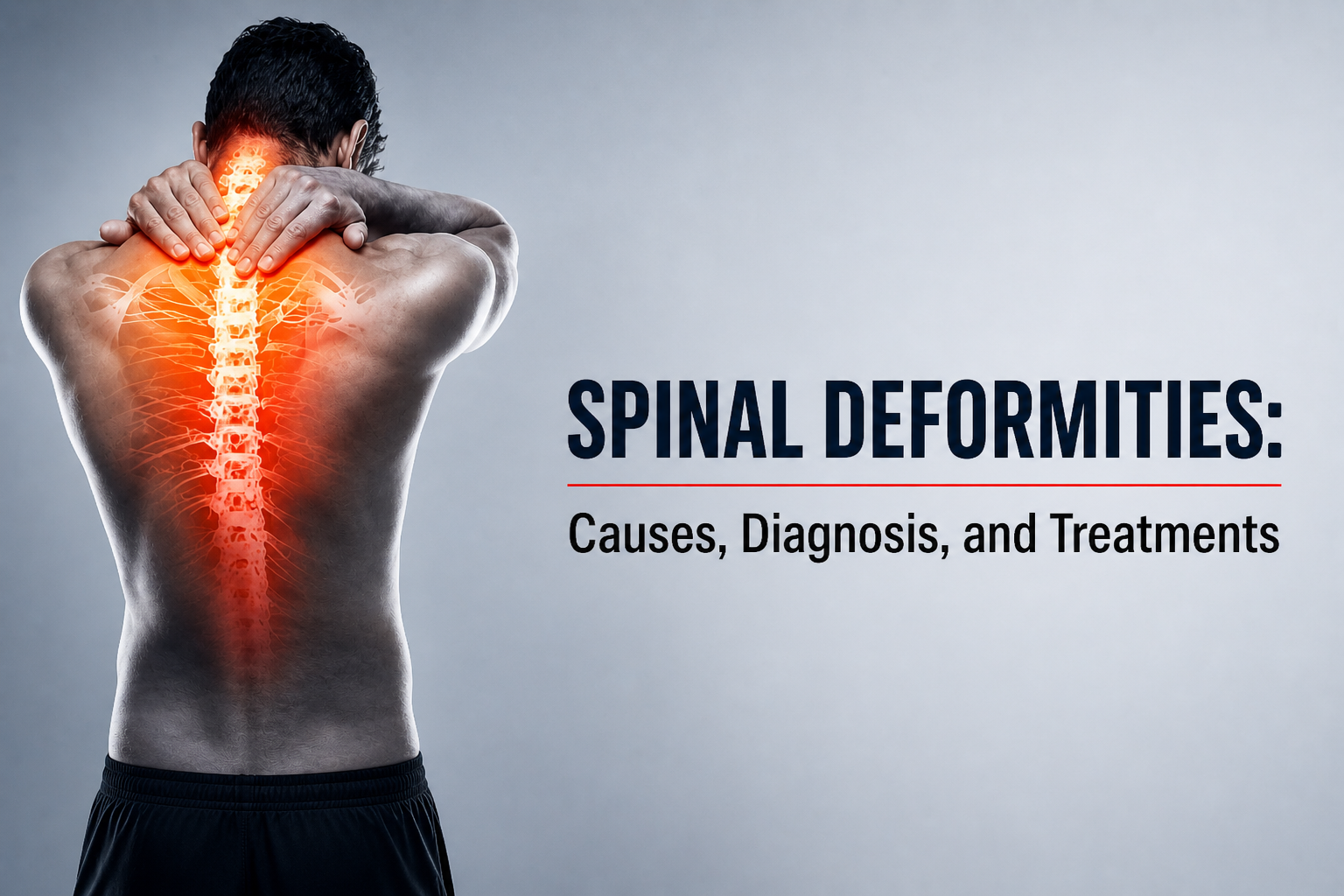
Most people do not notice changes in their spine all at once. It happens slowly. A slight shift in posture. One shoulder looks a little higher in the mirror. Clothes sit differently. At first, it feels like posture or fatigue. Then, over time, the body starts compensating. The back feels strained after simple tasks. Sitting becomes uncomfortable. Standing for long feels uneven. This is often how a spinal deformity begins to show itself. Not as a sudden problem, but as a gradual change the body tries to manage.
What Is a Spinal Deformity?
A spinal deformity means the spine does not maintain its natural alignment.
The spine is not meant to be perfectly straight. It has gentle curves that help with balance and movement. When these curves increase, reduce, or shift sideways, the structure changes. That change affects how weight is distributed. Over time, this leads to discomfort, imbalance, and sometimes nerve pressure.
Types of Spinal Deformity
Scoliosis (Lateral Curvature)
Scoliosis involves a sideways curve in the spine. It may appear during growth or later in life. Some cases are linked to genetic scoliosis, where family history plays a role.
Kyphosis (Forward Rounding)
Kyphosis causes a forward rounding of the upper back. In older adults, this may be linked to osteoporosis kyphosis, where weakened bones change spinal shape.
Lordosis (Excessive Inward Curve)
Lordosis increases the inward curve of the lower back. Common lordosis symptoms include lower back discomfort and a noticeable arch when standing.
Flatback Syndrome
Flatback syndrome reduces the natural curve of the spine. This makes it harder to stand upright comfortably, and people often feel tired while standing for long periods.
Spondylolisthesis
Spondylolisthesis occurs when one vertebra slips forward over another. This can affect stability and may lead to nerve-related symptoms.
Adult Spinal Deformity (ASD)
Adult spinal deformity develops later in life, often due to wear and tear. It may involve a combination of curvature changes and spinal imbalance.
Symptoms of Spinal Deformity
Visible Physical Changes
Posture changes are often the first sign. Uneven shoulders, tilted hips, or a curved spine may become noticeable over time.
Pain and Discomfort
Pain usually builds slowly. It may feel like muscle fatigue at first, then become more persistent as the spine adapts to the imbalance.
Neurological Symptoms
When nerves are affected, symptoms may include numbness, tingling, or weakness in the arms or legs.
Breathing and Heart Complications
In more severe cases, spinal shape changes may affect chest space, which can influence breathing patterns.
Causes and Risk Factors of Spinal Deformity
Genetic and Congenital Factors
Some people are born with spinal differences. Conditions like genetic scoliosis develop early due to inherited patterns.
Degenerative Changes with Aging
Over time, discs and joints wear down. This leads to gradual curvature changes and imbalance.
Neuromuscular Conditions
Certain conditions affect muscle control, which influences how the spine is supported.
Poor Posture and Lifestyle
Long periods of sitting, uneven movement, and lack of muscle support can contribute to gradual changes.
Osteoporosis and Bone Weakness
Long periods of sitting, uneven movement, and lack of muscle support can contribute to gradual changes.
Diagnosing Spinal Deformity
Physical Examination
The doctor observes posture, alignment, and movement. Small differences in shoulder or hip level provide early clues.
Imaging Studies
X-rays and MRI scans show the structure of the spine and help identify the type of deformity.
Cobb Angle Measurement
Cobb angle measurement is used to assess the degree of curvature. It helps determine how severe the deformity is and guides treatment decisions.
Treatment Options for Spinal Deformity
Conservative (Non-Surgical) Treatments
Many cases are managed without surgery. This includes physiotherapy, posture correction, and pain management. The aim is to improve function and reduce strain on the spine.
Interventional Pain Management at Alleviate Pain Clinic
In some cases, targeted treatments help reduce discomfort. These approaches focus on controlling pain and improving movement without major procedures.
Surgical Treatments
Spinal deformity surgery is considered when the curvature is severe or when symptoms significantly affect quality of life. Surgery focuses on correcting alignment and stabilising the spine.
Exercises for Spinal Deformity
Exercise plays a supportive role in most cases.
- Strengthening muscles around the spine
- Improving posture awareness
- Increasing flexibility
Prevention and Early Detection
Not all spinal deformities can be prevented, but early attention helps.
- Regular posture checks
- Staying physically active
- Addressing back discomfort early
- Maintaining bone health
Why Choose Alleviate Pain Clinic for Spinal Deformity?
Care usually begins with understanding how the body moves rather than relying only on imaging. Treatment plans focus on improving balance, reducing strain, and supporting daily function in a gradual and practical way.


