Key Highlights
Hip impingement is a structural issue that involves the bumping of the hip bones in an abnormal manner, resulting in pain and restriction of movement. Early diagnosis prevents damage to the joints. Non-surgical care is often effective to control
hip impingement symptoms, or surgery or more sophisticated procedures are applied when conservative measures fail to restore functioning.
What Is Hip Impingement (Femoroacetabular Impingement)?
Femoroacetabular impingement implies that the head of the femur and the acetabulum do not move easily. The friction that results erodes cartilage and labrum. It is a frequent cause of unremitting hip pain, particularly in active individuals and those whose anatomy differs.
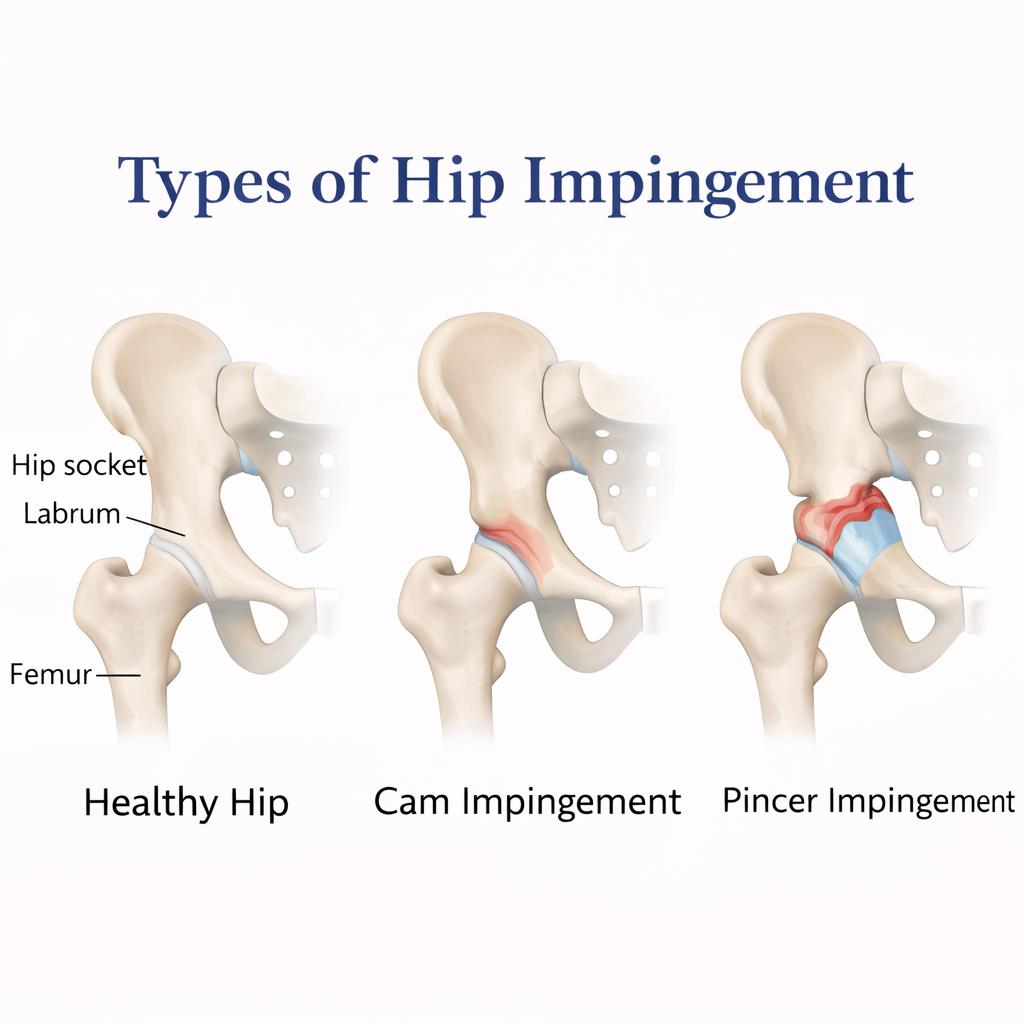
Types of Hip Impingement
Cam Impingement
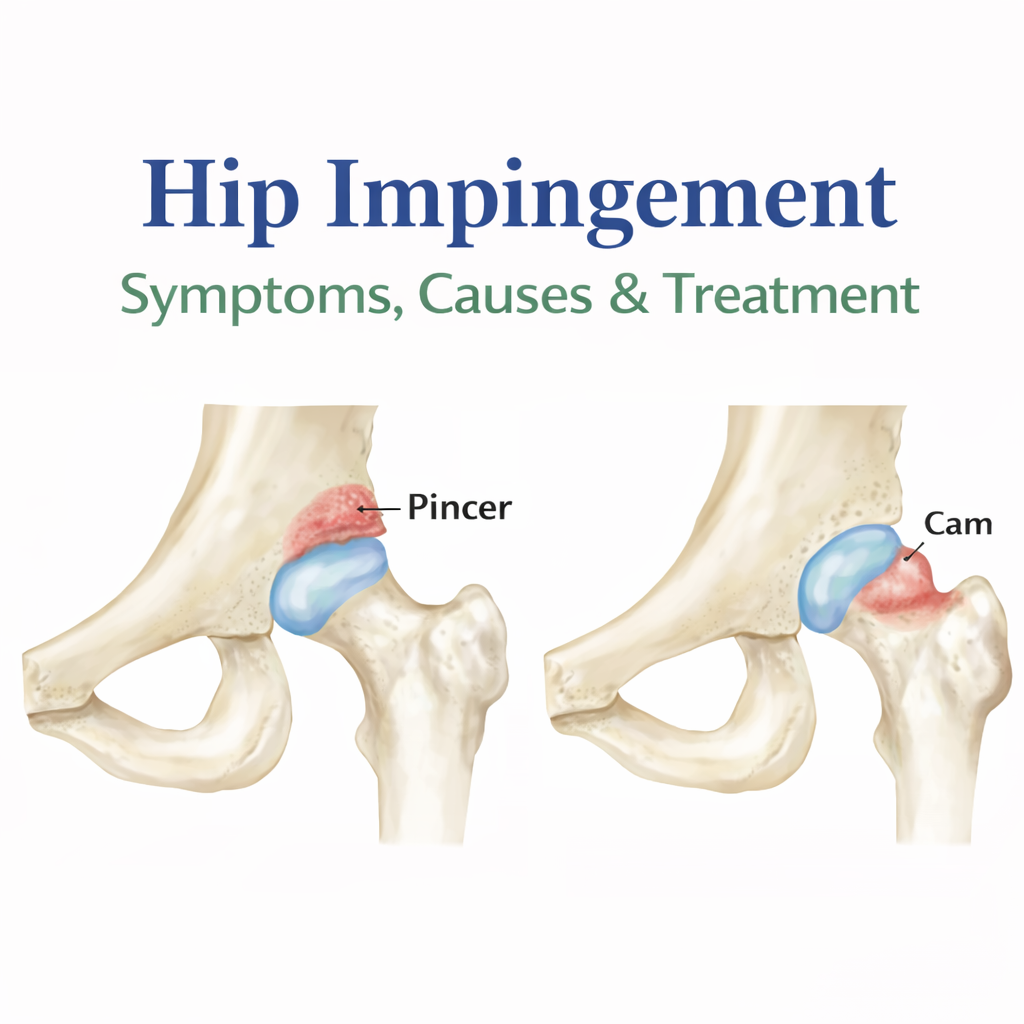
Cam Impingement is a condition where the femoral head is deformed and grabs the socket as one moves. It destroys cartilage with time. Cam lesions occur frequently in young athletes whose hip is constantly loaded.
Pincer Impingement
In Pincer Impingement, the femoral head is overcovered by the acetabulum. The supernumerary covering crunches the labrum during movement, which leads to irritation. Pincer lesions are common in middle-aged individuals, and they have the ability to damage the joint over time.
Mixed (Combined) Impingement
Mixed impingement presents characteristics of a cam lesion. It is the most common presentation. The stress results in faster degeneration of joints with no early treatment.
Hip Impingement Symptoms
Groin Pain and Discomfort
A common
symptom of hip impingement is a deep pain in the groin. It develops more following sitting or bending and may extend to the thigh or buttock. The ache is normally exacerbated by activity.
Limited Range of Motion
Patients tend to become stiff and lose their flexibility. Squatting or hip rotation becomes hard. Constant loss of movement is an indication of persistent irritation.
Clicking, Locking, or Catching Sensation
Labral irritation tends to produce a clicking or catching sensation. It implies that the surfaces of the joints are not free to move.
Pain with Activity
The pain gets worse when engaging in sports, running, or extended standing. Hip repetition increases stress and deteriorates symptoms.
Symptoms That Worsen Over Time.
Otherwise, the pain may turn chronic, and mobility may be reduced. Early intervention is essential to prevent long-term harm.
What Causes Hip Impingement?
Abnormal Bone Growth
The primary
cause of hip impingement is abnormal growth of bones around the joint, which causes the surfaces to touch in an abnormal manner.
Developmental Factors and Genetics.
The risk is increased by a genetic predisposition and changes in the shape of the hips during development.
Sports and Repetitive Activities.
Kick-busy sports and constant movement of the hip strain the joint and cause slow destruction.
Previous Hip Injuries
Previous injuries or trauma can change joint mechanics, which exposes them to the risk of impingement over time.
Risk Factors for Hip Impingement
Age and Activity Level
The young and active individuals are more susceptible since the repetition of the stress alters the structure of the hip.
Gender Differences
Some forms of impingement are even more prevalent in a particular gender because of the differences in their anatomy.
Sports Participation
Athletes are at increased risk of
hip impingement syndrome due to repetitive hip motions and increased mechanical loading.
How Is Hip Impingement Diagnosed?
Medical History and Symptom Assessment
Careful consideration of the symptoms, activity, and functional limitations identifies characteristic impingement indicators.
Physical Examination Tests
To verify the suspicion, clinician-based tests involve testing of
hip pain, mobility, reproduction, and joint mechanics.
Imaging Studies
The structural issues are identified by X-rays and MRI, and the presence of the
femoroacetabular impingement is established, directing the treatment.
Hip Impingement Treatment Options
Conservative (Non-Surgical) Treatments
The initial measures include physiotherapy, activity change, and pain control. The pulling on the joints makes the joint less stressed and increases its functionality.
Advanced Interventional Treatments at Alleviate Pain Clinic
Pictorial-guided injections and modifying treatments reduce inflammation and aid in recovery in any chronic cases.
When Is Surgery Needed?
Surgical intervention is not indicated until the
hip impingement symptoms fail to respond to the conservative treatment and the structural issues remain a limiting factor to functioning.
Best Exercises for Hip Impingement
The special exercises make the hips more stable, flexible, and stronger. Core and hip training decreases the stress in the joints and perfects the patterns of motion. Professional advice is useful in preventing the exacerbation of symptoms.
Preventing Hip Impingement Progression
Prevention is based on good biomechanics, prevention of repetitive strain, and strength training. Prompt intervention and lifestyle modifications maintain the well-being of the joints and slow down the onset of the disease.
When to See a Hip Specialist
See a specialist in case constant pain interferes with everyday life, if it gets worse with time, or fails to improve during a break. Timely diagnosis and treatment depend on timely evaluation.
Why Choose Alleviate Pain Clinic for Hip Impingement Treatment in Bangalore?
Alleviate Pain Clinic is a clinic that provides non-surgical evidence-based treatment, advanced diagnostics, and individual plans. It is aimed at restoring the functioning, reducing pain, and preventing the destruction of the joints over the long term with specific interventions.
FAQs About Hip Impingement