



Chest Pain Types, Causes, & Symptoms Explained
- Home
- Conditions
- Chronic Pain
- Chest Pain
Key Highlights
- Chest pain can result from both cardiac and non-cardiac conditions, including acid reflux, muscle strain, lung problems, and heart disease.
- Common symptoms include pressure, burning, squeezing, sharp pain, or discomfort that may spread to the jaw, shoulders, arms, or back.
- Emergency warning signs include shortness of breath, dizziness, nausea, cold sweats, and chest pain lasting more than a few minutes.
- Doctors use tests such as ECG, blood tests, chest X-rays, and CT angiography to identify the underlying cause of chest pain.
- Non-cardiac chest pain treatment may include medications, physical therapy, lifestyle modifications, and advanced pain management therapies.
Few experiences are as alarming as sudden Chest Pain. A sharp ache or heavy pressure in the center of the chest can quickly trigger fears of a heart attack. While it is true that some episodes signal a medical emergency, many cases have noncardiac explanations. Understanding what causes chest pain and recognizing key chest pain symptoms can help you respond appropriately and seek the right care.
What Is Chest Pain?
The chest pain definition refers to any discomfort located between the neck and the upper abdomen. The sensation does not always feel sharp. Many people describe it as pressure, fullness, burning, or squeezing.
Chest pain may remain localized or spread to the neck, jaw, shoulders, back, or arms. Because both minor and serious conditions can produce similar sensations, any new or unexplained pain deserves careful attention.
Types of Chest Pain
Doctors classify chest pain types based on the organ system involved. Identifying the source is the first step toward an accurate chest pain diagnosis.
1. Cardiac Chest Pain:
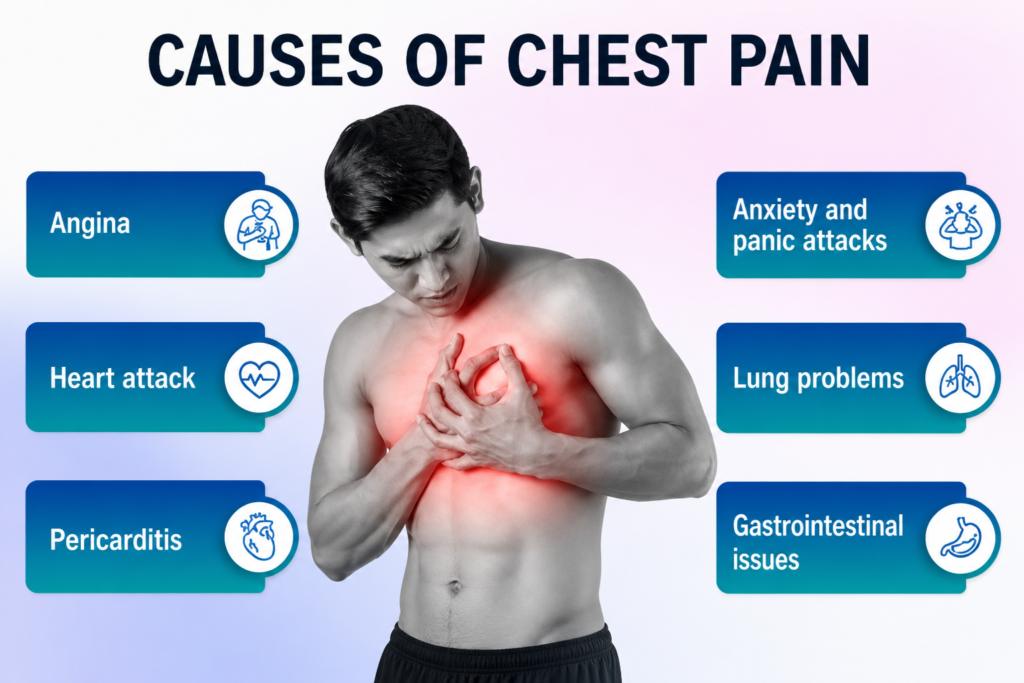
It is the type most people fear. It commonly appears as angina, which occurs when the heart muscle does not receive enough oxygen-rich blood due to narrowed coronary arteries. Patients usually describe it as pressure, squeezing, or heaviness. Other causes include pericarditis and heart attack.
2. Pulmonary Chest Pain:
This comes from lung-related problems. Conditions such as pulmonary embolism can cause sudden sharp pain with breathlessness. Pleurisy typically produces stabbing pain that worsens with deep breathing or coughing, while a collapsed lung causes sudden discomfort and shortness of breath.
3. Gastrointestinal Chest Pain:
One of the most frequent chest pain causes. Gastroesophageal reflux disease often creates a burning heartburn sensation when stomach acid flows backward. Esophageal spasms, gallbladder disease, and pancreatic disorders can also radiate pain into the chest.
4. Musculoskeletal Chest Pain:
Musculoskeletal Chest Pain: This pain originates from the chest wall. Costochondritis, bruised ribs, muscle strain, and fibromyalgia commonly cause sharp, localized tenderness that can mimic heart issues.
5. Anxiety Chest Pain:
It occurs during panic episodes and may feel like tightness or pounding in the chest, often accompanied by sweating, trembling, and breathlessness.
Common Causes of Chest Pain
The range of chest pain causes is broad, which is why proper medical evaluation is important.
Non-Cardiac Causes (Most Common)
Statistically, most Chest Pain episodes are not heart related. Acid reflux remains the leading culprit. Other frequent causes include muscle strain, respiratory infections such as pneumonia, and nerve conditions like shingles that affect the chest wall.
Cardiac Causes (Most Serious)
Although less common, cardiac conditions are the most dangerous. Coronary artery disease remains the leading serious cause. Other life-threatening conditions include aortic dissection and hypertrophic cardiomyopathy. Because of this risk, new or unexplained Chest Pain should never be ignored.
Symptoms of Chest Pain: What to Look For
Understanding typical chest pain symptoms helps doctors narrow down the cause.
Quality of Pain:
Pressure, squeezing, or heaviness often suggests cardiac chest pain. Sharp pain that changes with breathing or movement is more typical of lung or musculoskeletal chest pain. Burning discomfort usually points toward acid reflux.
Location and Radiation:
Pain that spreads to the jaw, left arm, shoulder, or back raises concern for heart involvement. Pain that stays in one small tender spot is more often musculoskeletal in origin.
Duration of Pain:
Brief pain lasting only a few seconds is rarely cardiac. Angina usually lasts several minutes and improves with rest. Persistent discomfort lasting hours or days without other symptoms is often non-cardiac.
Triggers and Relieving Factors:
Pain that worsens with exertion and improves with rest suggests angina. Pain that changes with body position or pressure on the chest wall usually indicates musculoskeletal chest pain.
When Is Chest Pain an Emergency
Seek immediate help for emergency chest pain if symptoms are new, severe, or last more than five minutes. Warning signs include cold sweats, nausea, dizziness, sudden fatigue, or shortness of breath. When in doubt, it is always safer to get evaluated promptly.
How Is Chest Pain Diagnosed
Doctors focus first on ruling out life threatening causes during chest pain diagnosis.
Medical History and Physical Examination
Your clinician will review risk factors such as smoking, high blood pressure, diabetes, and family history. A physical exam checks heart rhythm, breathing, and areas of tenderness.
Electrocardiogram ECG or EKG
This test records the electrical activity of the heart and can quickly detect signs of a heart attack or abnormal rhythm.
Blood Tests (Troponin and D-dimer):
Troponin levels help identify heart muscle injury. A D-dimer test can help detect blood clots in the lungs.
Chest X-Ray:
An X-ray evaluates heart size and lung conditions such as pneumonia or collapsed lung.
Cardiac Stress Test:
This test monitors how the heart performs during physical activity and helps uncover exercise-induced problems.
CT Angiography:
This advanced scan uses contrast dye to visualize coronary arteries and detect significant blockages.
Treatment Options for Non-Cardiac Chest Pain
Once serious heart conditions are ruled out, chest pain treatment focuses on the underlying cause.
GERD-related pain is usually managed with acid-reducing medication and dietary changes. musculoskeletal chest pain typically improves with rest, physical therapy, and anti-inflammatory measures. Nerve-related or chronic chest wall pain may benefit from interventional pain management techniques.
At Alleviate Pain Clinic, specialists provide targeted therapies designed to address the source of persistent non cardiac Chest Pain without major surgery.
Preventing Chest Pain
Effective chest pain prevention begins with heart-healthy habits. Regular exercise, a balanced diet, weight control, and proper management of blood pressure and diabetes significantly reduce risk.
Avoiding tobacco and limiting alcohol intake are also important steps. Maintaining good posture and avoiding repetitive strain can help prevent musculoskeletal chest pain.
When to See a Pain Management Specialist for Chest Pain
If Chest Pain continues for weeks or months after cardiac causes have been excluded, specialist care may be helpful. Conditions such as intercostal neuralgia and chronic chest wall pain often require advanced pain management techniques.
Why Choose Alleviate Pain Clinic for Non-Cardiac Chest Pain Treatment in Bangalore
For patients in Bangalore, Alleviate Pain Clinic offers expert non-surgical care for chronic Chest Pain. Led by Dr Swagatesh Bastia and Dr Wiquar Ahmed, the team focuses on identifying the true source of pain and treating it with precision.
The clinic provides advanced options, including intercostal nerve blocks and regenerative therapies such as PRP and prolotherapy. With centers in Indiranagar, Whitefield, and other key locations, patients receive accessible, personalized care designed to restore comfort and daily function.
FAQs About Chest Pain
The most frequent chest pain causes are acid reflux, muscle strain, and other non-cardiac conditions rather than heart attack.
Seek urgent care if chest pain is new, severe, lasts more than five minutes, or occurs with sweating, nausea, or breathlessness.
Cardiac chest pain usually feels like pressure, squeezing, or heaviness rather than a brief sharp jab.
Yes. Anxiety chest pain during panic attacks can closely mimic heart-related symptoms.
GERD typically causes burning discomfort and a sour taste that worsens when lying down, while heart-related pain often appears with physical exertion.
Yes. Nerve irritation in the thoracic spine or rib joints can produce Musculoskeletal chest pain that wraps around to the front of the chest.
Video Spotlight

Blog
Surgery-Free Solutions
Expert Tips for Pain Management


Testimonials
Words From Our Patients
Good patient care. Polite staff. Go to centre for chronic pain. Physiotherapy session were helpful by Rijo.
Excellent centre for all kind chronic pain..consulted dr shuba hegde ,pain physician there- she was very nice, empathetic and listen to all your complaints patiently and have Excellent knowledge and skills..highly recommended for pain.
Friendly staff and best solution for chronic pain,and treatment provided for all kinds of pain and weight management is also provided by shobitha nutritionist and thanks to physiotherapist for providing good exercises .
Wonderful and trustworthy team of doctors and support staff, really helped me manage my chronic pain. Dr Swagatesh and Dr Satyashree have been amazing with administering trigger point injections and physiotherapy sessions. Very friendly folks overall, would highly recommend them.


