Key Highlights
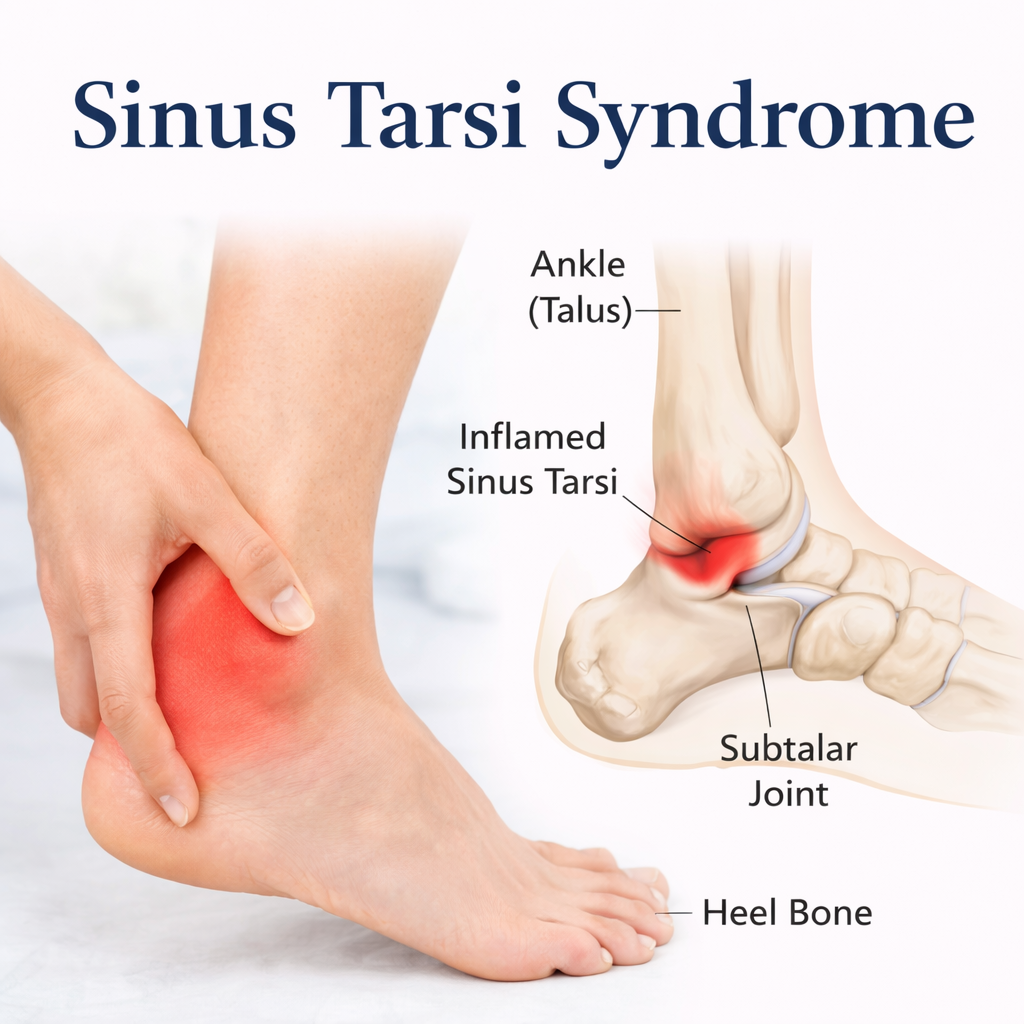
Sinus tarsi syndrome is a disorder that causes inflammation and instability at the outside of the ankle, typically following an injury or biomechanical problem. The affected persons will typically complain of persistent pain, ankle wobbling, and difficulty walking on an irregular surface. Early recognition of the issue and the application of a non-surgical, systematic method will typically result in improved outcomes and the prevention of long-term effects.
What Is Sinus Tarsi Syndrome?
The sinu tarsi is the small hole between the talus and calcaneus bones of the ankle. It contains ligaments, nerves, and fat, which help keep the joint stable and provide position sense. Inflammation or trauma to this space may lead to pain, wobbliness, and difficulty with movement, particularly when lifting weights.
Common Causes of Sinus Tarsi Syndrome
Ankle Sprains and Trauma
The commonest
cause of Sinus tarsi syndrome is sprains of the outer ligaments of the ankle. They cause the joint to be unstable, repeatedly stressing and swelling the sinus tarsi.
Chronic Ankle Instability
Where an ankle sprain is not completely rehabilitated, it may remain unstable. There are abnormal movements of the joint, overloading the subtalar joint and sinus tarsi.
Flat Feet (Pes Planus) Overpronation
Flat foot or over-pronation alters the weight distribution over the ankle, with an increased load put on the subtalar joint structures.
Arthritis and Inflammatory Disorders.
The swelling and irritation of the subtalar joint may also be caused by degenerative or inflammatory diseases that may occur in the subtalar joint.
Tarsal Coalition
The fusion of the foot bones that are found congenitally hinders the normal mobility, which causes compensatory stress and inflammation in the neighbouring tissues, such as the sinus tarsi.
Scar Tissue from Previous Injuries
The scar tissue that develops after injury may limit movement and disrupt normal joint function, contributing to chronic pain and stiffness.
Recognizing Sinus Tarsi Syndrome Symptoms
Lateral Ankle Pain (Outside of Ankle)
One of the obvious
symptoms of Sinus tarsi syndrome is external ankle pain. It is usually made worse by walking, standing, or stepping upon uneven surfaces.
Deep, Vague Pain in the Ankle
A lot of patients report severe pain that is difficult to find, and that is exacerbated when they are active or after prolonged use.
Pain Worsening on Uneven Surfaces
Lumpy surfaces exert more pressure on the subtalar joint, worsening the symptoms and making normal physical activities such as walking outdoors uncomfortable.
Feeling of Ankle Instability or “Giving Way”
The feeling of the ankle being weak or prone to collapse is a widespread symptom and is caused by a lack of support and joint awareness.
Stiffness and Limited Range of Motion
Rigidity and limited movements usually set in, particularly following prolonged rest or inactivity.
How Is Sinus Tarsi Syndrome Diagnosed?
Clinical Examination and Physical Tests
A complete physical examination assesses whether the area is tender, the joint is stable, and the joint has a range of motion.
Sinus tarsi syndrome symptoms are reproduced through specific tests and are used to confirm the involvement of the sinus tarsi.
Imaging Studies for Sinus Tarsi Syndrome
MRI and ultrasound can be used to identify inflammation, fluid accumulation, and damaged ligaments. They are also useful for eliminating other causes of ankle pain, such as fractures or tendon issues.
Non-Surgical Treatment Options for Sinus Tarsi Syndrome
RICE Protocol: Rest, Ice, Compression, Elevation
Management of knee inflammation and pain at an early stage includes limiting activity, applying ice, and using supportive devices.
Physical Therapy and Rehabilitation Exercises
Rehab aims to train the muscles that stabilize the ankle, improve balance, and correct biomechanical errors. Specific exercises rebuild joint function and prevent recurrence.
Anti-Inflammatory Medications (NSAIDs)
NSAIDs may inhibit inflammation when used short-term and relieve pain, particularly at the beginning of the condition.
Corticosteroid Injections
When symptoms persist, injections in the subtarsal area will reduce inflammation and provide temporary relief.
Platelet-Rich Plasma (PRP) Therapy
PRP is a complex therapy that accelerates tissue healing and regeneration, especially in prolonged or recurrent injuries.
Prevention Strategies for Sinus Tarsi Syndrome
Prevention focuses on biomechanical issues, increasing ankle strength, and preventing repeated strain. Wearing appropriate shoes, using flat-foot orthotics, and adopting an organized rehabilitation program after ankle injuries reduces the risk of recurrence. Long-term joint stability is supported by maintaining the ankle muscles in a flexible, balanced position as well.
Why Choose Alleviate Pain Clinic for Sinus Tarsi Syndrome Treatment
Alleviate Pain Clinic provides non-surgical treatment with a focus on high-quality diagnostics and evidence-based practices. It is concerned with identifying the underlying problem, providing specific treatment, and implementing a rehabilitation program to restore ankle function and reduce long-term complications.
Frequently Asked Questions About Sinus Tarsi Syndrome