
Back pain does not always arrive like an injury. No fall. No sudden twist. It can start in a quieter way. You sit for a while and notice a dull ache. You stand up, stretch a little, and it eases. Then it comes back the next day. Then again, but this time it lingers longer. After a point, the discomfort feels familiar. Not sharp. Not alarming. Just there, sitting somewhere deep in the back. Some days it spreads a bit toward the hips. On other days, it feels tighter after sitting too long. This kind of pattern often points toward degenerative disc disease. It does not behave like a simple muscle issue, which is why many people ignore it at first.
What Is Degenerative Disc Disease?

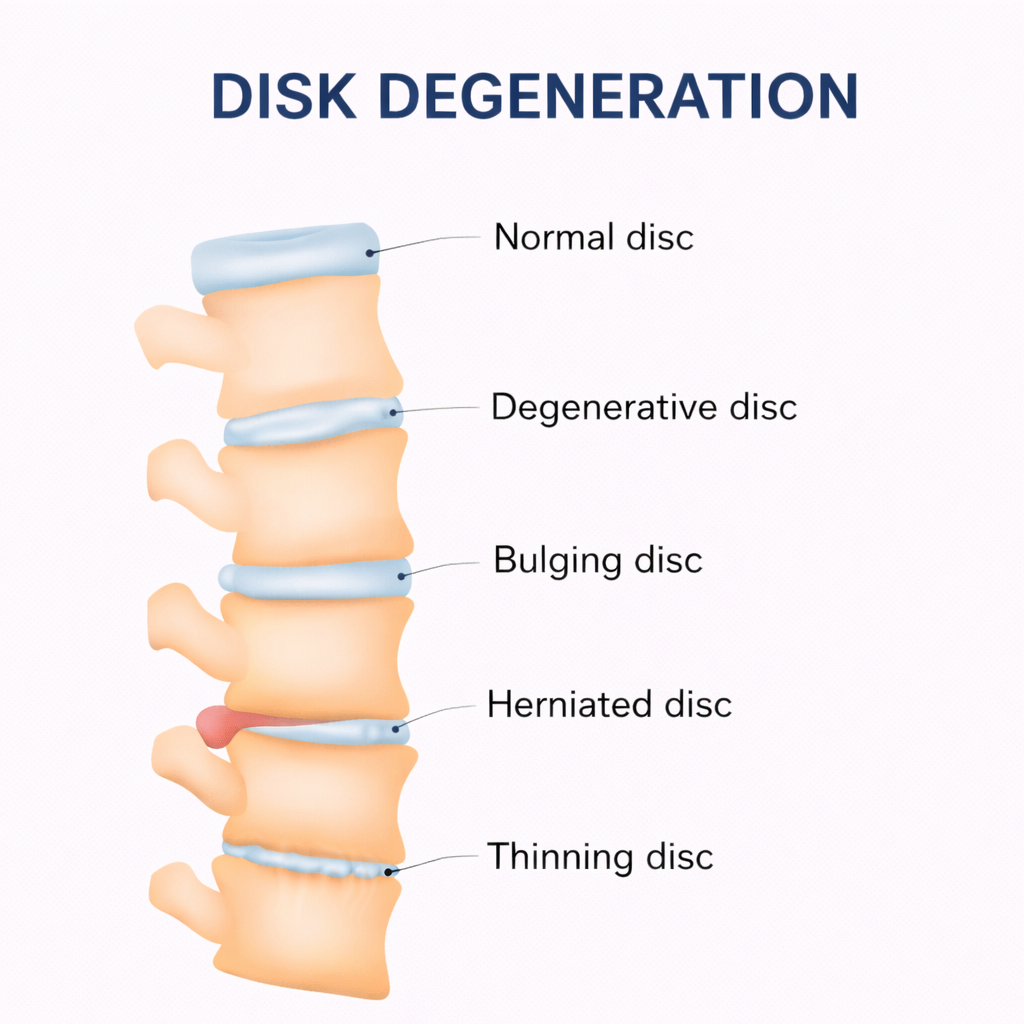
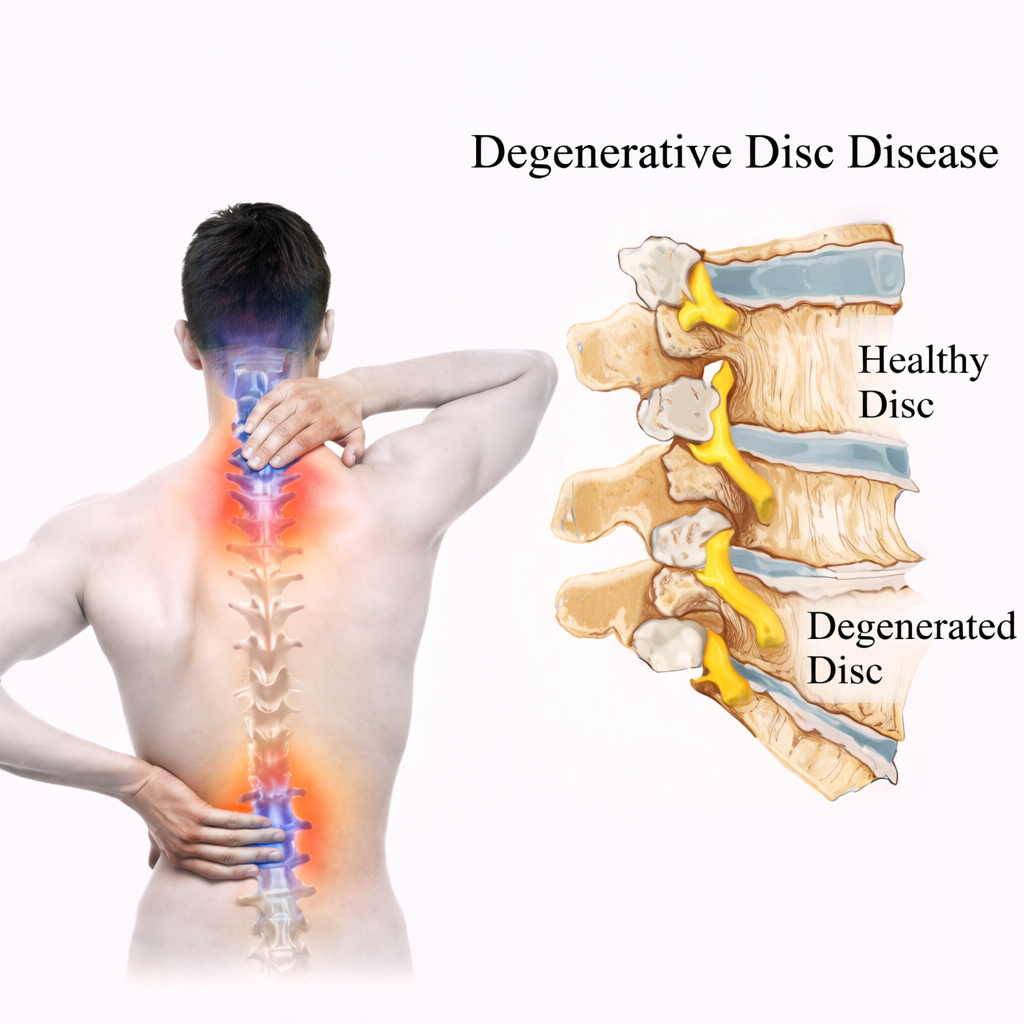
If someone hears the name for the first time, it sounds worse than it is. The DDD definition becomes clearer when you think of the spine as a stack of bones with soft cushions in between. These cushions are the discs. They help absorb shock and allow movement. With time, these discs lose some of their softness. They become thinner and less flexible. This process is called disc degeneration. So when people ask, what is degenerative disc disease, it simply means the discs are not as strong or hydrated as they once were. It is often called DDD spine, even though it is more of a wear-related change than a disease.
Types of Degenerative Disc Disease
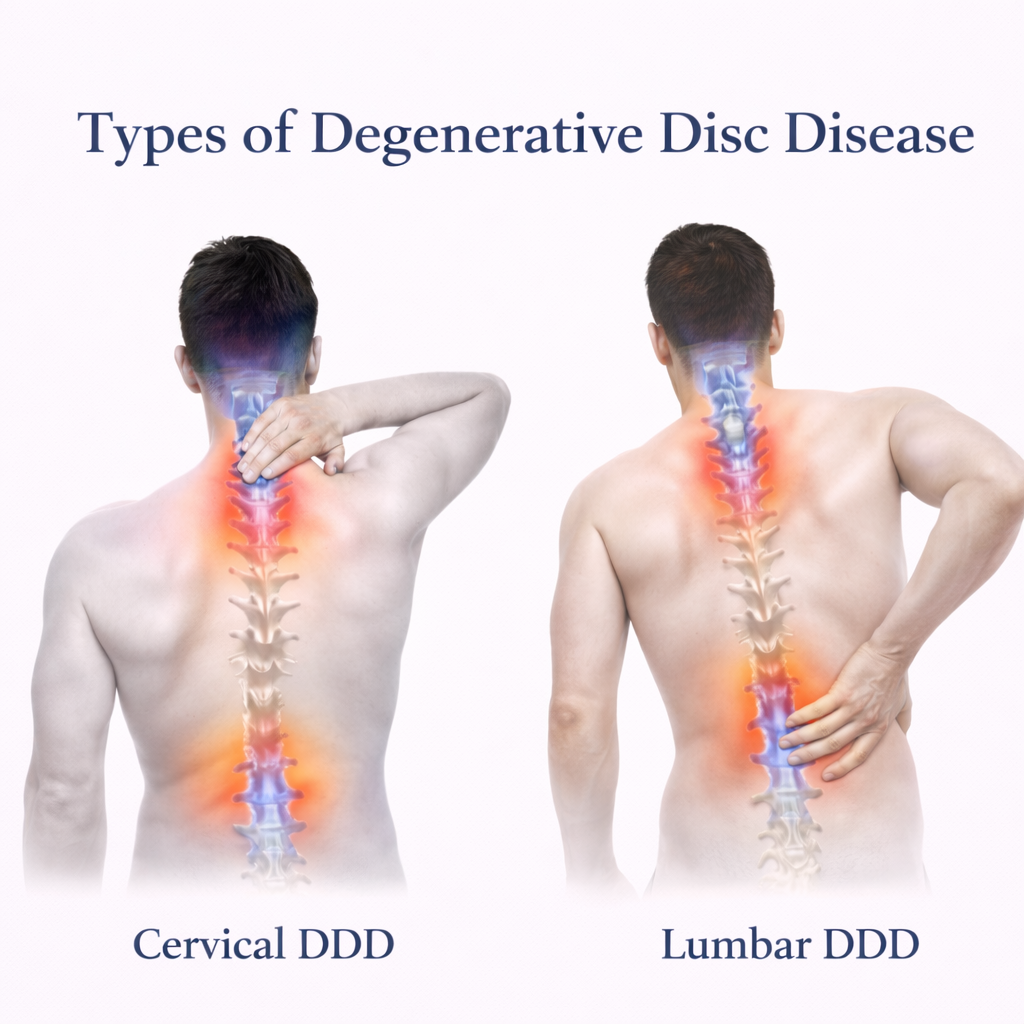
- Cervical DDD: Cervical DDD affects the neck. It may show up as stiffness or pain that moves toward the shoulders. Some people feel it while turning their head or holding their neck in one position.
- Lumbar DDD: Lumbar DDD is more common. It affects the lower back. The pain may stay local or move toward the hips or legs, especially after long sitting periods.
Signs and Symptoms of Degenerative Disc Disease
Chronic Pain and Inflammation
The discomfort is often dull. It feels deeper than muscle pain. This is usually linked to disc inflammation, where the affected area becomes sensitive over time.
Spinal Instability and Micromotion
As discs weaken, the spine loses some of its stability. This creates spinal instability, where small movements between bones start to feel noticeable.
Radiating Pain to Hips and Legs
Pain may travel. It might begin in the lower back and slowly move toward the hips or legs. That shift often confuses people at first.
Causes and Risk Factors of Degenerative Disc Disease
Natural Aging and Disc Drying
Discs lose water as part of normal aging. This reduces their ability to absorb pressure, which leads to disc degeneration.
Genetics and Family History
Some people notice symptoms earlier. Family history plays a role in how the spine changes over time.
Repetitive Physical Stress and Heavy Lifting
Repeated strain, especially from lifting or bending, adds pressure to the discs. Over time, this speeds up wear.
Injury and Trauma to the Spine
Even a past injury can change how a disc behaves. The effects may show up much later.
How Is Degenerative Disc Disease Diagnosed?
Clinical History
The doctor listens carefully. When the pain started. What makes it worse? What makes it settle? These details help guide DDD diagnosis.
Physical Exam
Movement is checked. Posture is observed. The way the spine responds to different positions gives useful clues.
Neurological Assessment
If pain travels, nerve function is checked. This helps identify whether nerves are involved.
Special Test
Certain movements may be used to bring out the discomfort. This helps narrow down the affected area.
Imaging Studies
Scans confirm what is happening inside the spine. They show disc changes and rule out other issues.
Treatment Options for Degenerative Disc Disease
Nerve Blocks
These help reduce pain by calming the signals coming from irritated nerves. They are used when basic methods do not provide enough relief.
PRP (Platelet Rich Plasma Therapy)
PRP uses the body’s own healing response. It may help reduce irritation and support recovery in some cases.
Prolotherapy
This method focuses on strengthening weakened structures around the spine through targeted injections.
Radiofrequency
Radiofrequency treatment reduces pain signals from specific nerves. It is used in selected cases where pain persists.
Physiotherapy
This is often the most important part. Movement, posture, and muscle support all improve with guided therapy. It plays a big role in long-term disc pain relief.
Lifestyle Changes
Small changes tend to matter more than people expect:
- Sitting posture
- Taking breaks during long hours
- Avoiding sudden strain
- Staying active without overloading the spine
Why Choose Alleviate Clinic for Degenerative Disc Disease?
The approach usually begins with understanding how the pain behaves rather than jumping straight to treatment. Movement patterns, daily habits, and symptom triggers are all considered before planning care.
