
It is not always pain that makes people notice something is wrong. Sometimes it is the way walking changes. You start fine. After a few minutes, the legs feel heavy. Not weak exactly, just uncomfortable. You slow down. You sit. And then, almost immediately, it eases. That pattern repeats. Day after day. Many people try to ignore it at first because it does not feel like a typical injury. There is no clear moment when it started. But that stop-and-start discomfort is often linked to spinal stenosis.
What is Spinal Stenosis?

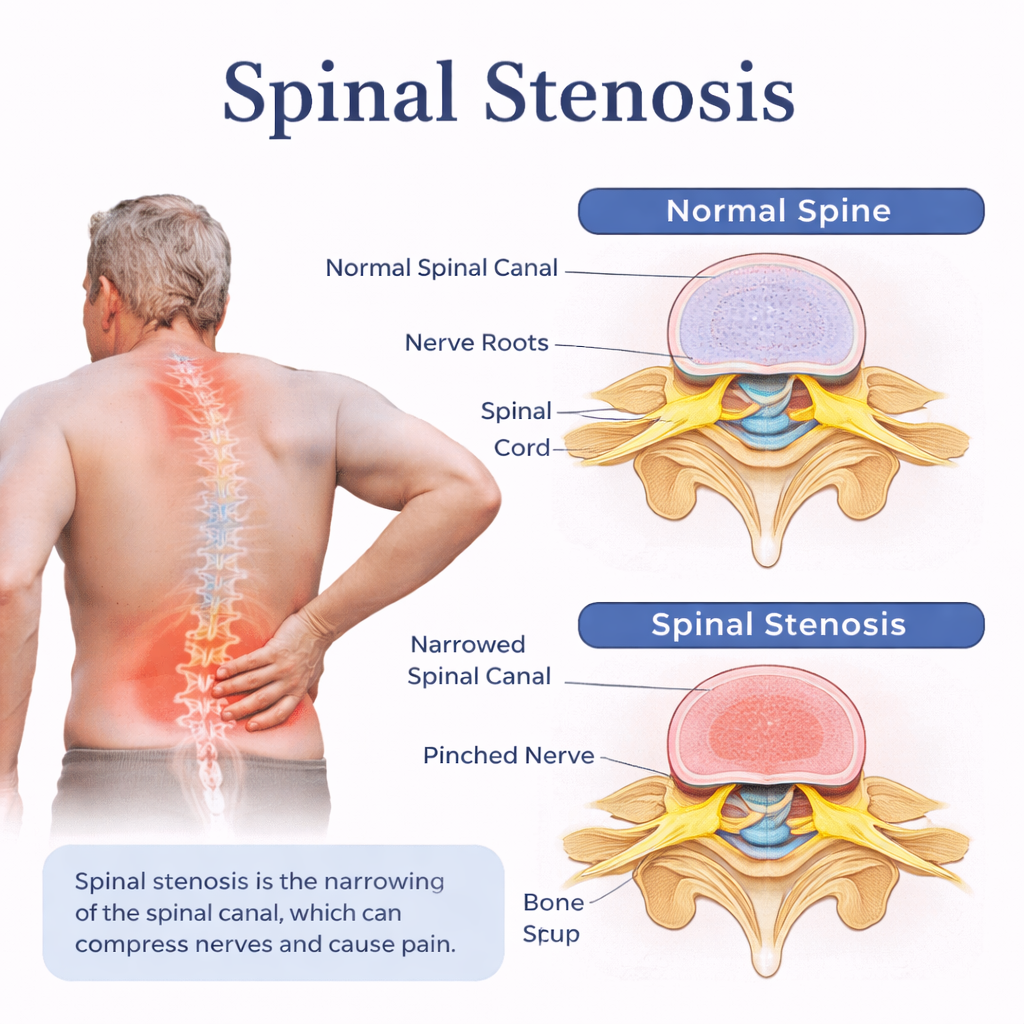
Inside the spine, there is a passage where nerves travel. Think of it as a tunnel. When that tunnel becomes narrower, the nerves do not have enough space. That narrowing is called spinal canal stenosis. So when people ask for a spinal stenosis definition, it really comes down to reduced space inside the spine that affects nerve movement. The tricky part is this. The narrowing can exist for years without symptoms. It only becomes a problem when the nerves start reacting to that pressure.
Anatomy of the Spine
The Anatomy of the Spine is not complicated when you picture it step by step. There are bones stacked one above the other. Between them sit discs that act like cushions. Running through the centre is the spinal canal. That canal carries nerves down the body. If the space inside stays open, everything works quietly in the background. When it starts to narrow, even slightly, the nerves begin to complain. That is when symptoms appear.
Prevalence & Etiology
Some people have clear narrowing on scans and no symptoms at all. Others feel discomfort even with mild changes. That difference usually comes down to how sensitive the nerves are and how the body handles pressure. Lifestyle also plays a role. Long sitting hours, repetitive strain, and lack of movement all add to the picture over time.
Common Causes
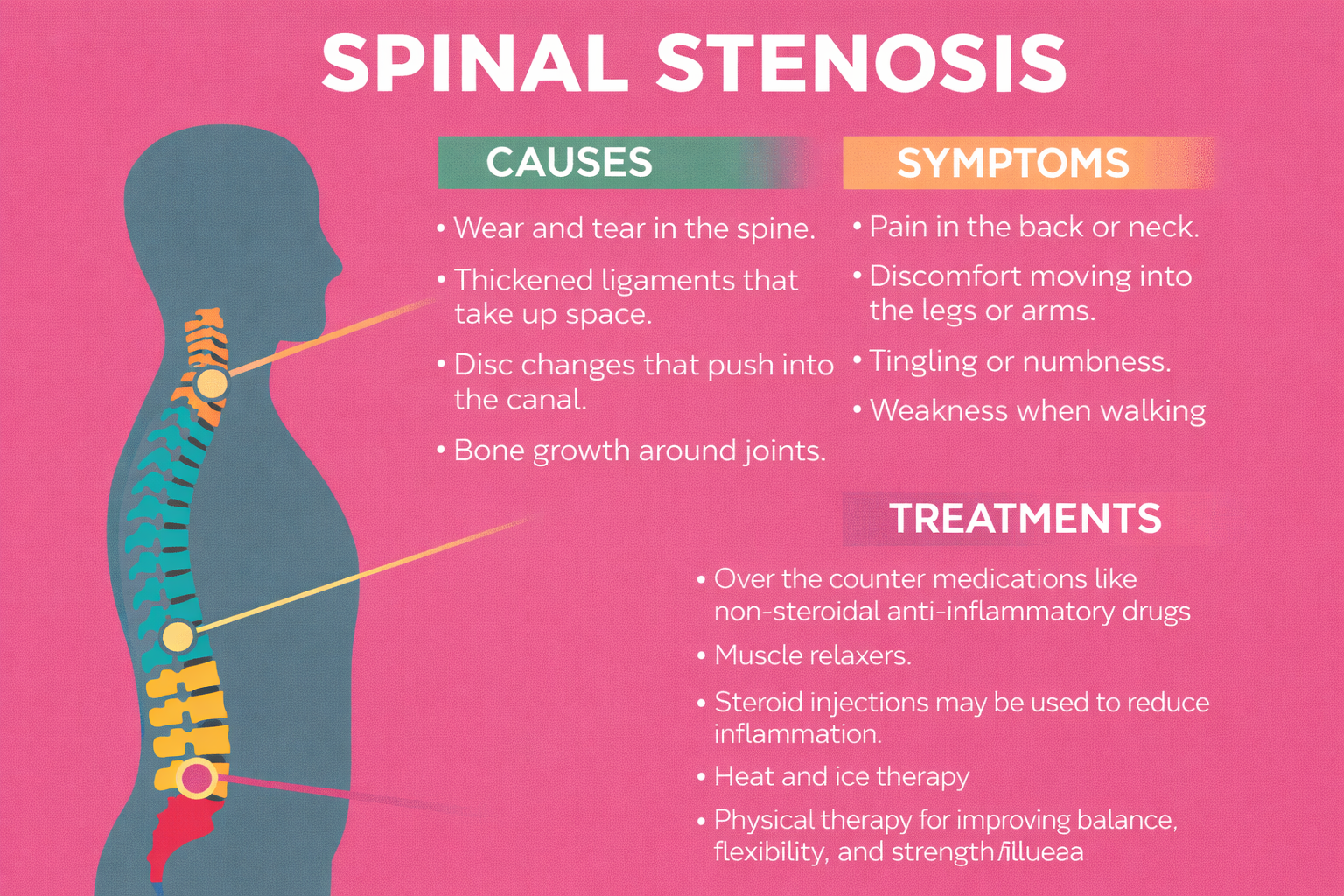
The causes of spinal stenosis are rarely sudden. They build slowly.
- Wear and tear in the spine
- Thickened ligaments that take up space
- Disc changes that push into the canal
- Bone growth around joints
- Old injuries that altered alignment
None of these alone always causes symptoms. But together, they reduce the space little by little.
Symptoms
The spinal stenosis symptoms often follow a pattern that people only notice after a while.
- Pain in the back or neck that comes and goes
- Discomfort that moves into the legs or arms
- Tingling or numbness that feels strange rather than painful
- Weakness after walking for some time
- Relief when sitting or leaning forward
Diagnosis
Clintory
The conversation matters more than people expect. When the pain starts, how long does it last, and what relieves it? These details shape spinal stenosis diagnosis early on.
Phyxam
The way a person stands, walks, and moves tells a lot. Even small changes in posture can hint at where the issue lies.
Neal Assessment
If nerves are involved, there may be changes in sensation or strength. These are checked carefully.
Spal Test
Certain movements are used to see if symptoms appear or reduce. This helps narrow down the cause.
Imaging Test
Scans confirm what is happening structurally. They support the diagnosis, but they do not replace the clinical picture.
Treatment
Treatment for spinal stenosis usually depends on how the symptoms behave in daily life. Some people feel discomfort only after long walks, while others struggle even with short movements. That difference matters. In many cases, the focus is not on removing the condition completely, but on reducing pressure on the nerves and helping the spine move more comfortably. The approach often starts simple and becomes more targeted only if needed.
Conservative Treatments
This is where most people begin, and often, this is enough. Conservative care focuses on easing symptoms without invasive methods. It includes rest, posture correction, guided movement, and basic pain relief methods. The idea is to reduce irritation around the nerves while keeping the body active. Physiotherapy plays a big role here. It helps improve how the spine moves and how surrounding muscles support it. Many people notice that once movement improves, the discomfort reduces on its own.
Surgical Treatments
Surgery is not the first step for most people, even though it is often the first thing they worry about. It is usually considered only when symptoms become severe, such as persistent weakness, loss of balance, or when pain does not respond to other treatments. The goal of surgery is to create more space in the spinal canal and reduce nerve pressure. Even then, the decision is made carefully, based on how much the symptoms affect daily life.
Medical Interventions
Medical options are often used when basic care does not provide enough relief. These may include medications that reduce inflammation or relax muscles. In some cases, targeted injections help calm irritated nerves and reduce pain for a period of time. The aim here is not long-term dependence, but short-term relief that allows better movement and participation in therapy.
Advanced Procedures
When symptoms persist, more focused treatments may be considered. Procedures like nerve blocks or radiofrequency treatment target specific pain pathways. These approaches reduce the signals coming from irritated nerves, which helps manage ongoing discomfort. They are usually considered after simpler methods have been tried and when pain starts interfering with routine activities.
Comprehensive Care
No single method works on its own in most cases. A combination approach tends to work better. This means addressing posture, movement, muscle strength, and pain together rather than in isolation. Small improvements from different areas add up over time. This kind of care often feels gradual, but it leads to more stable and lasting results.
Lifestyle Changes
Daily habits often influence symptoms more than people realise.
- Avoid staying in one position for too long
- Take short breaks while sitting or standing
- Use proper support while sitting
- Keep movements controlled rather than sudden
- Stay active without pushing into pain
When to See a Doctor for Spinal Stenosis
Some discomfort settles with rest. Some patterns do not. It is better to seek help if walking distance keeps reducing, or if numbness, tingling, or weakness starts to appear. These signs suggest that the nerves are under more pressure. Early evaluation makes a difference because it allows treatment to begin before symptoms become harder to manage.
Why Choose Alleviate?
Treatment usually begins with understanding how symptoms behave in real situations, not just what appears on scans. The focus stays on improving movement, reducing nerve pressure, and helping people return to daily activities with less discomfort. Care is adjusted based on how the body responds, rather than following a fixed plan.
