
Key Highlights
Lumbar traction is a non-surgical treatment that is widely used to alleviate lower back pain by gently stretching the spine. It relieves pressure on the spinal discs, nerves, and joints and enhances mobility. When used properly, it helps heal most spinal conditions and enhances the performance of long-term pain-relief rehabilitation programs.
What Is Lumbar Traction?

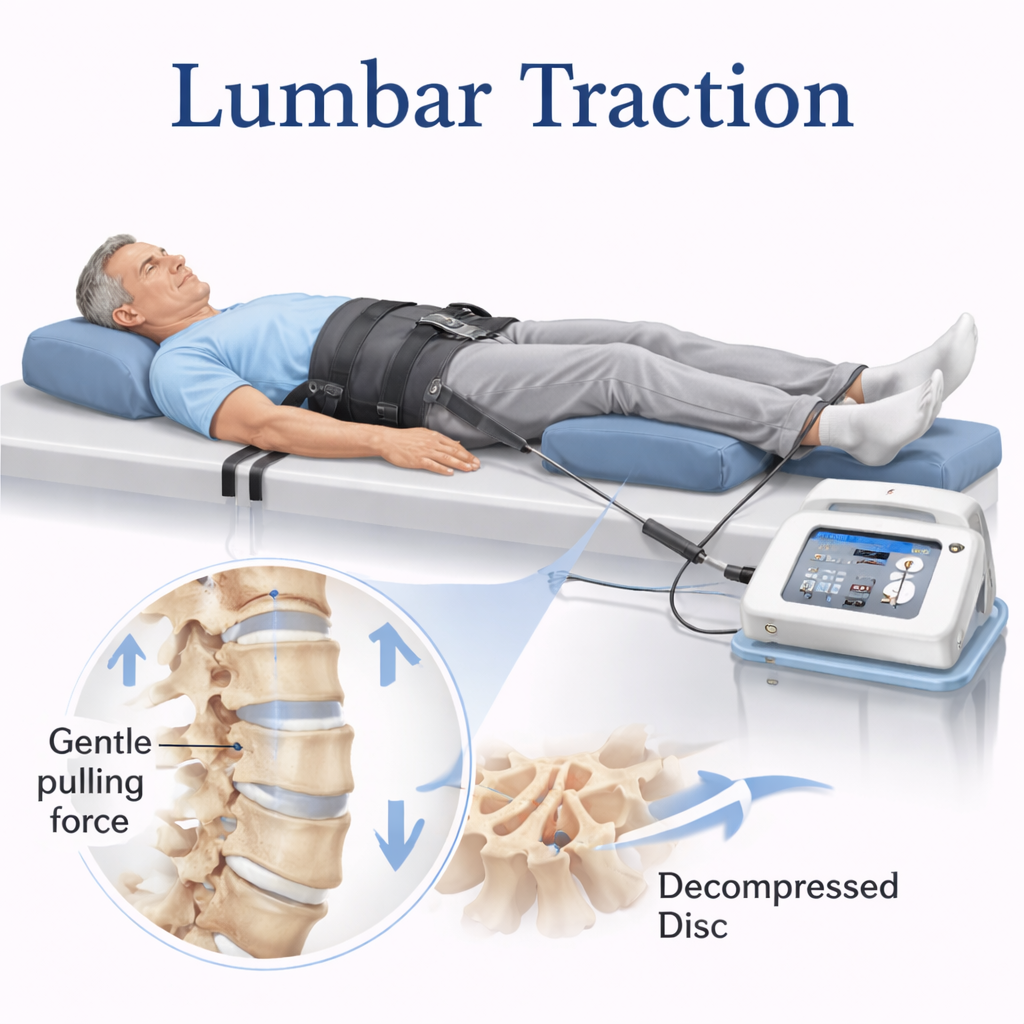
Lumbar traction procedure is a therapeutic technique that uses controlled force on the lower spine and separates the vertebrae by a small margin. This unloading of pressure on the interspinal discs and nerve roots is achieved. It is typically used in physiotherapy for the conservative treatment of patients with long-term lower back pain and restricted movement.
How Does Lumbar Traction Work?
Creating Negative Pressure in Discs
Traction creates negative pressure within the spinal discs, which can push back the bulging or herniated material. This reduces pressure on surrounding nerves and alleviates disc-related pain.
Stretching Spinal Muscles and Ligaments
The smooth motion helps stretch stiff muscles and ligaments, relax them, and increase a person’s flexibility. This helps maintain the spine in good posture.
Reducing Nerve Root Compression
Traction reduces the compression of nerve roots by increasing the distance between vertebrae. Such symptoms as radiating pain, tingling, or numbness can also improve.
Improving Blood Flow and Healing
Traction enhances the flow of blood and nutrients to spinal tissues, which helps with healing. It is also effective in reducing inflammation.
Types of Lumbar Traction
Mechanical Lumbar Traction
In mechanical traction, force is exerted and modified by specialized equipment. The environment may be adjusted to the patient’s condition and comfort level.
Manual Lumbar Traction
A therapist uses hands-on methods to perform manual traction. It enables the therapist to manipulate the session in terms of force and position.
Positional Traction
Positional traction involves specific body positions to achieve natural spinal decompression, which does not depend on mechanical tools.
Inversion Traction
Inversion therapy involves applying pressure to the head by standing on it and placing the body in a reverse position that uses gravity to straighten the spine. It is typically performed on an inversion table under the supervision of a professional.
Conditions Treated with Lumbar Traction
Herniated or Bulging Discs
Traction has the potential to reduce disc pressure and relieve most related symptoms.
Sciatica and Nerve Root Compression
Lumbar traction is used to reduce nerve irritation, soothing radiating pain and discomfort in the legs.
Degenerative Disc Disease
Mobility and stiffness in degenerated disc patients can be improved with traction.
Spinal Stenosis
Expanding the spinal space can alleviate compression in constricted canals, thereby improving symptoms.
Facet Joint Syndrome
Decompression reduces stress on the facet joints, enhancing function and reducing pain.
Muscle Spasms and Tightness
Traction relaxes the muscles, relieving tension and making the areas even more comfortable.
The Lumbar Traction Procedure: What to Expect
In the process, a person lies on a table and fastens straps or a harness around the pelvis and torso. The force of traction is regulated, either intermittently or continuously. Each session lasts 15–30 minutes. Patients normally experience a light pull or stretch, and the therapist observes whether it is comfortable or effective.
Benefits of Lumbar Traction Therapy
Lumbar traction procedure can reduce low back pain, enhance movement, decrease nerve compression, and promote spinal relaxation. It increases the disc hydration and flexibility. Traction is beneficial in conjunction with physiotherapy, long-term recovery, and a decrease in symptom recurrence, and thus is an effective component in the non-surgical control of pain.
Risks and Contraindications of Lumbar Traction
Traction is not harmful; nevertheless, it may not be suitable for everyone. Traction may be unsafe in cases such as spinal fractures, severe osteoporosis, infections, or tumors. Mistakes in use may worsen conditions. Thus, treatment should be evaluated and monitored by certified specialists.
Effectiveness of Lumbar Traction: Does It Work?
The usefulness of lumbar traction varies with the disease being treated and the patient’s condition. It works best as a component of a general treatment. Even though it might not be a total relief on its own, it can greatly reduce symptoms and enhance results when combined with rehabilitation and strengthening exercises.
Combining Lumbar Traction with Other Treatments
Physical Therapy and Exercise
Exercises to strengthen and increase flexibility enhance spinal stability and traction, which help prevent recurrence.
Manual Therapy and Massage
Manual therapy relaxes muscles, enhances circulation, and promotes functional recovery.
Medications and Injections
Choosing traction should be accompanied by pain-killing medications and specific injections to manage the symptoms more effectively.
Cost of Lumbar Traction Therapy
The price depends on the number of sessions, the type of traction, and the facility. Non-surgical treatment, such as traction, is typically cheaper than surgery, particularly when incorporated into an organized rehabilitation program.
Insurance Coverage and payment options.
It is covered in relation to individual policies. Certain plans incorporate traction in physiotherapy, while others may involve some full or partial out-of-pocket payment. Before treatment, patients should ensure that they are covered.
Why Choose Alleviate Pain Clinic for Lumbar Traction
Alleviate Pain Clinic provides evidence-based, highly personalized non-surgical treatment. We are interested in accurate diagnosis, traction-specific treatment, and full rehabilitation programs aimed at restoring functions and minimizing pain.
