




Piriformis syndrome can be a frustrating source of persistent deep gluteal pain, often caused by tightness or irritation in a small but essential hip muscle. Even routine activities like sitting or driving may become uncomfortable. At Alleviate Pain Clinic, we emphasize understanding the root cause and using nonsurgical care to restore function. A consistent routine of stretches for piriformis syndrome, along with targeted piriformis syndrome exercises and piriformis muscle stretches, can help relieve nerve pressure and improve hip mobility for lasting relief.
What is Piriformis Syndrome?
To understand what piriformis syndrome is, it helps to review hip and buttock anatomy. The piriformis muscles are deep structures connecting the upper thigh bone to the lower spine, supporting hip rotation and lower-body stability. Piriformis muscle pain develops because this muscle lies close to the sciatic nerve, which runs from the lower back down the legs. When the piriformis tightens, becomes inflamed, or spasms, it can irritate the nerve, producing symptoms that often resemble lower back or hamstring problems.
Common Causes & Symptoms of Piriformis Syndrome
Athletes, especially runners, cyclists, and weight-training enthusiasts, also face higher risk due to repetitive hip motion and muscle overload. In some cases, the condition develops from insufficient movement, where prolonged inactivity leads to tight hip musculature.
Additional contributors include:
- Tight surrounding gluteal or hip muscles
- Sudden increases in physical activity
- Previous hip or buttock injuries
- Poor posture or biomechanics
- Muscle imbalances in the pelvic region
Understanding these risk factors is key to both treatment and prevention.
Recognizing piriformis syndrome symptoms early can help you seek appropriate care. The most common complaint is a dull or sharp ache deep in the buttock.
Typical symptoms include:
- Deep gluteal pain on one side
- Pain radiating down the back of the leg
- Tingling or numbness in the buttock or leg
- Increased pain after prolonged sitting
- Discomfort during hip rotation activities
- Difficulty with prolonged walking or climbing stairs
Because the sciatic nerve is involved, piriformis muscle pain can sometimes feel severe and debilitating. If symptoms persist beyond several weeks, professional assessment is strongly recommended.
Benefits of Stretching for Piriformis Syndrome
Targeted stretches for piriformis syndrome are widely considered first-line conservative management. Stretching helps lengthen tight muscle fibers, reducing pressure on the sciatic nerve.
Key benefits include:
- Improved hip flexibility and mobility
- Reduced nerve compression
- Enhanced blood circulation to irritated tissues
- Better pelvic and gluteal muscle balance
- Decreased risk of recurrence
When paired with strengthening-based piriformis syndrome exercises, patients often experience meaningful symptom improvement. At Alleviate Pain Clinic, empowering patients with guided movement therapy is a central part of our nonsurgical approach.
10 Most Effective Stretches for Piriformis Syndrome
The best piriformis stretches typically combine hip rotation, glute activation, and controlled mobility work. Incorporate the following into your daily routine.
1. Supine Piriformis Stretch (Knee to Opposite Shoulder)
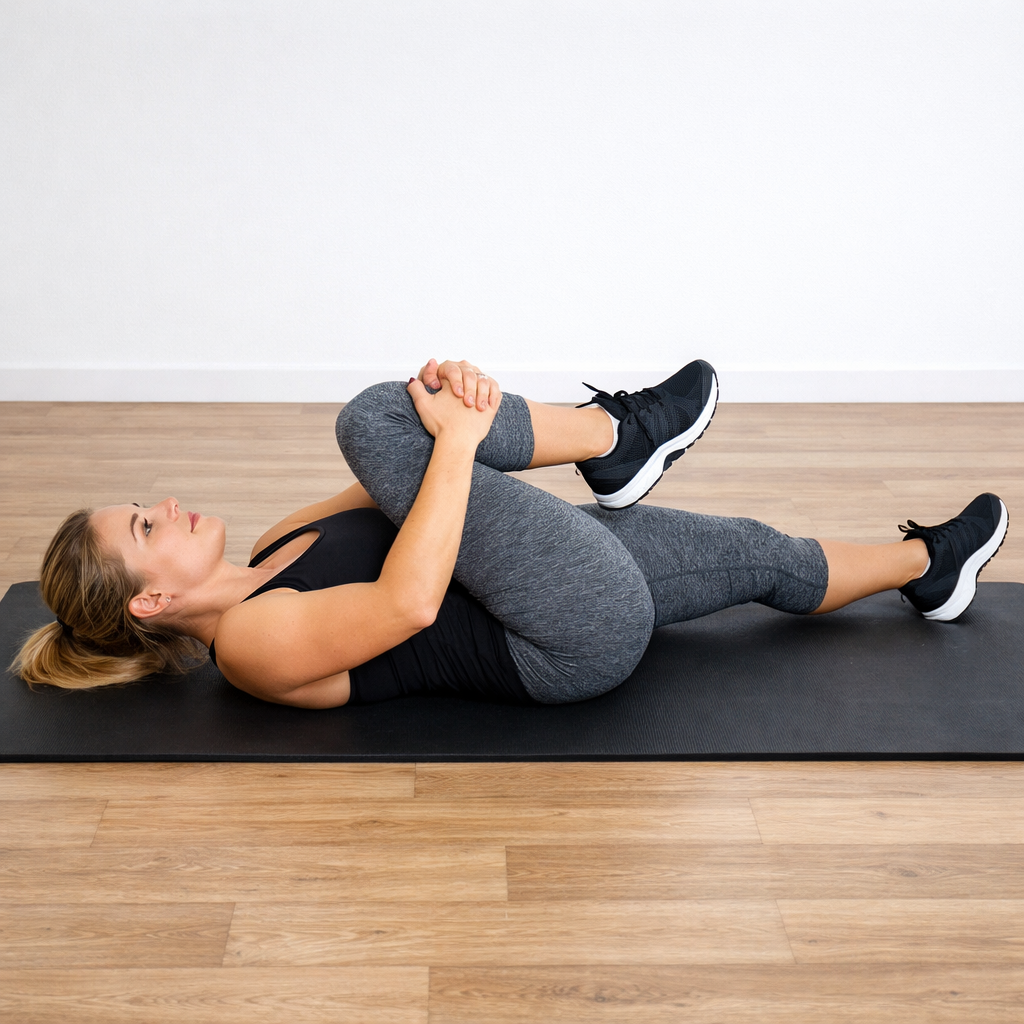
The supine piriformis stretch is a foundational movement. Lie flat on your back with legs extended. Bend the affected knee and gently pull it toward the opposite shoulder using your opposite hand. Hold for 30 seconds and repeat three times per side.
2. Seated Piriformis Stretch (Figure 4 Position)

The seated piriformis stretch is ideal for office settings. Sit upright, and cross the affected ankle over the opposite knee, forming a figure-4 shape. Gently press the raised knee downward or lean forward slightly. Hold for 30 seconds and repeat three times.
3. Standing Piriformis Stretch

This standing hip stretch works well when floor space is unavailable. Stand near a wall for balance. Cross the painful leg over the opposite knee and lower into a partial squat. Maintain a straight back and hold for 30–60 seconds.
4. Supine Figure 4 Stretch
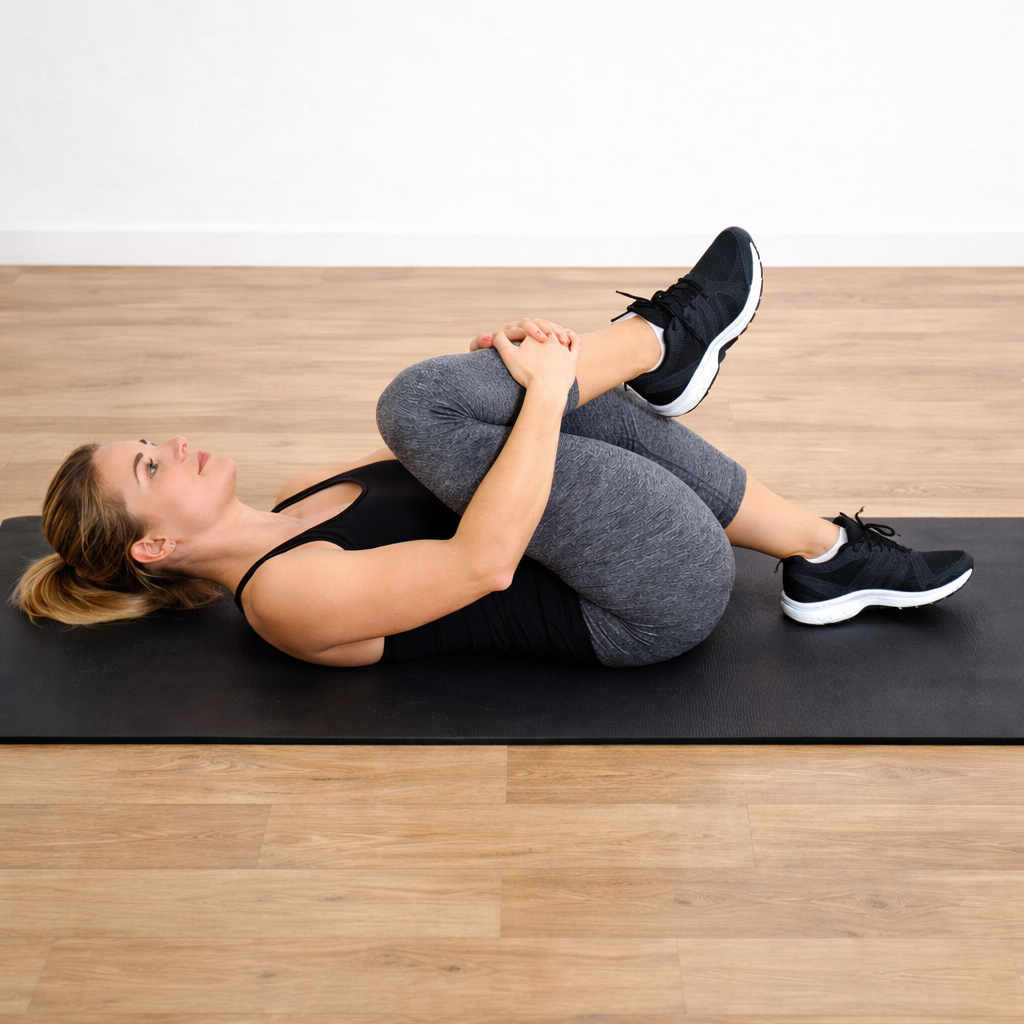
Lie on your back with knees bent. Cross one ankle over the opposite thigh and pull the bottom leg toward your chest. Hold for 30 seconds and repeat three times per side. This is among the most effective piriformis muscle stretches.
5. Pigeon Pose (Yoga Stretch)
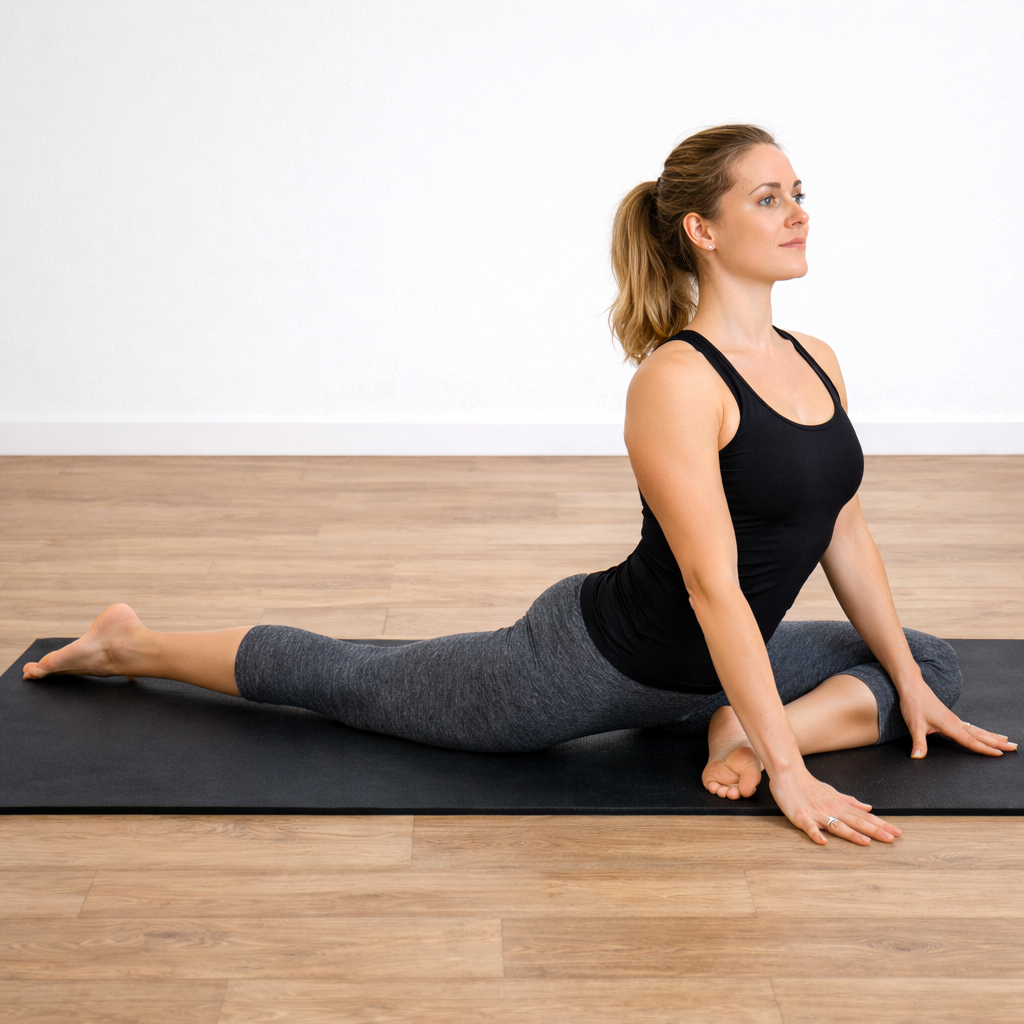
Begin on all fours. Bring one leg forward with the shin angled across the body while extending the other leg behind. Gradually lean forward while breathing deeply. This yoga posture provides an intense hip opening.
6. Seated Spinal Twist
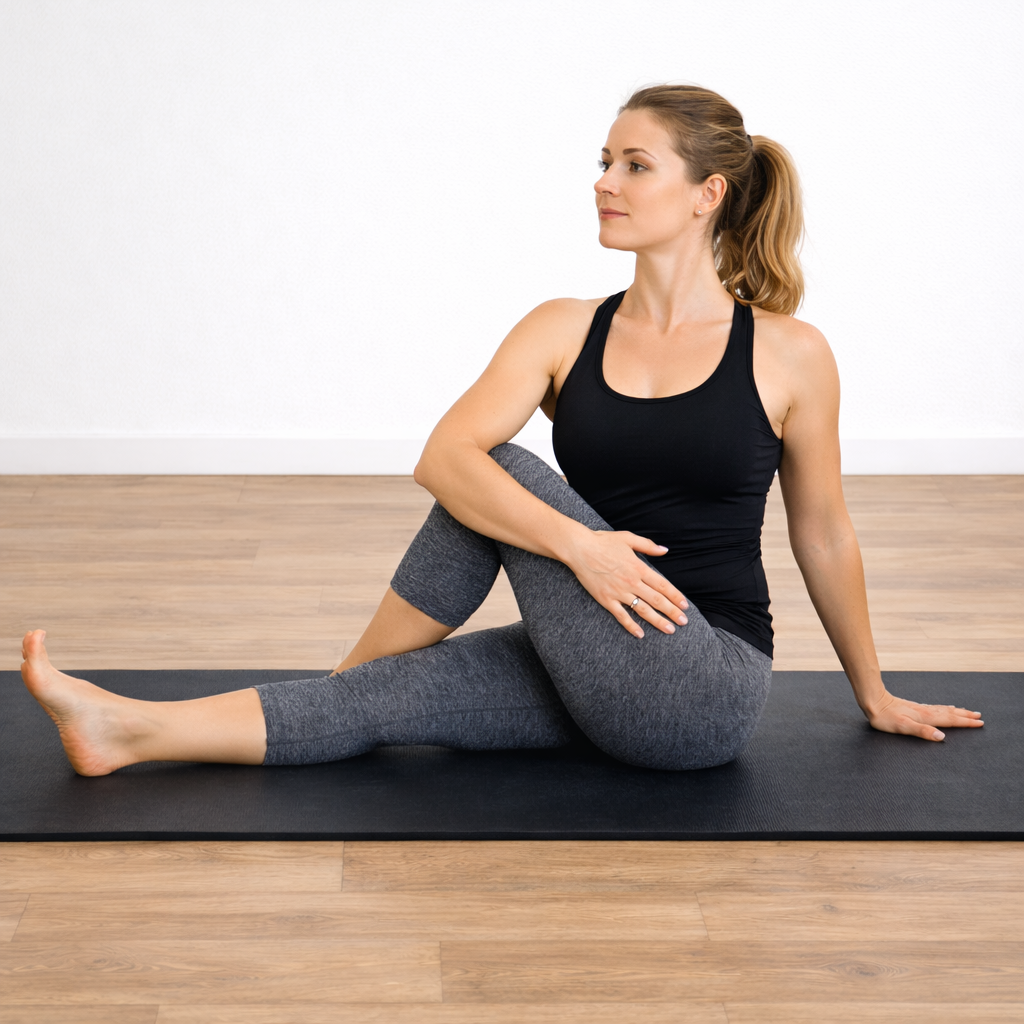
Sit with legs extended. Cross one foot outside the opposite knee and rotate your torso toward the bent knee. Hold for 30 seconds. This movement creates space through the spine and hip complex.
7. Supine Hamstring Stretch
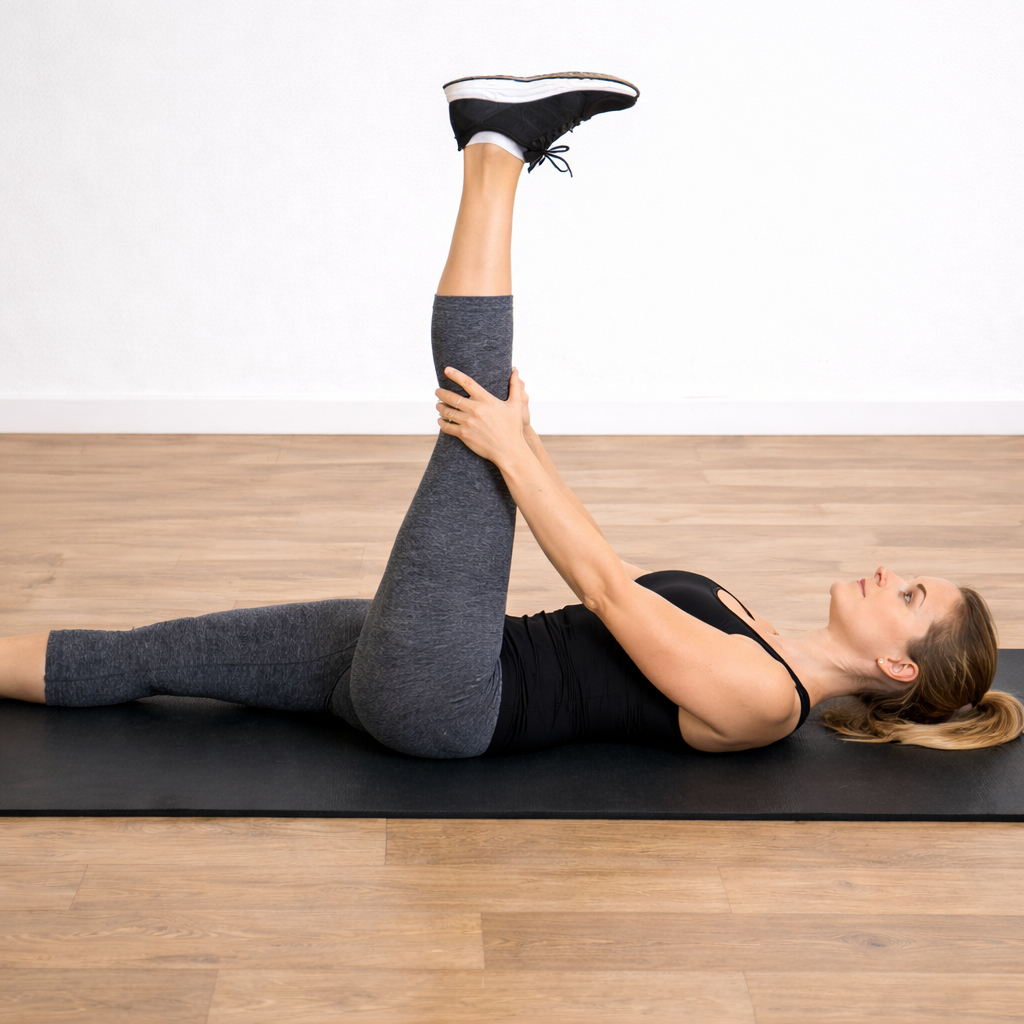
Although indirect, this stretch reduces posterior chain tension. Lie on your back and raise one leg, holding behind the thigh. Keep a slight knee bend and hold for 30 seconds per side.
8. Hip Extension Stretch
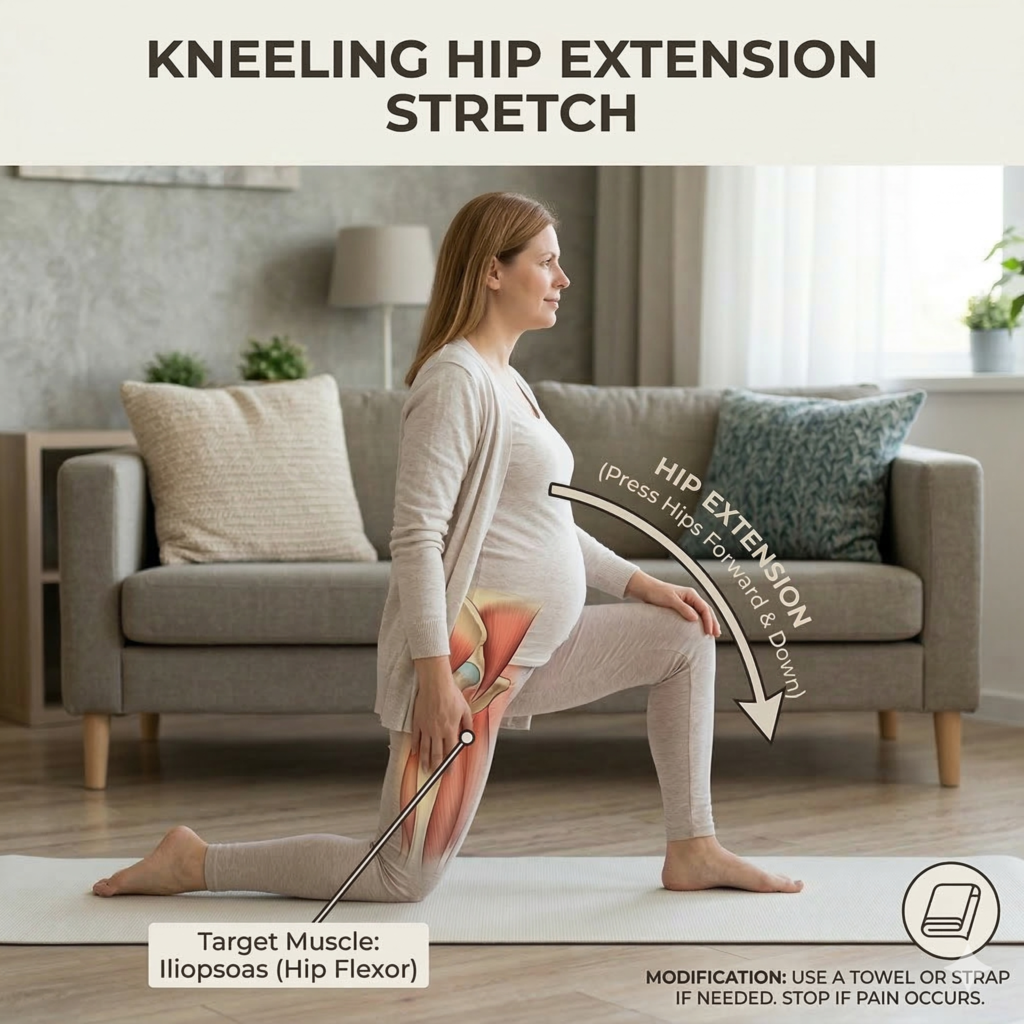
This hip flexor stretch balances pelvic musculature. Lie face down and slowly lift one leg while keeping the knee straight. Perform 10 controlled repetitions per side.
9. Clamshell Exercise (Strengthening)
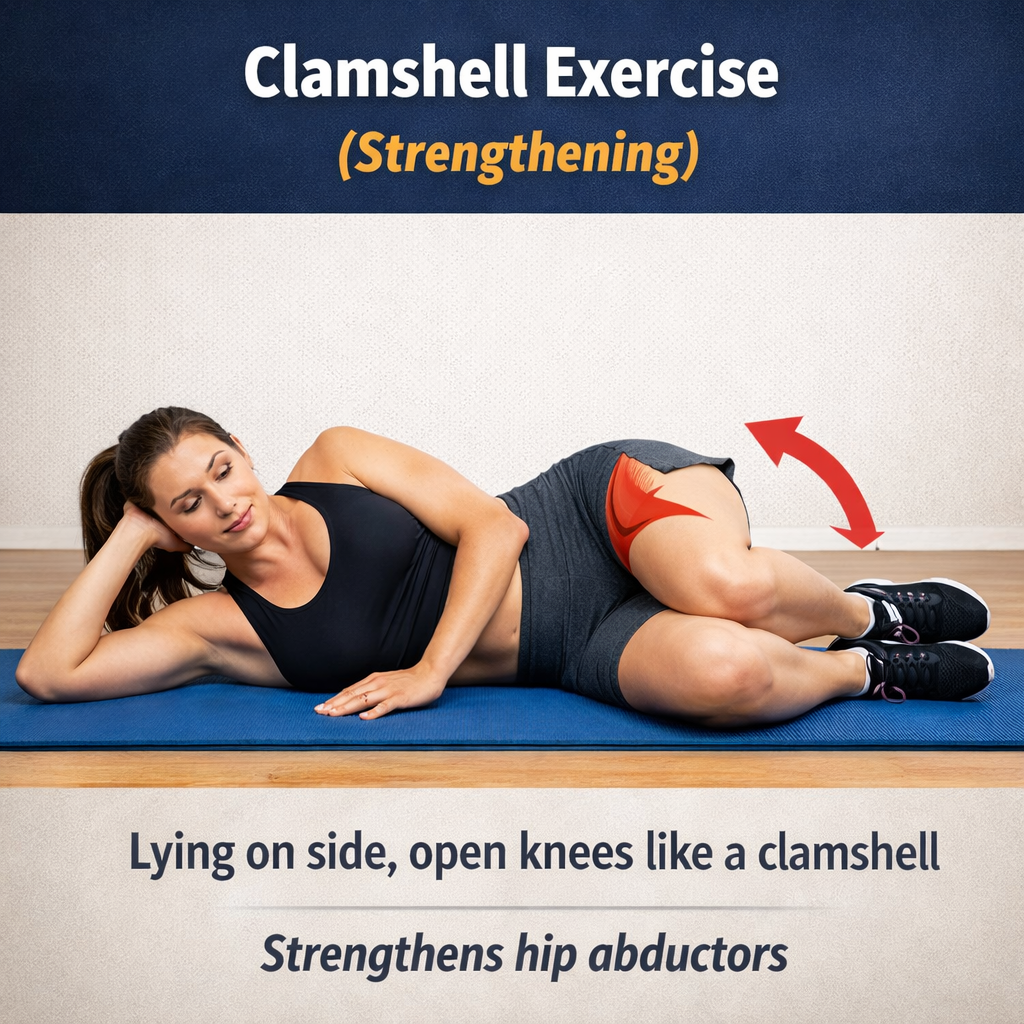
This is a key gluteal strengthening exercise. Lie on your side with knees bent and heels together. Lift the top knee while keeping hips stable. Perform three sets of 10 repetitions.
10. Glute Bridge (Strengthening)
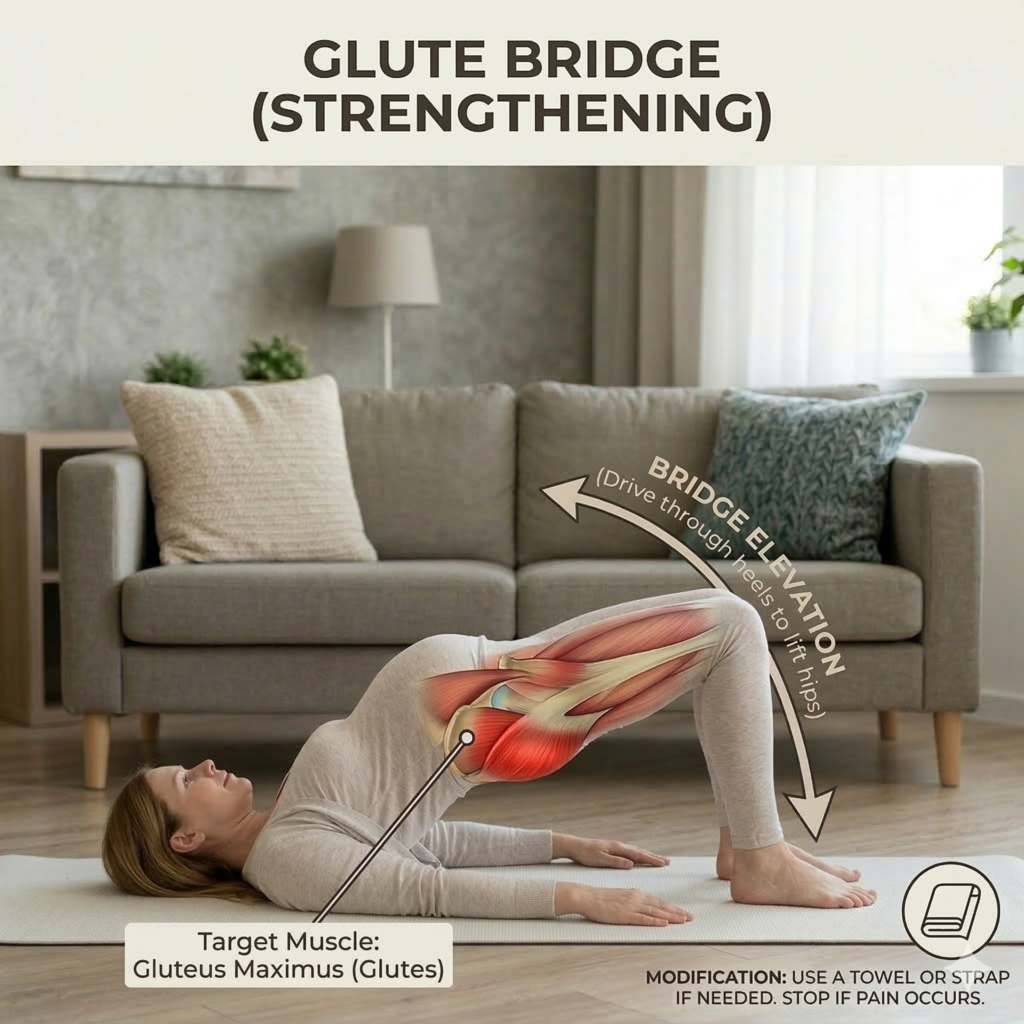
Lie on your back with knees bent and feet flat. Lift your hips while squeezing the glutes, then lower slowly. Perform three sets of 10 repetitions to support long-term recovery from piriformis syndrome.
How to Perform Stretches Correctly?
Proper technique is essential when performing stretches for piriformis syndrome. Incorrect form may aggravate symptoms rather than relieve them.
Warm-Up Before Stretching
Never stretch cold muscles. Begin with 5–10 minutes of light activity such as walking or using an elliptical. This increases blood flow and prepares tissues for mobility work.
Proper Form and Technique
Move slowly and avoid bouncing. You should feel a gentle stretch—not sharp pain. If symptoms worsen, stop immediately and modify positioning. Consistency and controlled execution produce the best outcomes.
Additional Treatment Options for Piriformis Syndrome
In persistent cases, stretching alone may not fully resolve piriformis syndrome. A comprehensive piriformis syndrome treatment plan may include supportive therapies.
Heat and Ice Therapy
Cold therapy helps numb acute pain and reduce inflammation. Heat therapy relaxes muscle spasms and improves circulation. Alternating both can enhance symptom control.
Massage and Foam Rolling
Using a foam roller, the piriformis technique or a tennis ball can release trigger points within the gluteal region. Because the piriformis is deep, professional guidance may improve accuracy and safety.
Professional Treatment at Alleviate Pain Clinic
At Alleviate Pain Clinic, we specialize in advanced, nonsurgical piriformis syndrome treatment. If symptoms persist after one month of consistent piriformis syndrome exercises, our team provides comprehensive evaluation and targeted therapies.
Available treatments include:
Our knee pain treatment centers across Bangalore, including Whitefield, Indiranagar, Jayanagar, Sadashiva Nagar, and Dasarahalli, are dedicated to restoring mobility and reducing chronic pain.
FAQ's About Best Stretches for Piriformis Syndrome
There is no single best stretch for everyone, but the seated and supine figure-4 positions are widely considered the most effective stretch for piriformis syndrome.
Most stretches for piriformis syndrome should be held for about 30 seconds and repeated two to three times per side.
Some people experience short-term relief quickly, but meaningful improvement usually requires several weeks of consistent piriformis muscle stretches.
If piriformis muscle pain is intense or worsening, consult a healthcare provider before performing deep stretches.
Yes. Many piriformis syndrome exercises are specifically designed to reduce sciatic nerve compression.
Yes. Prolonged sitting is one of the leading triggers of piriformis syndrome symptoms because it compresses both the muscle and the sciatic nerve.


