



Key Highlights
- Right hand pain from shoulder to fingers often occurs due to nerve compression or musculoskeletal problems affecting the neck, shoulder, or arm.
- Conditions such as Cervical Radiculopathy, Rotator Cuff Injury, Carpal Tunnel Syndrome, Frozen Shoulder, and thoracic outlet syndrome can lead to shoulder pain radiating to fingers.
- Common symptoms include numbness, tingling sensations, muscle weakness, reduced grip strength, and persistent Hand Pain that may interfere with daily activities.
Proper diagnosis of shoulder pain usually involves physical examinations, imaging tests, and nerve studies, while treatment often begins with rest, medication, and physical therapy before considering surgery.
Understanding Pain That Travels from Shoulder to Fingers
The shoulder is the most mobile joint in the human body, which also makes it highly vulnerable to injury and degeneration. Because the shoulder connects the arm directly to the torso, pain that begins in this area may travel down the arm and into the fingers.
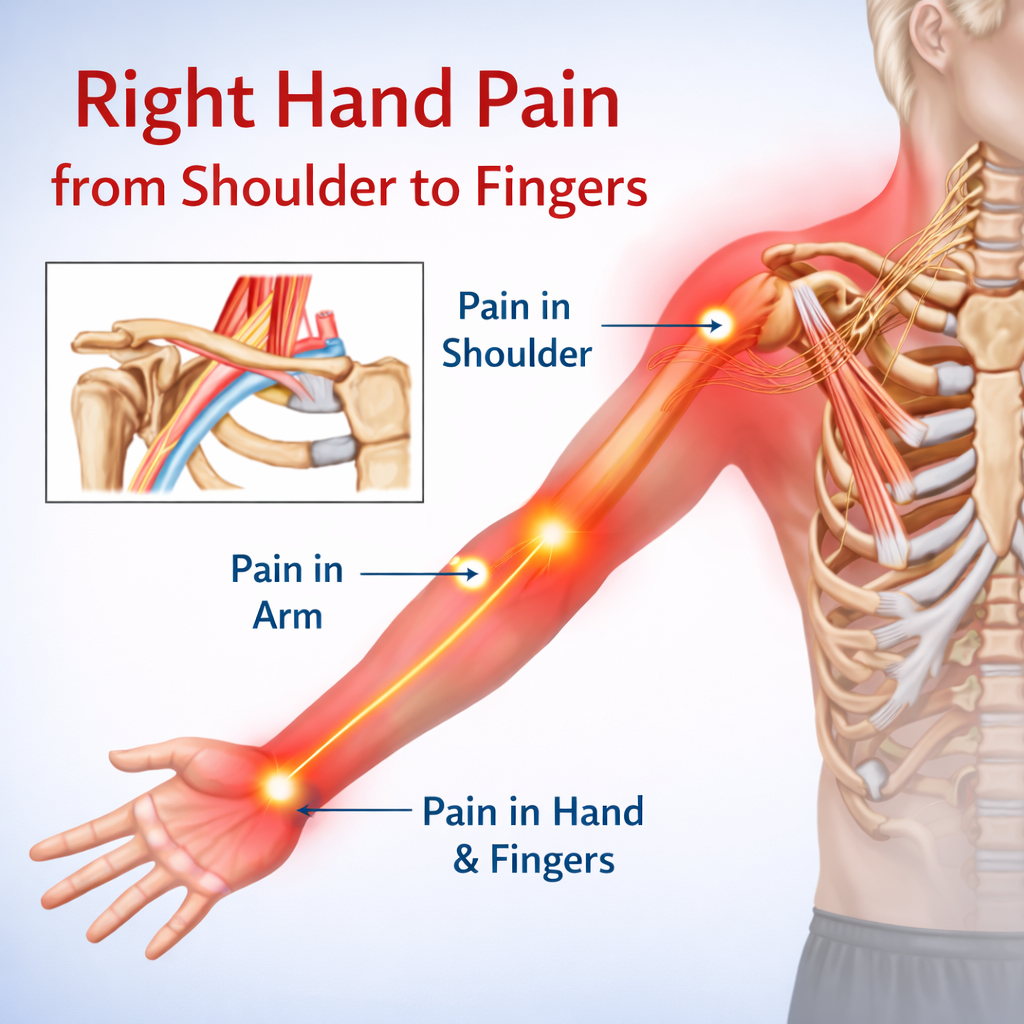
When right hand pain from shoulder to fingers occurs, it often suggests that a nerve or surrounding structure is being compressed or irritated. This type of shoulder pain radiating to fingers can disrupt everyday activities such as dressing, cooking, or sleeping. Identifying the cause early helps restore normal arm function and prevent long-term complications.
Common Causes of Right Shoulder to Finger Pain
Cervical Radiculopathy (Pinched Nerve in Neck)
Cervical Radiculopathy occurs when a nerve root in the cervical spine becomes compressed. A pinched nerve in the neck may develop due to herniated discs, bone spurs, or age-related degeneration.
Thoracic Outlet Syndrome (TOS)
Thoracic outlet syndrome occurs when nerves or blood vessels between the collarbone and the first rib become compressed.
Common thoracic outlet syndrome symptoms include arm pain, numbness, tingling, and weakness extending from the shoulder down to the fingers.
Rotator Cuff Injury or Tear
A Rotator Cuff Injury affects the group of muscles and tendons that stabilize the shoulder joint.
Common rotator cuff tear symptoms include shoulder weakness, limited mobility, and pain that may extend from the shoulder down the arm.
Carpal Tunnel Syndrome with Shoulder Involvement
Carpal Tunnel Syndrome is typically associated with wrist and hand problems, but it can indirectly affect the shoulder.
When the median nerve in the wrist becomes compressed, individuals often adjust how they use their arm.
Cubital Tunnel Syndrome (Ulnar Nerve)
Cubital tunnel syndrome occurs when the ulnar nerve becomes compressed near the elbow.
This condition may cause numbness, weakness, and pain that travels along the arm.
Brachial Plexus Injury
The brachial plexus is a network of nerves connecting the spinal cord to the shoulder, arm, and hand.
A brachial plexus injury often results from trauma such as falls or accidents.
Frozen Shoulder (Adhesive Capsulitis)
Frozen Shoulder, also known as adhesive capsulitis, causes stiffness and severe restriction of shoulder movement.
Common frozen shoulder symptoms include persistent aching and reduced range of motion.
Cervical Spondylosis
Cervical spondylosis refers to age-related wear and tear affecting the discs and joints in the neck.
Typical cervical spondylosis symptoms include neck stiffness, nerve compression, and radiating arm pain.
Heart-Related Causes (Referred Pain)
In some situations, arm pain may be related to heart problems. Although heart attack pain is commonly associated with the left arm, it can also affect the right arm.
Heart attack arm pain may appear alongside chest pressure, nausea, shortness of breath, or jaw discomfort. Immediate medical attention is necessary if these symptoms occur.
Symptoms of Right Shoulder to Finger Pain
Pain Characteristics and Patterns
Pain may vary depending on the underlying condition. Some individuals experience a dull ache, while others report sharp or burning sensations. The discomfort may worsen during arm movement or physical activity.
Numbness and Tingling
Nerve compression often produces tingling or numbness in the fingers. This sensation, frequently described as “pins and needles,” is common in conditions involving nerve irritation.
Weakness and Grip Problems
Muscle weakness can accompany radiating arm pain. Reduced grip strength may make everyday tasks such as holding objects or lifting items more difficult.
Color and Temperature Changes
Certain conditions, particularly vascular compression disorders like thoracic outlet syndrome, may cause swelling, discoloration, or temperature changes in the arm or hand.
Diagnosing Right Shoulder to Finger Pain
Physical Examination and Medical History
Doctors begin the diagnosis of shoulder pain by reviewing symptoms and medical history. A physical examination helps identify tenderness, restricted motion, and potential nerve involvement.
Imaging Studies (X-ray, MRI, CT Scan)
Imaging tests provide a clearer view of internal structures. X-rays can detect fractures or bone spurs, while MRI and CT scans reveal soft-tissue injuries such as disc herniation or Rotator Cuff Injury.
Nerve Conduction Studies and EMG
When nerve damage is suspected, physicians may use nerve conduction studies or electromyography (EMG). These tests evaluate electrical signals in muscles and nerves to identify areas of compression or dysfunction.
Treatment Options for Shoulder to Finger Pain
Conservative Treatments
Most cases respond well to non-surgical treatments. The RICE method rest, ice, compression, and elevation is commonly recommended after injuries to reduce inflammation and pain.
Physical Therapy and Rehabilitation
Physical therapy for nerve pain helps restore mobility and strength. Targeted exercises can improve posture, flexibility, and joint stability, reducing pressure on affected nerves.
Medications for Pain Relief
Over-the-counter medications such as ibuprofen or acetaminophen may relieve mild pain. For persistent inflammation, physicians may prescribe stronger medications or corticosteroid injections.
Surgical Interventions (When Necessary)
Surgery is considered when conservative treatments fail. Procedures may involve nerve decompression, Rotator Cuff Injury repair, or other corrective interventions to restore normal function.
Exercises and Stretches for Relief
Gentle stretching exercises can help relieve tension and improve mobility. The crossover arm stretch involves pulling the affected arm across the chest and holding it for about 30 seconds.
A triceps stretch can be performed by raising the elbow overhead and supporting it with the opposite hand. Another helpful stretch involves clasping both hands behind the back and lifting them gently to open the chest.
When to Seek Immediate Medical Attention
Immediate medical care is necessary if arm pain occurs with chest pressure, breathing difficulty, nausea, or jaw pain, as these symptoms may indicate a heart attack.
Emergency care is also required for injuries involving visible deformities, severe bleeding, or sudden intense pain following trauma.
Prevention Tips for Shoulder and Hand Pain
Maintaining good posture helps reduce stress on shoulder and arm muscles. Warming up before physical activity and avoiding repetitive strain can also prevent injuries.
Taking regular breaks during repetitive tasks and strengthening shoulder muscles may help prevent shoulder pain and reduce the risk of chronic arm discomfort.
FAQs About Right Hand Pain from Shoulder to Fingers
This often indicates nerve irritation or compression somewhere along the nerve pathway from the neck to the hand.
Persistent right hand pain from shoulder to fingers should be evaluated by a healthcare professional, especially if it includes numbness or weakness.
Several nerves may be involved, including those in the cervical spine and the brachial plexus.
Yes. A pinched nerve neck condition such as Cervical Radiculopathy frequently causes pain and tingling extending into the fingers.
Nerve pain is often described as burning, electric, or tingling and may occur alongside numbness or weakness.
Doctors rely on imaging tests and nerve studies to confirm the diagnosis of shoulder pain and determine the exact cause.


