




A person may notice discomfort in the chest during routine work. After some time, the same pain spreads toward the upper back. It may feel like pressure, a dull ache, or sharp pain between the shoulder blades. Situations like this lead many people to worry. When chest and back pain appear together, the cause is not always obvious. Pain in these areas may come from muscles, joints, nerves, organs in the chest, or digestive structures. Some causes are mild, such as a strained muscle. Others require quick medical attention. Understanding common chest and back pain causes people to respond in the right way.
Understanding Chest and Back Pain Together
When chest and back pain occur together, the explanation often relates to shared nerve pathways. The ribs connect the spine to the front of the chest. Nerves travel around the rib cage and carry signals from muscles, joints, and organs. A problem in the thoracic spine can produce upper back and chest pain because nerves travel around the chest wall. Digestive irritation may also create pain that spreads toward the back. Because of these connections, the exact location of pain does not always identify the cause.
10 Common Causes of Chest and Back Pain
Muscle Strain and Overuse
A muscle strain is a frequent cause of chest and back discomfort. It may happen after lifting heavy objects, sudden twisting, or long periods of poor posture. Pain from muscle strain usually increases with movement or deep breathing. The area may feel sore when touched.
Costochondritis (Rib Cage Inflammation)
Costochondritis refers to inflammation of cartilage where the ribs connect to the breastbone. Pain appears near the chest wall and may spread toward the back because the ribs connect to the spine. Tenderness often appears when pressure is applied to the affected joint.
Thoracic Spine Problems
The thoracic spine sits in the middle part of the back. Problems in this region can produce thoracic spine pain that wraps around the ribs. A herniated disc in the thoracic spine may press on nearby nerves. This pressure can cause discomfort that feels like it comes from the chest.
Heart-Related Conditions
Heart problems may cause cardiac chest pain. This pain often feels like pressure or heaviness in the chest. In some cases, the pain spreads toward the back, shoulders, or arms. Other symptoms may include sweating, nausea, or shortness of breath.
Pulmonary (Lung) Conditions
Certain lung conditions can produce pain across the chest and back.
Pulmonary Embolism
A pulmonary embolism occurs when a blood clot blocks a blood vessel in the lungs. PE symptoms may include sudden chest pain, breathing difficulty, and pain that worsens with inhalation. Back pain may also occur in some cases.
Aortic Dissection
An aortic dissection occurs when the inner layer of the aorta tears. This condition may produce sudden, severe chest pain that spreads toward the upper back. Immediate medical treatment is required.
Gastroesophageal Reflux Disease (GERD)
Gastroesophageal Reflux Disease develops when stomach acid moves into the esophagus. This acid irritation can cause burning chest discomfort. The pain sometimes spreads toward the back and may worsen after meals.
Peptic Ulcer Disease
Peptic Ulcer Disease involves sores in the lining of the stomach or upper intestine. Pain may appear in the chest or upper abdomen and travel toward the back. Symptoms often increase when the stomach remains empty.
Pancreatitis
Pancreatitis refers to inflammation of the pancreas. Pain often begins in the upper abdomen and spreads toward the back. Some people describe a band-like ache across the upper body.
Shingles (Herpes Zoster)
Shingles occurs when a virus affects nerve pathways. Pain often begins before a skin rash appears. The discomfort may follow a narrow band along the chest or back.
Diagnostic Approach for Chest and Back Pain
Medical History and Physical Exam
The evaluation begins with questions about the symptoms. Doctors ask when the pain started, where it spreads, and what triggers it.
Laboratory Tests
Blood tests may detect infection, inflammation, or markers related to heart injury.
Imaging Studies
Imaging tests help identify structural problems. X-rays may show rib or spine changes. MRI scans reveal disc or nerve issues. CT scans may help evaluate internal organs or blood vessels.
Treatment Options Based on Cause
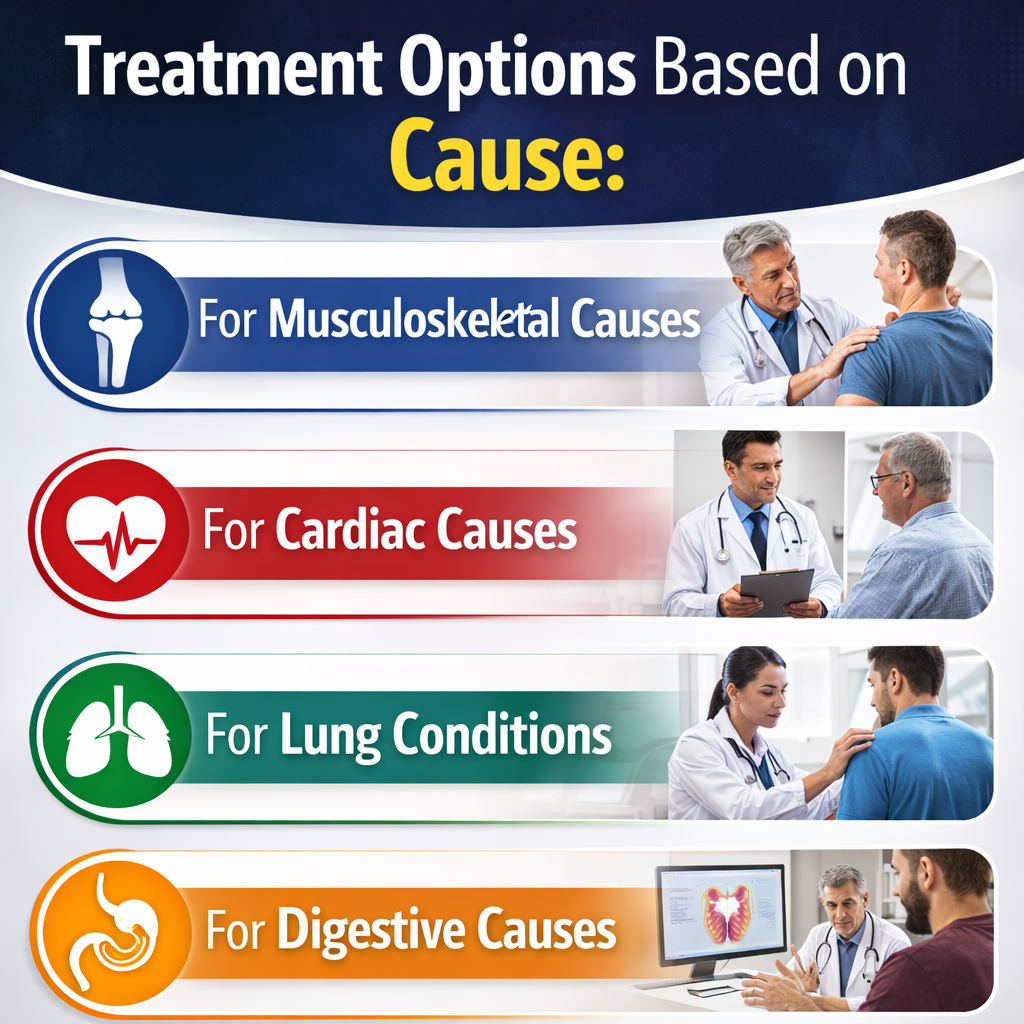
For Musculoskeletal Causes
Muscle strain or thoracic spine problems often improve with rest, physical therapy, and posture correction.
For Cardiac Causes
Heart conditions require immediate medical treatment.
For Lung Conditions
Lung problems such as pulmonary embolism require emergency care.
For Digestive Causes
Digestive problems such as Gastroesophageal Reflux Disease or Peptic Ulcer Disease may improve with medication and dietary adjustments.
Advanced Pain Management at Alleviate Pain Clinic
Persistent chest and back pain related to musculoskeletal causes may require structured treatment. Evaluation focuses on the thoracic spine, muscle strain, and nerve irritation. Treatment may include physical therapy, posture training, a
Prevention Strategies
Certain habits reduce the risk of pain in the chest and back. Maintain proper posture during sitting and standing. Lift objects using correct body mechanics. Strengthen back muscles through regular exercise. Balanced nutrition and physical activity also support heart and digestive health.
When to See a Pain Specialist
Seek medical care if pain becomes severe or persistent. Immediate evaluation is necessary when chest pain occurs with shortness of breath, fainting, or sweating. Pain that spreads to the arm, jaw, or upper back should also receive medical attention.
Why Choose Alleviate Pain Clinic?
People with unexplained chest and back pain often need careful evaluation to identify the cause. Assessment may include examination of the spine, posture, and nerve pathways. Treatment focuses on identifying the source of pain and supporting recovery through targeted care.
Frequently Asked Questions (FAQs)
No. Muscle strain or costochondritis may cause chest and back pain together, though serious conditions must be ruled out.
Cardiac chest pain often feels like pressure in the chest with symptoms such as sweating, nausea, or shortness of breath.
Yes. Anxiety may lead to muscle tension that causes discomfort across the chest and upper back.
Muscle strain, rib inflammation, or lung conditions may cause upper back and chest pain during breathing.
Yes. Gastroesophageal Reflux Disease can create burning chest discomfort that spreads toward the back.
Go to the ER if pain is severe, sudden, or accompanied by breathing difficulty, fainting, or sweating.
Yes. A herniated disc in the thoracic spine may compress nerves and create pain that travels toward the chest.


