




Key Highlights
- A spinal tumor is a growth inside or around the spine
- Different types of spinal tumors depend on location and behaviour
- Some tumors stay harmless, others need treatment
- Symptoms may begin with unusual back pain
- Diagnosis uses scans and nerve testing
- Treatment may include monitoring or spinal tumor surgery
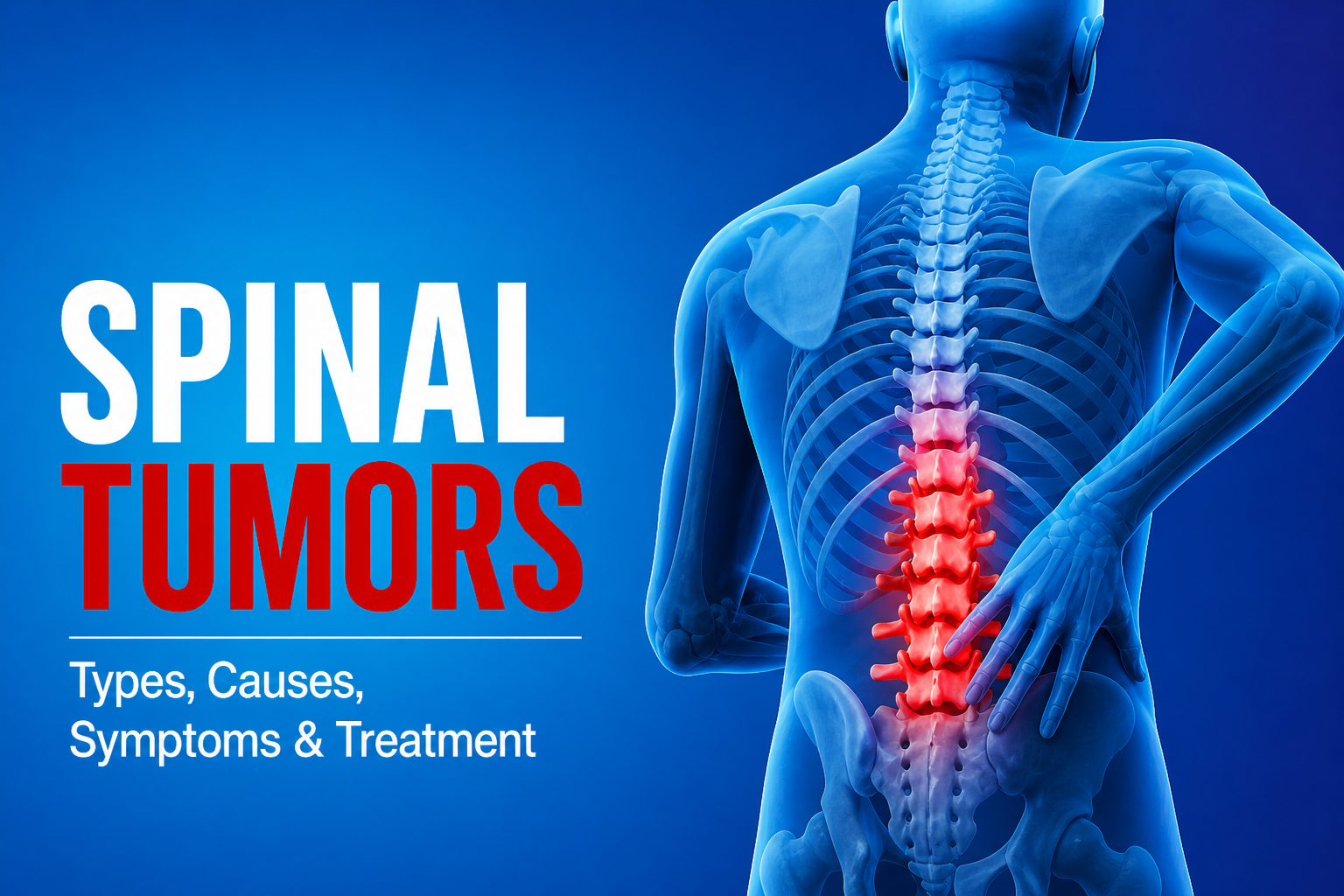
Back pain is common. Most people ignore it at least once. But sometimes it behaves differently. The pain does not link to movement. It does not settle with rest. It may even show up at night without a clear reason. That is where doubt starts. Not fear, just a sense that something feels off. In rare cases, this pattern can relate to a spinal tumor, though many people with back pain never have one.
What Is a Spinal Tumor?
A spinal tumor means abnormal cells grow in or near the spine. People often expect a clear sign or sudden pain. That is not how it usually starts. The change is often slow. The spine has limited space, so even a small growth can press on nearby nerves. The problem is not only the tumor. It is how it affects movement, sensation, and balance over time.
Types of Spinal Tumors
Spinal tumors are grouped by where they sit and how they behave.
By Location: Intramedullary, Intradural-Extramedullary, Extradural
Location changes the way symptoms appear.
- Intramedullary tumors grow inside the spinal cord.
- Intradural extramedullary tumors sit inside the covering but outside the cord.
- Extradural tumors form outside the covering, often in bone
The term intradural extramedullary matters because these tumors press on the cord instead of growing inside it.
By Nature: Benign vs. Malignant Spinal Tumors
Some tumors grow slowly and stay local. Others grow faster and may spread. The nature of the tumor often decides how urgent treatment becomes.
Causes and Risk Factors of Spinal Tumors
There is no single clear cause for a spinal tumor.
Primary Cancers That Spread to the Spine
Some tumors start in other organs and later spread to the spine. This happens more often than people expect.
Environmental and Lifestyle Factors
Certain exposures over time may play a role, though the link is not always clear.
Immune System Conditions
The way the body controls abnormal cells can change. This may affect how tumors develop.
Symptoms of Spinal Tumors
The spinal tumor symptoms often begin subtly.
Early Warning Signs
- Pain that does not improve with rest
- Pain that feels worse at night
- Discomfort not linked to activity
These signs are easy to ignore because they do not feel severe at first.
Progressive Neurological Symptoms
As pressure builds, changes may appear:
- Weakness in arms or legs
- Tingling or numbness
- Reduced control in movement
Spinal Cord Compression Symptoms
When pressure increases, cord compression signs may show:
- Difficulty walking
- Loss of balance
- Changes in bladder or bowel control
Symptoms by Tumor Location
Symptoms depend on where the tumor sits. Upper spine issues affect arms. Lower spine issues affect legs and walking.
Diagnosing Spinal Tumors
Diagnosis builds step by step.
Medical History and Neurological Exam
Doctors study how symptoms started and how they changed. A neurological exam checks strength, reflexes, and sensation.
MRI of the Spine (Gold Standard)
MRI gives the clearest view of a spinal tumor. It shows soft tissue and the exact location.
CT Scan and X-Ray
These tests show bone changes and support the findings.
Biopsy and Histological Analysis
In some cases, tissue is tested to confirm the type of tumor.
Treatment Options for Spinal Tumors
Spinal tumor treatment depends on symptoms and tumor behaviour.
Some tumors are watched over time. Others need treatment.
Common options include:
- Medication for pain or swelling
- Radiation in selected cases
- Spinal tumor surgery when nerves or stability are affected
Surgery is considered when symptoms begin to interfere with daily life.
Prognosis and Recovery
The spinal tumor prognosis varies a lot. Some people recover well, especially with early detection. Others may take longer if nerves are involved. Recovery often moves slowly. The focus stays on movement, comfort, and daily function.
Pain Management at Alleviate Pain Clinic
Pain from spinal conditions often needs a simple, steady approach. Treatment usually focuses on how pain behaves during movement and rest. The aim is to reduce discomfort and improve day-to-day activity without forcing the body.


