




Key Highlights
- Cervical lymphadenopathy means swelling of the neck lymph nodes
- Lymph nodes support the immune system through their filtering role
- Pain, tenderness, and small lumps are common signs
- Most swollen lymph node symptoms come from infections
- Some cases need evaluation when swelling does not settle
- Proper lymph node diagnosis helps rule out serious causes
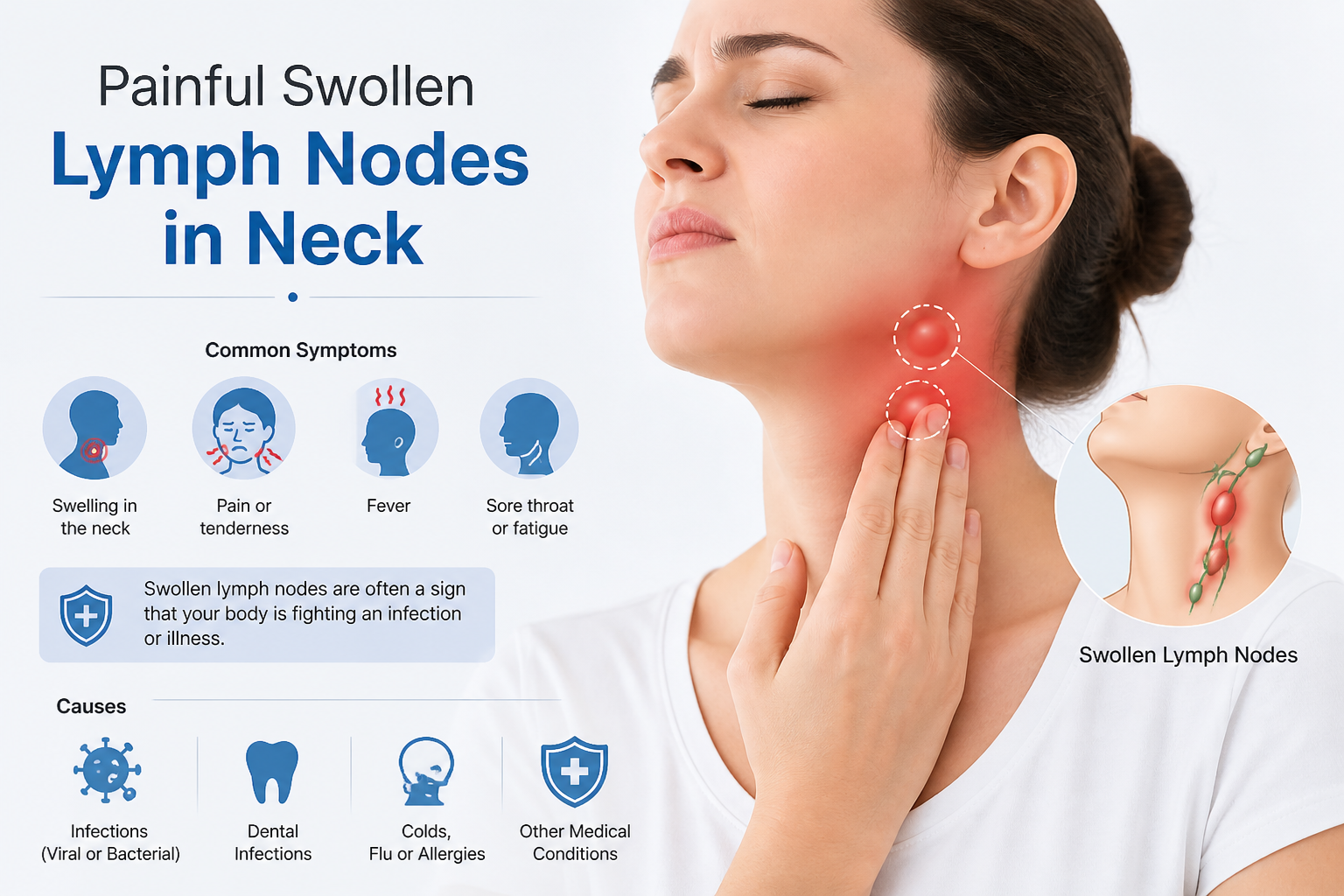
It often comes up in a quiet way. You touch your neck without thinking and notice something small that was not there before. It feels like a pea under the skin. Then, over a day or two, it becomes sore. At that point, it starts to bother you. Not because of the size, but because it feels unfamiliar. This is how painful swollen lymph nodes in the neck usually come to attention. The body reacts first. The mind catches up later.
What Are Lymph Nodes and What Do They Do?
Before thinking about swelling, it helps to pause and understand what lymph nodes are in simple terms. They are small structures placed across the body, often in clusters. You can feel them in the neck because they sit closer to the surface there. The lymph nodes function as checkpoints. They filter unwanted material such as bacteria and viruses. When they become active, they increase in size. That increase is not random. It is a response. So swelling is not always a problem. It is often a sign that something is being handled.
Understanding Lymph Node Swelling (Lymphadenopathy)
When these nodes enlarge, the condition is called cervical lymphadenopathy if it happens in the neck. In most cases, this is temporary. The body reacts to an infection, the nodes do their job, and then things settle down. Still, the way a node feels matters. A soft and tender node usually points to infection. A firm or persistent one may need a closer look. It is not about fear. It is about paying attention.
Symptoms of Swollen Lymph Nodes in the Neck
The swollen lymph node symptoms do not stay hidden for long.
Visible or Palpable Lump in the Neck
You may feel a small lump while touching your neck or even while turning your head.
Tenderness and Pain
Pain usually shows up when the node reacts to infection.
Warmth and Redness Overlying the Node
Sometimes the skin over the node feels warmer than usual.
Difficulty Swallowing
If the swelling sits closer to the throat, swallowing may feel uncomfortable.
Associated with Fever, Fatigue, and Night Sweats
The body may feel tired. Fever can come and go.
Sore Throat and Runny Nose (Infection Signs)
A common pattern includes cold or throat symptoms along with swollen nodes.
Common Causes of Painful Swollen Lymph Nodes in the Neck
Most cases fall into a few familiar categories.
Infectious Causes (Most Common)
- Viral infections like cold or flu
- Throat infections
- Dental issues
Non-Infectious Causes
- Immune system reactions
- Inflammatory conditions
Serious / Concerning Causes
In rare cases, a firm, persistent lymph node may need evaluation.
Red Flags: When Swollen Lymph Nodes Are Dangerous
Night Sweats and Fever Without Infection
If these appear without infection, further evaluation is needed.
- Nodes increasing in size
- Hard or fixed lumps
- Ongoing fatigue or weight loss
Diagnosing Swollen Lymph Nodes
A proper lymph node diagnosis is based on multiple factors.
Physical Examination
The doctor checks size, texture, and movement.
Imaging Studies
Ultrasound and scans help assess structure.
Laboratory Tests
Blood tests identify infection or inflammation.
Treatment of Painful Swollen Lymph Nodes
Treatment depends on the cause. Infections often resolve on their own. Persistent swelling requires further evaluation.
Prevention
- Maintain oral and throat health
- Do not ignore repeated infections
- Allow proper recovery time
- Avoid irritating swollen areas
Why Choose Alleviate Pain Clinic for Neck Pain & Lymph Node Issues?
Care begins with understanding symptoms and identifying whether the swelling is reactive or requires deeper evaluation.


