



A person finishes a short walk and sits down for a moment. The knee feels sore and slightly warm. Another person stands after a long day at work and feels stiffness around the joint. Situations like these happen often. Knees carry body weight through the entire day, so even a small strain can lead to discomfort.
Some people rest the joint or use ice. Others try support braces. Another simple option involves knee patches for pain relief. These patches stick to the skin and release medicine or herbal compounds slowly. Many people prefer them because they are easy to use and do not require complicated preparation.
These knee pain patches provide localized relief. The medicine stays close to the painful area rather than spreading through the whole body.
Introduction: Understanding Knee Pain Patches
Knee patches work as topical treatments. A thin medicated layer stays in contact with the skin for several hours. During this time, the ingredients move gradually into the surface tissues. Some patches contain cooling agents that create a cold sensation. Others use warming ingredients to relax muscles around the joint. Certain patches contain mild pain relievers or numbing compounds.
Many people with arthritis, mild ligament strain, or overuse discomfort use these products because they provide temporary relief without oral medication.
How Knee Pain Patches Work
Most patches use a transdermal delivery method. The patch sticks to the skin and slowly releases active ingredients. These ingredients reach the tissue around the joint. The goal is simple. Reduce pain signals and relax surrounding muscles. Some patches rely on cooling compounds such as menthol. Others use warming agents like capsaicin. Certain patches include numbing medication such as lidocaine.Because the treatment stays close to the knee, many people find it easier to manage mild pain during daily activities.
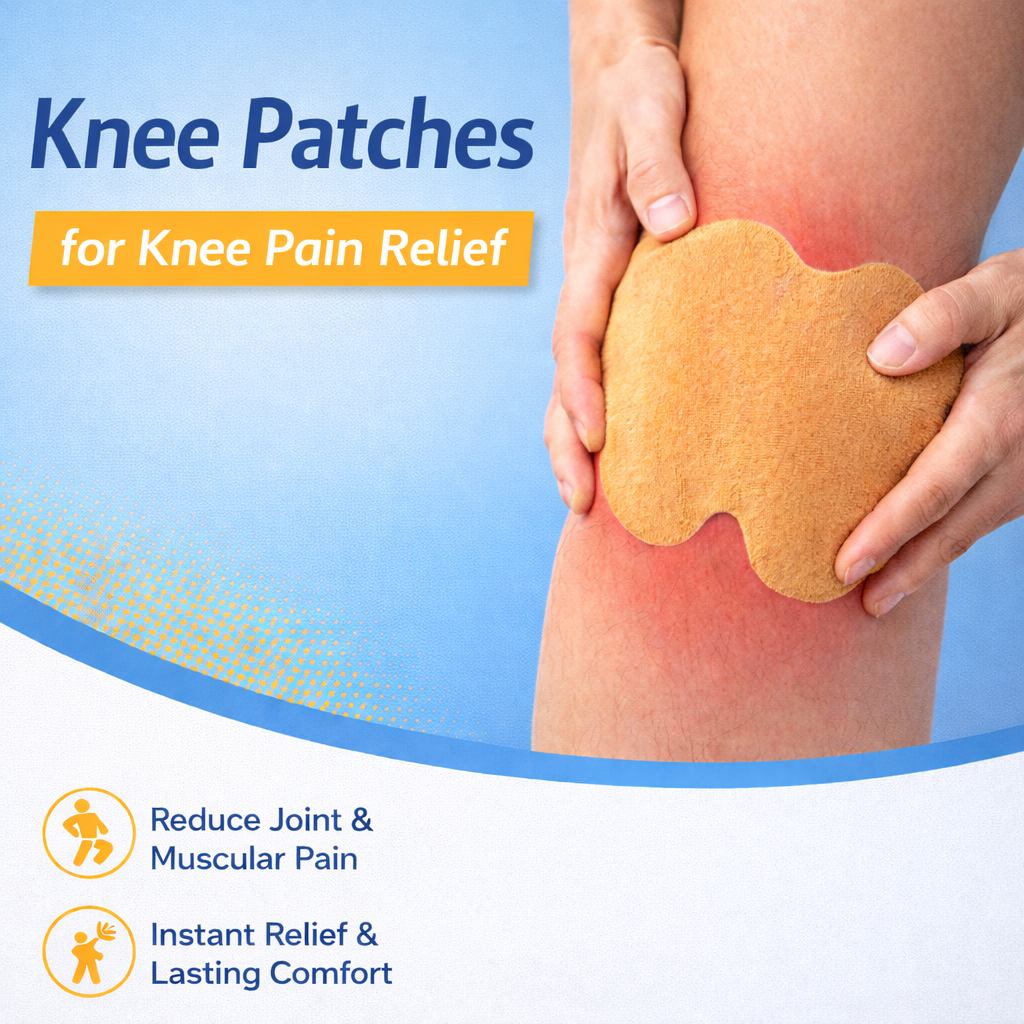
Top 10 Best Knee Patches for Pain Relief
Several types of knee pain patches are available today. Each type uses a slightly different ingredient or method.
Salonpas Pain Relief Patch (Lidocaine)
Salonpas patches contain a local anesthetic. The lidocaine knee patch reduces pain signals in the affected area. Many people use this type when knee discomfort interferes with walking or standing.
Absorbine Jr Pain-Relieving Knee Patch
Absorbine Jr patches use menthol and herbal ingredients that create a cooling sensation. Many individuals prefer them for muscle soreness or joint stiffness.
Flexiknee Warming Herbal Patches (12-Hour)
These herbal patches rely on warming compounds that improve circulation around the knee. The heat sensation may relax tight muscles.
Aspercreme Lidocaine Pain Relief Patches
Aspercreme patches also contain lidocaine. This ingredient blocks pain signals in the nerves near the skin surface.
Icy Hot Medicated Patches
Icy Hot patches combine cooling and warming ingredients. The initial cooling sensation often turns into mild warmth after several minutes.
Walgreens Capsaicin Hot Patch
Capsaicin patches use a compound derived from chili peppers. This ingredient produces warmth that can distract the brain from pain signals.
Blue-Emu Maximum Arthritis Pain Relief Patch
These arthritis patches often contain soothing compounds designed for joint discomfort associated with arthritis.
Tiger Balm Pain-Relieving Patch
Tiger Balm patches use herbal ingredients that produce a warming effect. Many people use them for muscle tension around the knee.
Maengve 40-Count Joint Pain Relief Patches
These patches combine herbal compounds with adhesive layers that stay in place for several hours.
Re-Lieved Pain Relief Patches for Knees
These patches aim to provide gradual relief during daily activities such as walking or standing.
How to Use Knee Pain Patches Correctly
Correct use improves the effect of knee pain patches. Many people wonder how to apply patches properly.
Step-by-Step Application Guide
- Clean and dry the skin around the knee.
- Remove the protective layer from the patch.
- Place the patch over the painful area.
- Press gently so it sticks evenly.
Dos and Don’ts
- Use patches only on healthy skin.
- Avoid placing them over cuts or irritated areas.
- Wash your hands after handling medicated patches.
Who Should Use Knee Pain Patches?
Knee patches may help individuals with mild joint discomfort. Athletes sometimes use them after training sessions. Office workers may apply them after long hours of standing or walking. People with arthritis or minor ligament strain may also find temporary relief through topical patches. However, patches work best for mild or moderate discomfort rather than severe joint problems.
Potential Side Effects and Precautions
Although most patches remain safe for short use, patch side effects may occur in some individuals.
Possible reactions include:
- Mild skin redness
- Warm or burning sensation
- Skin irritation after removal
Potential Side Effects and Precautions
Although most patches remain safe for short use, patch side effects may occur in some individuals.
Possible reactions include:
- Mild skin redness
- Warm or burning sensation
- Skin irritation after removal
Can Patches Replace Medical Treatment?
Knee patches help reduce temporary pain, but they do not treat underlying joint damage.
Persistent knee pain may involve cartilage wear, ligament injury, or inflammation inside the joint. These problems often require professional evaluation. Patches can provide short-term relief, but they should not replace proper medical care when symptoms continue.
Advanced Knee Pain Treatments at Alleviate
PRP & Regenerative Therapies
PRP therapy knee treatment uses concentrated platelets from a patient’s blood. These platelets may support healing in injured tissue. This method falls under the field of regenerative medicine, which focuses on improving natural tissue repair.
Knee Injections & RFA
Doctors may also recommend knee injections to reduce inflammation in the joint. Another option involves radiofrequency ablation, a procedure that targets pain-carrying nerves to reduce chronic discomfort. These treatments address deeper causes of knee pain rather than only surface symptoms.
FAQs – Knee Pain Relief Patches
Many people experience temporary relief because the patch releases medication directly near the painful area.
Most patches remain active for several hours. Some products work for up to twelve hours.
Yes. Some people apply patches before sleep so the medication works during rest.
Arthritis patches containing anti-inflammatory or warming ingredients often help reduce joint stiffness.
Usage depends on the instructions of the specific patch. Many products recommend one or two patches daily.
Medical evaluation is important when knee pain persists, worsens, or interferes with normal movement.


