



The rhomboid muscles are located in the upper back and connect the shoulder blades to the spine and rib cage. They play an important role in maintaining posture and supporting movements such as pulling and rotating the torso. When these muscles become strained or overused, it can lead to rhomboid pain, commonly felt as shoulder blade pain between the spine and shoulder. This discomfort may range from a mild ache to sharp pain that interferes with daily activities. Early recognition and treatment can help prevent long-term stiffness and mobility problems.
What Are the Rhomboid Muscles
The rhomboid muscles consist of the rhomboid major and the rhomboid minor, which are part of the shoulder girdle. They pull back your shoulder blade while also lifting and rotating it during arm movements. These muscles play a critical role when you throw or pull objects and help stabilize your upper body during exercise. Without healthy rhomboids, it becomes difficult to move your arms overhead or maintain an upright sitting position.
Symptoms of Rhomboid Muscle Pain
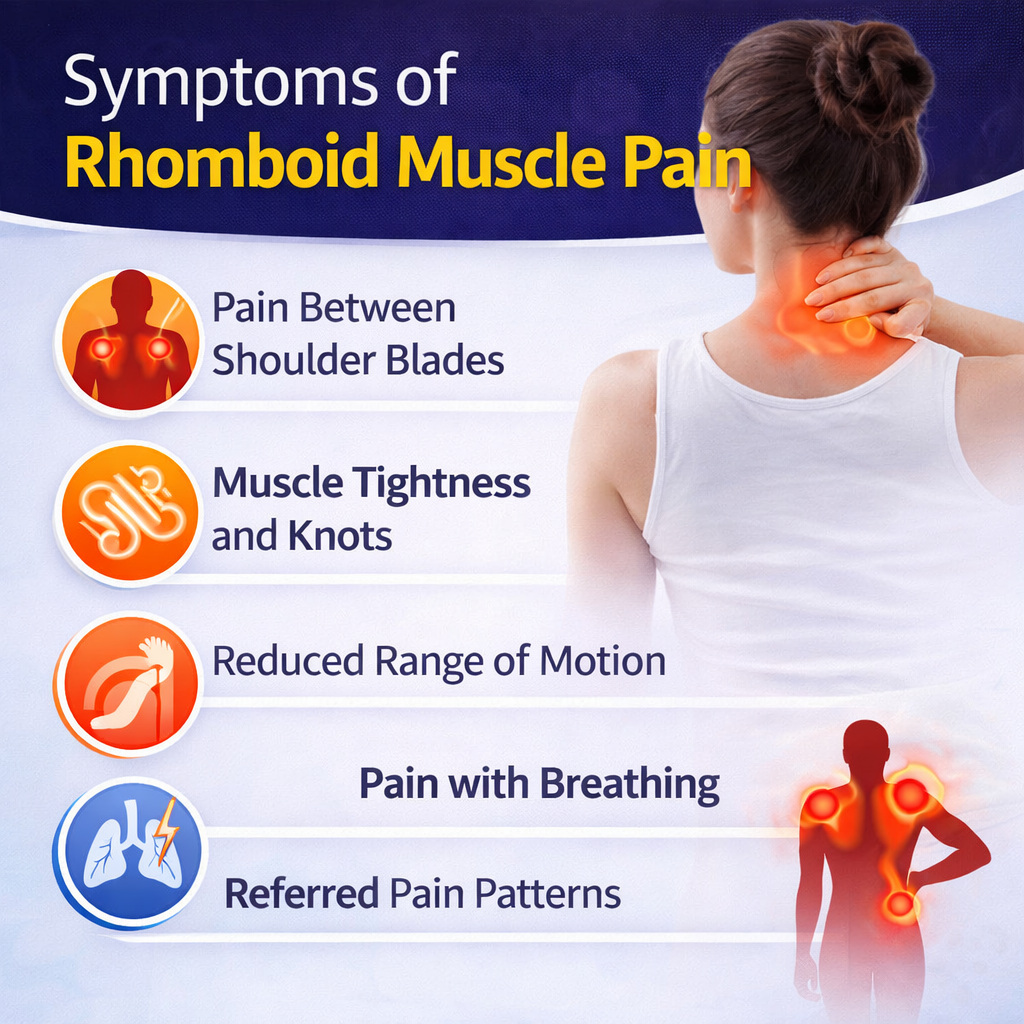
Recognizing rhomboid pain symptoms helps you address the problem before it worsens.
Pain Between Shoulder Blades
The most common symptom is interscapular pain, which is a dull sensation felt between the shoulder blades and often described as shoulder blade pain.
Muscle Tightness and Knots
You might feel rhomboid muscle knots or localized tightness and swelling in the upper back area. These trigger points can be very tender to the touch and cause a burning feeling.
Reduced Range of Motion
Shoulder blade stiffness often results in a loss of movement, making it hard to reach across your body or lift your arms. You may also hear a popping or grinding noise when moving your shoulder.
Pain with Breathing
Severe inflammation can also cause pain when taking deep breaths.
Referred Pain Patterns
Pain from the rhomboids can travel to the backs of the shoulders or down the arms. It can also be associated with structural issues in the rotator cuff or shoulder joint.
10 Common Causes of Rhomboid Pain
There are many causes of rhomboid pain ranging from daily habits to physical injuries, including muscle sprain and sports injuries.
Cause 1: Poor Posture
Sitting hunched at a computer for long periods is a leading cause of upper back discomfort and persistent shoulder blade pain.
Cause 2: Muscle Strain or Overuse
A rhomboid muscle strain or muscle sprain can happen from repetitive pulling motions or intense rowing during a workout.
Cause 3: Weak or Imbalanced Muscles
Having weak rhomboids forces these muscles to work harder than they should, which may result in chronic discomfort.
Cause 4: Thoracic Spine Problems
Issues with the thoracic spine, such as stiffness, can put extra pressure on the surrounding muscles.
Cause 5: Shoulder Blade Dysfunction
Scapular dyskinesis or abnormal shoulder blade movement, is often linked to chronic rhomboid pain and ongoing shoulder blade pain.
Cause 6: Sports Injuries
A sudden rhomboid strain can occur during tennis, golf, or other sports injuries that involve repetitive overhead movements.
Cause 7: Stress and Tension
Emotional stress can manifest as physical tension in the upper back, leading to rhomboid pain.
Cause 8: Sleeping Position
Sleeping on your side can compress the shoulder and strain the rhomboid muscles overnight.
Cause 9: Carrying Heavy Bags
Carrying heavy backpacks on just one shoulder creates muscle imbalance and may trigger Shoulder Blade Pain.
Cause 10: Underlying Medical Conditions
Conditions like osteoarthritis or rheumatoid arthritis can cause persistent inflammation in the upper back.
Diagnosing Rhomboid Pain
A doctor usually begins with a medical history and a physical examination to find the source of the pain.
Physical Examination
They will check for tenderness between your shoulder blades and test your shoulder strength and stability.
When Imaging Is Needed
Imaging is only needed if the pain lasts for months or if there is a suspected serious injury such as a fracture or a severe muscle sprain.
Treatment Options for Rhomboid Pain
Finding the right rhomboid pain treatment depends on the severity of the strain.
Immediate Relief Measures
The RICE method involving rest, ice, compression, and elevation is the first line of defense after an injury. You can use over-the-counter medications like ibuprofen or acetaminophen to manage pain and inflammation.
Physical Therapy and Manual Therapy
A therapist can teach you specific exercises to improve shoulder motion and build stability. Massage is an excellent tool for releasing muscle knots and improving circulation to the area.
Advanced Treatments at Alleviate Pain Clinic
If conservative care is not enough, Alleviate Pain Clinic offers nonsurgical interventional treatments. They specialize in regenerative medicine like Platelet Rich Plasma therapy and Prolotherapy to promote natural healing in damaged tissues.
Best Exercises for Rhomboid Pain Relief
Performing rhomboid exercises regularly can speed up recovery and prevent future flare-ups. Shoulder blade squeezes involve pulling your blades together and holding for several seconds. You can also try neck rotations or the side arm stretch to release tension in the surrounding muscles. Strengthening moves like bent-over rows help build the stability needed for a healthy upper back.
Posture Correction Strategies
Improving your posture involves sitting all the way back in your chair with your shoulders relaxed. Taking frequent breaks to move around and stretch is crucial if you work at a computer all day.
Prevention: How to Avoid Rhomboid Pain
Many patients experience meaningful improvements in pain and mobility after receiving injections. While these treatments do not cure Knee Osteoarthritis, they can significantly reduce symptoms and delay the need for joint replacement surgery.
The success of treatment depends on the severity of the joint condition and the overall health of the patient.
When to See a Doctor for Rhomboid Pain
See a doctor if your pain is severe or if you experience numbness and weakness in your arm. Persistent pain that lasts more than a few months requires a checkup to rule out structural problems.
Why Choose Alleviate Pain Clinic for Rhomboid Pain
Alleviate Pain Clinic is a leader in nonsurgical pain management in Bangalore. Their team of experts uses modern interventional techniques to help patients regain mobility without undergoing surgery. They focus on identifying the root cause of shoulder blade pain and rhomboid pain treatment to provide long-term relief.
Frequently Asked Questions
Mild strains heal in about three weeks, while serious injuries can take several months for full recovery.
A strain is likely if you feel tenderness, tightness, or knots between your shoulder blades after physical activity or sports injuries.
Yes slouching at a desk puts immense pressure on your upper back muscles, leading to chronic shoulder blade pain.
Resting the muscle and using ice packs followed by gentle stretching is the quickest way to find relief.
You should do both, as stretching restores motion while strengthening provides the stability needed to prevent reinjury.
Yes, massage can release muscle knots and improve blood flow, which helps the tissue heal faster.


