



Patellofemoral pain syndrome is a relatively common kind of knee disease that makes one feel pain around or behind the kneecap, particularly when loading the joint. It tends to afflict active individuals like runners and individuals with biomechanical imbalances. Prevention leads to early detection and adequate management to minimize discomfort and get back to the knee functions and avoid long-term stress on the joint without surgical intervention.
What Is Patellofemoral Pain Syndrome?
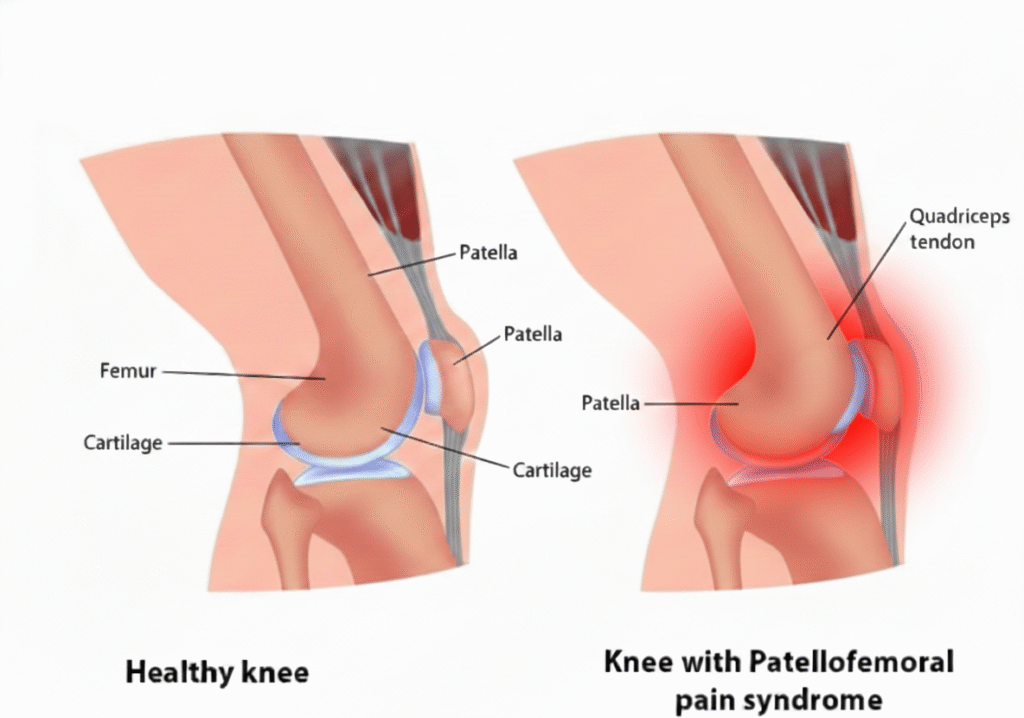
Patellofemoral pain syndrome is the maladjustment or stress between the kneecap and the femur. It occurs when the joint mechanics are altered, which provokes the nearby tissues to be irritated. Symptoms increase with stairs, squatting, or prolonged sitting, and the importance of precise diagnosis and early intervention is evident.
Why the Patellofemoral Joint is Important ?
The knee extension is essential as the patellofemoral joint increases the leverage of the quadriceps. Appropriate orientation provides easy movement during walks or climbing. Loss of alignment is a cause of stress that causes pain, decreased performance, and uneasiness in daily or sporting activities.
Common Symptoms of Patellofemoral Pain Syndrome
Following are the key symptoms.
- Dull or aching pain behind the kneecap
- Pain around or beneath the patella (kneecap)
- Crackling, grinding, or popping sounds when moving the knee
- Stiffness in the knee joint after periods of rest
- Increased pain after physical activity
- Pain that worsens after sitting for long periods
- Discomfort while climbing stairs, squatting, or standing up after sitting
Causes of Patellofemoral Pain Syndrome
Following are the causes for patellofemoral pain syndrome.
Muscle Imbalances
Pattellar alignment may be disrupted by weakness or tightness of the quadriceps, hamstrings, or hip muscles. Loss of muscular control alters change in patterns of movement, increasing joint stress. Specific therapy to cure these imbalances is essential to long-term symptom alleviation.
Excessive and Monotonous Stress
Knee loading through the repetition of running, jumping, or climbing may overload the tissues of the joints. Symptoms are frequently caused by a sudden change in the intensity or duration of activity. Overuse injuries are prevalent among athletes and those who have limited time to rest.
Poor Knee Alignment
Patellar tracking may be influenced by structural problems, including flat feet, over-pronation, or altered hip mechanics. Malalignment introduces friction in the joint, which causes chronic pain when an individual fails to correct it biomechanically.
Injury or Trauma
The kneecap or other related structures can be directly traumatized, affecting the joint mechanics. Even simple injuries can cause chronic pain if they do not heal. Early assessment can stop compensatory movements from exacerbating symptoms.
Risk Factors of the Patellofemoral Pain Syndrome
- High levels of physical activity or rapid increases in training intensity.
- Wearing improper or inadequate footwear.
- Obesity, which increases stress on the knee joints.
- History of previous knee injuries.
How Patellofemoral Pain Syndrome is Diagnosed ?
It is not a single test but a clinical assessment that is used to diagnose patellofemoral pain syndrome. This includes.
Physical Examination
Clinicians evaluate gait, posture, muscle tone, flexibility and patellar movement. Functional tests in squatting or step-downs are used to recreate symptoms and identify biomechanical factors.
Imaging Studies
Imaging is not necessarily a used procedure, but can be employed to eliminate structural abnormalities. To rule out cartilage damage or other joint pathology, X-rays or an MRI need to be conducted when the symptoms are not relieved or even get worse despite conservative care.
Treatment Options for Patellofemoral Pain Syndrome
The treatment options for Patellofemoral pain syndrome includes:
Activity Modification
Minimization of aggravating activities can enable the recovery of inflamed tissues. Partial rest, not full, is used to maintain conditioning and eliminate additional stress on the joints.
Exercise Therapy and Physiotherapy
Physiotherapy and knee strengthening exercises enhances flexibility, and neuromuscular control. Drills that address the quadriceps, hips, and core improve patella tracking and are at the core of successful treatment.
Pain Management Treatments
Treatment of Knee pain can incorporate medication, targeted injections, or modalities that are able to decrease inflammation and aid rehabilitation. Such interventions assist in the management of patellofemoral pain syndrome symptoms, as corrective therapy tackles the underlying causes.
Bracing and Taping
Short-term support in the form of knee bracing and taping is offered to enhance patellar alignment and to decrease the load. They are mostly used in combination with exercise and not as individual solutions.
Advanced Non‑Surgical Care
Regenerative therapies or image-guided injections are more sophisticated techniques that can be used to assist patients with long-lasting symptoms. These methods have a role in non-surgical tissue healing.
Can Patellofemoral Pain Syndrome Be Prevented?
Although it is not always avoidable, most of them can be circumvented by appropriate training, muscle conditioning, and biomechanical awareness. The initial intervention of knee discomfort eliminates the probability of long-lasting patellofemoral pain syndrome symptoms.
Prevention Tips
Slow changes in the activity, use of proper footwear, strength training, and flexibility exercises contribute to the balance of the joints. Treatment of minor pain at the initial stages will avoid the progression of patellofemoral pain in the long run.
Recovery Time and Prognosis
The recovery process depends on the level of severity, adherence, and predisposing factors. The majority of people heal using systematic attention and change in activity over multiple weeks to months.
What to Expect
Pain reduces slowly with a sad treatment and the improvement of functionality. With corrective measures and prevention measures ensured, the long-term outcomes are positive.
When to See a Pain Specialist
Seek help in case knee pains do not improve after weeks, if they aggravate, or restrict the ability to move freely. Premature specialist assessment eliminates the need for the course of action and unnecessary surgery for patellofemoral pain.
Why Choose the Alleviate Pain Clinic for Patellofemoral Pain Syndrome?
Alleviate Pain is a non-surgical knee pain clinic in Bangalore that provides personalized biomechanics and activity-specific care. Safe management of Patellofemoral Pain Syndrome is guaranteed by powerful diagnostics, rehabilitation initiatives, and evidence-based interventions.
Frequently Asked Questions (FAQs)
Patellofemoral pain syndrome is usually not serious but can become chronic if untreated. Early care helps prevent persistent pain, reduced activity levels, and secondary joint issues.
Mild cases may improve with rest and activity modification. However, structured patellofemoral pain syndrome treatment is often needed to correct mechanics and prevent recurrence.
Surgery is rarely required. Most patients recover with non-surgical care. Surgery for patellofemoral pain is considered only when conservative treatments fail, and structural abnormalities are present.
Improper or excessive exercise may worsen symptoms. Correctly prescribed exercises, however, are essential for recovery and improving joint mechanics.
Pain management treatments effectively reduce symptoms and support rehabilitation. When combined with corrective therapy, they significantly improve outcomes and functional recovery.


