




You are halfway through your second trimester. Your lower back already feels different. One evening, while adjusting pillows before sleep, you notice another discomfort. A dull ache at the base of your neck. By morning, it feels tight and slightly sore. Many women expect back pain in pregnancy. Fewer expect neck pain during pregnancy. Yet pregnancy neck pain is common. The body changes rapidly over a few months. Posture shifts. Hormones loosen joints. Sleep becomes lighter. All of this can contribute to discomfort in areas that once felt stable. Understanding why this happens and what helps can make the journey more manageable.
Understanding Neck Pain in Pregnancy
Neck pain in pregnancy does not happen without reason. The body adapts to support a growing baby. That adaptation affects alignment from head to pelvis. When posture changes below, the neck often compensates above. During pregnancy, ligaments soften due to hormonal shifts. Muscles work harder to maintain balance. The upper back and neck absorb part of that strain. If daily posture remains poor or sleep is disrupted, tension builds gradually.
Many women describe the discomfort as a stiff or heavy feeling in the neck and shoulders rather than sharp pain. The pattern often changes as pregnancy progresses.
Common Causes of Neck Pain During Pregnancy
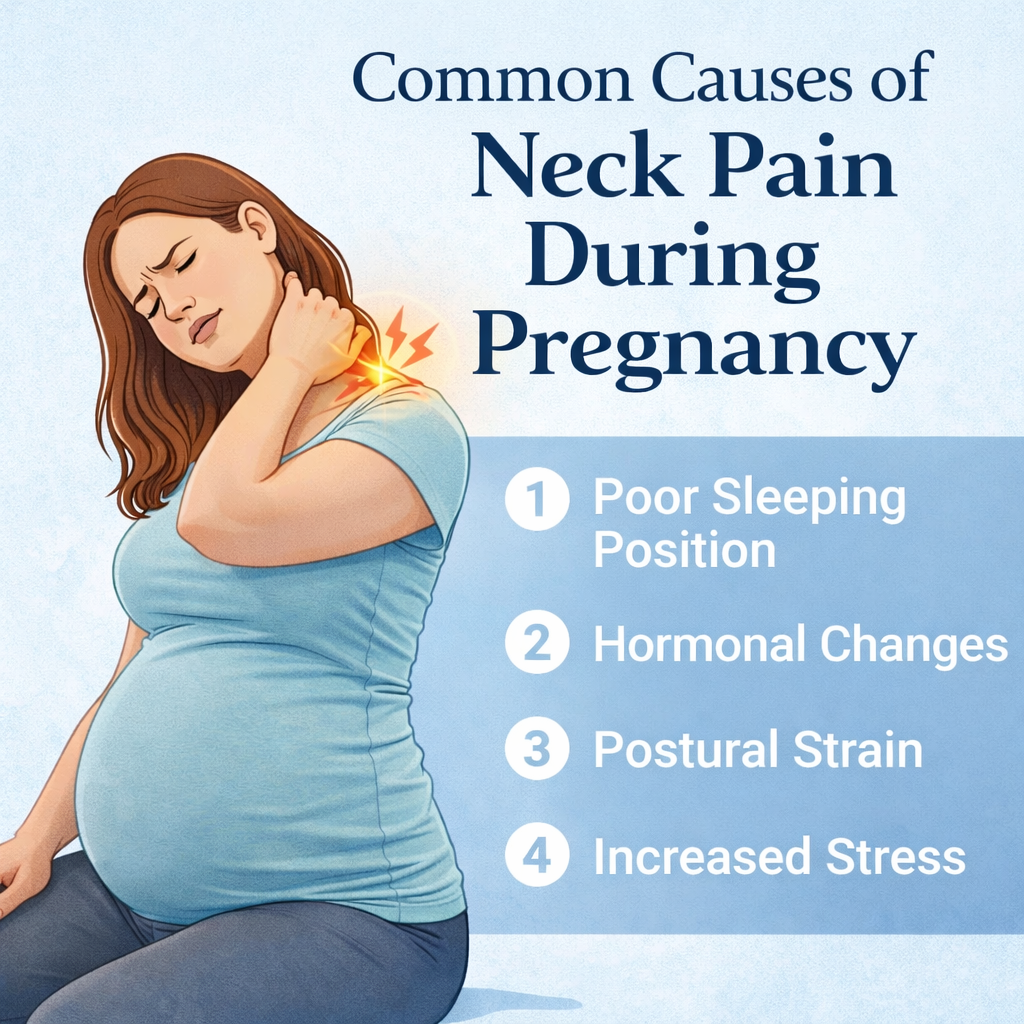
The causes of neck pain during pregnancy usually combine physical and hormonal factors rather than a single injury.
Hormonal Changes
Pregnancy hormones, such as relaxin, loosen ligaments to prepare the body for childbirth. This increased flexibility can reduce joint stability. When joints feel less supported, muscles tighten to compensate. That tension often settles around the neck and shoulders.
Postural Changes & Forward Head Posture
As the abdomen grows, the center of gravity shifts forward. Many women lean slightly backward to balance. This adjustment affects the upper spine. Forward head posture becomes more common. Over time, it leads to upper back neck pain pregnant women frequently report.
Weight Gain & Breast Size Increase
Natural weight gain and breast enlargement place additional load on the upper spine. The neck must support that load daily. Prolonged sitting or device use can worsen strain.
Stress & Muscle Tension
Pregnancy brings emotional changes along with physical ones. Stress may increase muscle tension, especially around the shoulders. This tension contributes to pregnancy neck pain that feels tight or aching.
Poor Sleep Position
Sleep becomes challenging as pregnancy advances. The wrong pillow height or unsupported neck angle can cause stiffness in the morning. A poor sleeping position for neck pain often worsens symptoms overnight.
Carrying Older Children
Mothers who lift toddlers repeatedly may strain neck and shoulder muscles. Repeated lifting without proper alignment increases tension.
Thoracic Outlet Syndrome & Carpal Tunnel
In some cases, nerve compression contributes to discomfort. Thoracic outlet syndrome pregnancy cases occur when nerves or blood vessels become compressed between the collarbone and first rib. Swelling during pregnancy may increase pressure in this area. This may lead to neck pain, shoulder discomfort, and even tingling hands, as well as pregnancy symptoms.
Symptoms of Neck Pain During Pregnancy
Neck Stiffness & Limited Range of Motion
A stiff neck pregnancy pattern often appears after sleep or prolonged sitting. Turning the head fully may feel restricted. Muscle tightness remains common.
Shoulder & Upper Back Pain
Many women report shoulder pain during pregnancy alongside neck discomfort. Upper back neck pain, pregnant patients often describe it as spreading between the shoulder blades.
Headaches
Tension headaches may develop when neck muscles tighten. Pain may begin at the base of the skull and move forward.
Numbness or Tingling in Hands
Fluid retention during pregnancy can compress nerves. Tingling hands, pregnancy symptoms, and sometimes neck or shoulder tension appear.
Pain Worsening at Night
Discomfort may intensify at night due to prolonged positioning and reduced support.
Pain by Trimester: What to Expect
In early pregnancy, hormonal changes may cause mild muscle tension. During the second trimester, posture changes become more visible. Weight shifts forward, and strain increases in the upper spine.
In the third trimester, sleep disturbance and abdominal growth may worsen symptoms. Some women feel increased stiffness in the neck and upper back during the final months. Not every woman experiences these patterns, but they are common.
When to See a Doctor for Pregnancy Neck Pain
Mild discomfort that improves with rest usually does not require urgent care. However, certain symptoms need medical evaluation. Seek help if pain becomes severe, if numbness spreads to the arms, if weakness appears, or if headaches become persistent. Symptoms such as visual changes or sustained tingling in the hands during pregnancy should not be ignored.
Safe Treatment Options for Neck Pain During Pregnancy
FAQ's About Neck Pain During Pregnancy
Safe neck pain treatment during pregnancy focuses on comfort and posture rather than aggressive intervention.
In many cases, these conservative approaches help manage neck pain without surgery.
Maintain Proper Posture
Simple neck posture correction can reduce strain. Keep the ears aligned with the shoulders while sitting. Support the lower back to reduce upper spine compensation. Avoid prolonged device use without breaks.
Warm or Cold Compress
Warm compresses relax tight muscles. Cold packs reduce inflammation after strain. Choose based on comfort.
Gentle Stretching & Neck Exercises
Regular neck stretches maintain flexibility. Slow rotation and side bending movements ease tension. Controlled exercises for neck pain strengthen supportive muscles and improve alignment.
Prenatal Massage & Chiropractic Care
A trained therapist can provide prenatal massage that focuses on muscle relaxation without excessive pressure. Some women benefit from gentle manual therapy under professional supervision.
Physical Therapy During Pregnancy
Pregnancy-specific posture correction and guided strengthening are provided by physical therapy. Daily stress is lessened by learning body mechanics.
Only after speaking with a healthcare professional may medication for neck pain be considered. Not every neck pain medication is safe to take while pregnant. Medical advice is still crucial.
Exercises to Relieve Neck Pain During Pregnancy
Exercises that are safe for neck pain include:
- Chin tuck techniques to enhance head alignment
- Squeezing your shoulder blades will help your upper back muscles get stronger.
- For comfort, gently stretch your neck on the sides.
- Exercises for controlled upper back mobility
These motions ought to be gentle rather than painful. Over time, neck pain can be relieved with consistency.
Why Choose Alleviate Pain Clinic for Neck Pain During Pregnancy?
Women experiencing neck pain during pregnancy often need reassurance as much as treatment. Evaluation focuses on posture, muscle tension, and nerve involvement. The approach remains careful and aligned with pregnancy safety. For those dealing with persistent pregnancy neck pain, structured guidance helps reduce discomfort and improve daily comfort.
Yes. Neck pain during pregnancy is common due to posture changes, weight gain, and hormonal ligament loosening.
Hormonal changes and early posture shifts may lead to neck pain during the first trimester.
Gentle neck stretches, posture correction, warm compress, and supervised exercises for neck pain may help relieve neck pain.
Side sleeping with a proper pillow support helps maintain neutral alignment and reduce strain.
Medication for neck pain should only be taken after consulting a healthcare provider.
Yes. Controlled stretching and strengthening exercises for neck pain under guidance are generally safe.
Yes. Prenatal massage may relax tight muscles and reduce pregnancy neck pain symptoms when performed by trained professionals.


