



Back Pain is one of the most common health complaints worldwide. It can interfere with walking, working, and even sleeping. In many cases, the condition is classified as mechanical back pain, which means the discomfort comes from the structures of the spine rather than from infection or systemic disease. Understanding what is mechanical back pain and choosing the right mechanical back pain treatment can help you avoid years of unnecessary discomfort. This guide explains the condition clearly and highlights how expert care at Alleviate Pain Clinic can support recovery without invasive procedures.
What Is Mechanical Back Pain?
The mechanical back pain definition refers to pain that originates from the spine’s physical components, such as vertebrae, intervertebral discs, joints, muscles, or ligaments. Unlike pain caused by internal organ problems, mechanical low back pain is directly related to movement, posture, and spinal alignment.
Causes of Mechanical Back Pain
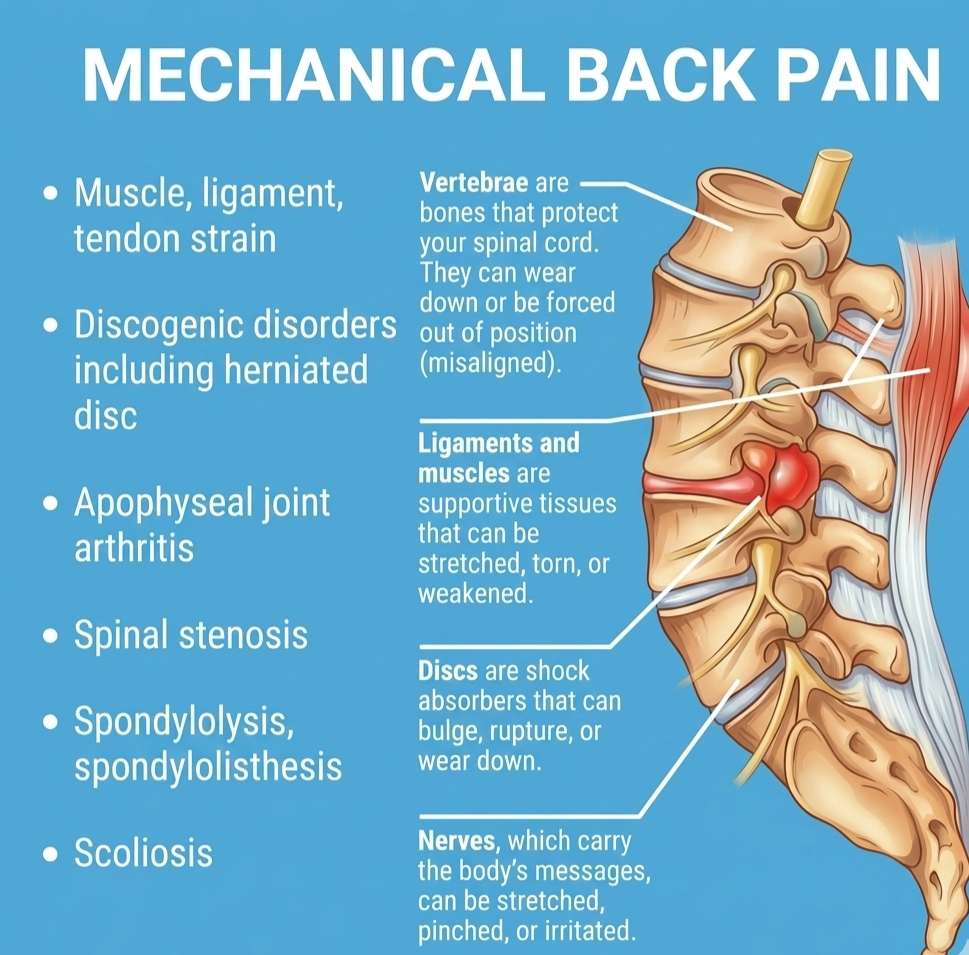
There are multiple mechanical back pain causes, ranging from sudden injuries to long-term lifestyle habits. Identifying the exact source helps guide effective care.
Muscle Strain and Ligament Sprain
The most common cause of mechanical low back pain. Overstretching during heavy lifting, sudden twisting, or awkward movement can injure soft tissues and trigger acute symptoms.
Degenerative Disc Disease
With age, spinal discs lose hydration and height, reducing shock absorption. These degenerative disc changes often cause stiffness and localized lower back discomfort.
Facet Joint Arthritis
Breakdown of cartilage in the small spinal joints leads to inflammation and pain. Symptoms typically worsen with twisting or backward bending movements.
Herniated or Bulging Disc
A herniated disc occurs when inner disc material pushes outward and irritates nearby nerves. This can cause sharp back pain and sometimes leg symptoms.
Spondylolisthesis
This condition occurs when one vertebra slips forward over another. The resulting spinal instability often produces localized pain and tightness.
Spinal Stenosis
Narrowing of the spinal canal can compress nerves. In spinal stenosis pain usually worsens with prolonged standing or walking.
Poor Posture and Ergonomics
Long hours of slouching or improper workstation setup strain spinal tissues and contribute to mechanical back pain.
Obesity and Excess Body Weight
Extra body weight increases stress on spinal joints and discs, raising the risk of recurrent mechanical back pain episodes.
Symptoms of Mechanical Back Pain
Recognizing mechanical back pain symptoms early allows timely care and prevents chronic problems.
Pain Worse with Activity and Better with Rest
A defining feature is that pain changes with movement. It typically becomes more noticeable during bending, lifting, or prolonged activity and improves with rest or lying down.
Localized Lower Back Pain
In most cases, mechanical low back pain stays centered in the lumbar region. Unlike severe nerve compression, it usually does not travel far down the legs unless a Herniated Disc or similar issue is present.
Morning Stiffness That Improves with Movement
Many people notice stiffness when they first wake up. The back may feel tight for several minutes, but symptoms usually ease as blood flow improves and the body begins to move.
Muscle Spasms and Tightness
After an acute strain, surrounding muscles may tighten protectively. These spasms can be painful and may temporarily limit movement or posture.
How Is Mechanical Back Pain Diagnosed?
Accurate Back Pain diagnosis is essential to rule out serious conditions and identify the true pain source.
Clinical History and Physical Examination
The evaluation begins with a detailed discussion of symptoms, daily activities, and injury history. During the physical exam, the clinician checks range of motion, muscle tenderness, reflexes, and nerve function. Tests such as the straight leg raise help determine whether a Herniated Disc may be involved.
When Are Imaging Tests Needed?
Most cases of nonspecific mechanical low back pain do not require immediate imaging. X-rays or MRI scans are usually considered only if symptoms persist beyond several weeks or if there is suspicion of fracture, infection, or significant nerve compression.
Ruling Out Serious Pathology
Physicians also screen for warning signs such as unexplained weight loss, fever, cancer history, or bowel and bladder changes. These red flags may indicate conditions other than routine mechanical back pain and require urgent evaluation.
Treatment Options for Mechanical Back Pain
The primary goal of mechanical back pain treatment is to restore movement, reduce discomfort, and help patients return to normal activity.
First-Line Conservative Treatments
Most patients improve with simple measures. Brief relative rest followed by a gradual return to activity is often effective. Structured physical therapy, particularly the McKenzie method, helps centralize pain and restore spinal mechanics. Nonsteroidal anti-inflammatory medications may offer short-term relief. Together, these form the foundation of effective Back Pain Treatment.
Advanced Interventional Treatments at Alleviate Pain Clinic
If symptoms persist, Alleviate Pain Clinic in Bangalore provides advanced nonsurgical care. Options include radiofrequency ablation, platelet-rich plasma, prolotherapy, epidural injections, and trigger point therapy to reduce inflammation and promote healing.
When Is Surgery Considered
Surgery is reserved for severe, persistent cases that fail to improve with comprehensive conservative or interventional treatment.
Best Exercises for Mechanical Back Pain
Regular movement is one of the most effective ways to manage Back Pain. Evidence supports yoga, core strengthening, and guided physiotherapy for both short-term and long-term improvement. Specific back pain exercises that strengthen the abdominal and hip muscles help stabilize the spine and reduce recurrence. Programs based on the McKenzie method are particularly valuable because they teach patients how to manage symptoms independently at home.
Lifestyle Modifications for Mechanical Back Pain
Small daily changes can significantly improve spinal health. Maintaining a healthy weight reduces stress on the discs. Quitting smoking improves blood flow to spinal tissues and supports healing. Proper workstation ergonomics and regular movement breaks prevent the stiffness commonly associated with mechanical back pain.
Preventing Mechanical Back Pain
Effective back pain prevention focuses on protecting the spine during everyday activities. Lift heavy objects using your legs rather than your back. Keep loads close to the body. Warm up before sports or strenuous work. Maintaining good posture and staying physically active are key strategies to reduce the risk of future episodes.
When to See a Pain Management Specialist
If your Back Pain does not improve after several weeks of basic care, it is wise to consult a specialist. Medical attention is especially important if symptoms include leg weakness, numbness, or persistent functional limitation. Early expert evaluation can prevent chronic problems.
Frequently Asked Questions (FAQs)
It is pain that arises from the physical structures of the spine, such as muscles, joints, discs, and ligaments, rather than from infection or systemic disease.
The leading mechanical back pain causes are muscle strains and ligament sprains from lifting injuries or sudden movements.
Mechanical back pain usually changes with movement and improves with rest. Pain that is constant, accompanied by fever, or linked with unexplained weight loss should be evaluated promptly.
Most acute cases improve within a few weeks. Persistent symptoms may require structured mechanical back pain treatment at a specialized center like Alleviate Pain Clinic.
Core strengthening, yoga, and guided back pain exercises based on the McKenzie method are highly effective for long term relief.
You should seek expert care if pain lasts longer than six weeks, interferes with daily function, or is associated with neurological symptoms such as leg weakness or numbness


