




A person finishes a walk and notices the knee looks larger than usual. Another person bends the knee after sitting for a while and feels tightness around the joint. When someone looks down and sees a puffy knee, the first reaction is usually concern. Swelling often appears suddenly and can make normal movement uncomfortable.
Many people experience knee swelling at some point in life. The knee joint contains ligaments, cartilage, and fluid that help it move smoothly. When something irritates these structures, the body may respond with extra fluid or inflammation. This response leads to a swollen knee. Understanding the causes of swollen knees can help people decide whether simple at-home care is enough or if medical attention is needed.
Introduction: Understanding Knee Swelling
A swollen knee often means that fluid has collected inside or around the joint. This condition sometimes appears after injury, but it may also develop slowly with joint disease. Doctors often describe swelling as an increase in fluid within the joint capsule. When this happens, the knee may look larger than normal and may feel tight during bending or walking. Some people notice visible swelling around the kneecap. Others feel stiffness without major changes in appearance. The main goal of knee swelling treatment is to identify the cause and reduce inflammation.
What Causes Knee Swelling?
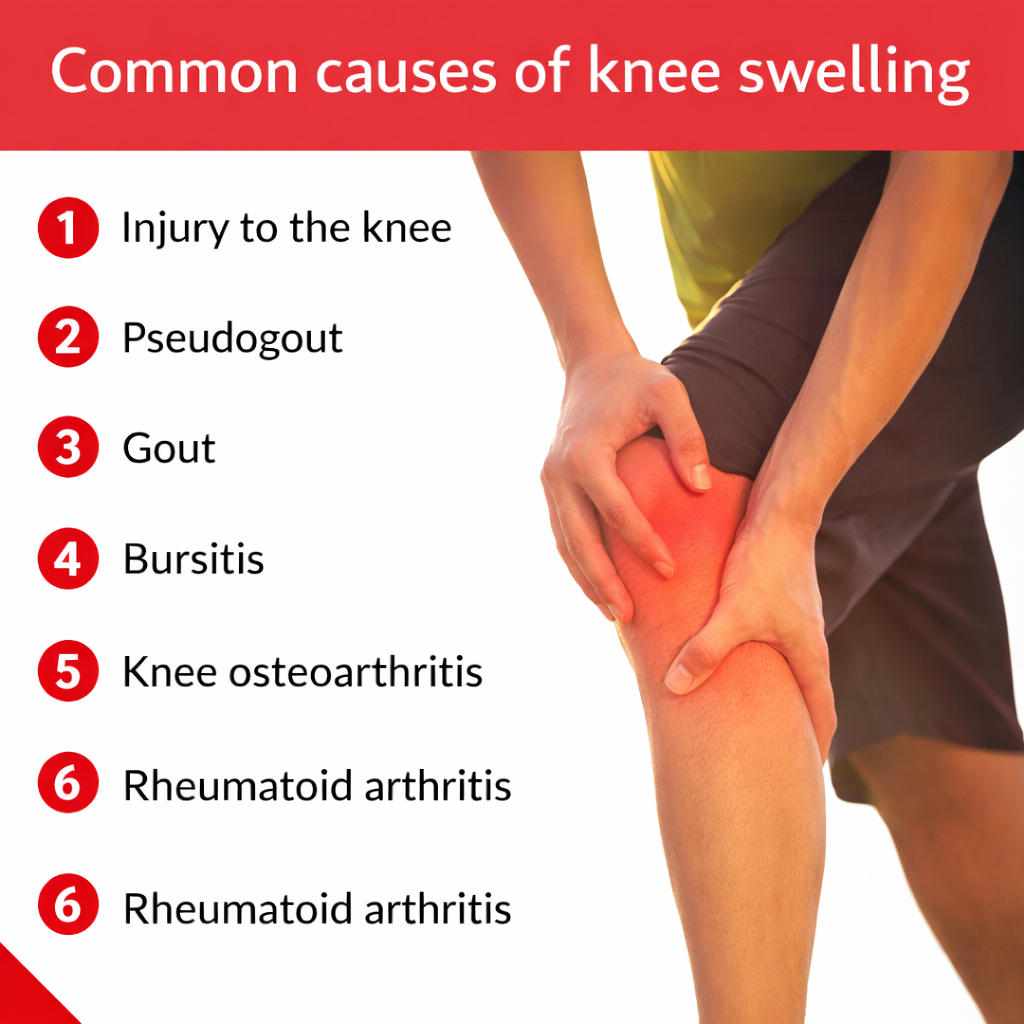
There are several causes of knee swelling. Some involve injury. Others relate to joint disease or infection.
Injuries & Trauma
Sudden injury is one of the most common reasons for swelling.
Ligament Tears (ACL, MCL)
A ligament injury can occur during sports or sudden twisting of the knee. Ligaments stabilize the joint. When they tear, the knee may swell quickly.
Meniscus Tears
The meniscus is a cartilage cushion inside the knee. A tear may lead to swelling of the meniscus, especially after twisting or heavy activity.
Fractures & Dislocations
Bone fractures or joint dislocations also cause swelling. The body sends fluid to protect the injured area.
Arthritis & Joint Diseases
Joint diseases can also cause arthritis and knee swelling. In osteoarthritis, cartilage wears down over time. This wear may trigger inflammation inside the joint.
Rheumatoid arthritis may also cause swelling because the immune system attacks the joint lining.
Bursitis & Tendonitis
Fluid-filled sacs called bursae protect the knee from friction. When these sacs become inflamed, the condition is called knee bursitis swelling. The knee may appear swollen and feel tender during movement.
Infections (Septic Arthritis)
A knee infection can lead to rapid swelling and severe pain. In septic arthritis, bacteria infect the joint space. The knee may appear very swollen and warm.
Gout & Pseudogout
Crystal deposits in the joint can cause gout knee swelling. These crystals irritate the joint lining and produce sudden inflammation. The knee may feel extremely painful and swollen.
Overuse & Repetitive Strain
Long periods of physical activity or repetitive movements may irritate tissues around the knee. This irritation may lead to mild swelling and discomfort.
Symptoms of Knee Swelling
The signs of swelling may vary depending on the cause.
Visible Swelling & Puffiness
Some people notice visible swelling around the kneecap. The joint may appear larger or feel tight. A puffy knee often indicates fluid buildup.
Pain & Tenderness
Pain often accompanies swelling. The knee may feel sensitive when touched or when bending.
Stiffness & Reduced Range of Motion
Swelling may limit movement. The knee may feel stiff when trying to straighten or bend the joint.
Warmth & Redness
Inflammation may produce a warm knee. In some cases, the skin becomes red, creating a red, swollen knee.
Difficulty Walking or Weight-Bearing
Severe swelling may make walking uncomfortable. Some people avoid putting weight on the affected leg.
When to See a Doctor for Knee Swelling
Mild swelling after physical activity may improve with rest. However, medical attention is important if swelling appears suddenly after injury. Severe pain, fever, or inability to move the knee may indicate serious problems. These symptoms require evaluation by a doctor.
How is Knee Swelling Diagnosed?
Physical Examination
During a physical exam knee assessment, the doctor checks joint movement, tenderness, and swelling patterns.
Imaging Studies (X-ray, MRI, Ultrasound)
Imaging tests help detect ligament tears, fractures, or cartilage damage.
Joint Aspiration & Fluid Analysis
Doctors may remove fluid from the joint with a needle. This test helps identify infection, gout crystals, or inflammation.
Treatment Options for Knee Swelling
The best knee swelling treatment depends on the underlying cause.
Home Remedies & Self-Care
Rest, ice, compression, and elevation help reduce swelling in many cases. Avoiding activities that strain the knee also helps recovery.
Physical Therapy & Exercises
Therapists guide exercises that improve joint movement and muscle strength. Strong muscles support the knee and reduce stress on the joint.
Medications (NSAIDs, Corticosteroids)
Anti-inflammatory medication may reduce pain and swelling.
Advanced Non-Surgical Treatments
Certain procedures may reduce inflammation in persistent cases. These treatments help when swelling does not respond to basic care.
How to Reduce Knee Swelling Quickly
People often ask how to reduce knee swelling fast. Simple steps may help in many situations. Rest the knee and avoid strenuous activity. Apply cold packs for short periods to reduce inflammation. Keep the leg elevated while resting.
Prevention Tips for Knee Swelling
Simple habits may reduce the risk of swelling.
Maintain strong leg muscles through regular exercise. Warm up before sports activity. Avoid sudden increases in physical workload. Proper footwear and good movement technique also help protect the knee joint.
FAQs About Knee Swelling
Common causes include injury, arthritis, bursitis, infection, and gout.
Sometimes. Infection or severe injury may require medical attention.
Rest, ice, compression, and elevation often help reduce swelling.
Yes. Fluid buildup sometimes causes swelling without severe pain.
Arthritis may cause swelling, but other conditions can also cause the same symptom.
Mild swelling may improve within days. Persistent swelling may require medical evaluation.


