



When winter arrives and temperatures begin to fall, many people notice their joints start to complain. If you have ever felt your knees ache more on cold mornings, you are definitely not imagining it. Knee pain in winter is a very common experience, especially among people with past injuries or arthritis.
Even though researchers are still studying the exact science behind cold weather knee pain, the pattern is clear in real life. Many patients report that their knees feel stiffer, slower, and more uncomfortable during colder months. The good news is that once you understand why this happens, you can take practical steps to stay mobile and comfortable.
Understanding Knee Pain in Winter
The connection between knee pain, cold weather and seasonal changes has been discussed for years. While studies have shown mixed results, what matters most is the lived experience of patients. Many people genuinely feel worse when the temperature drops.
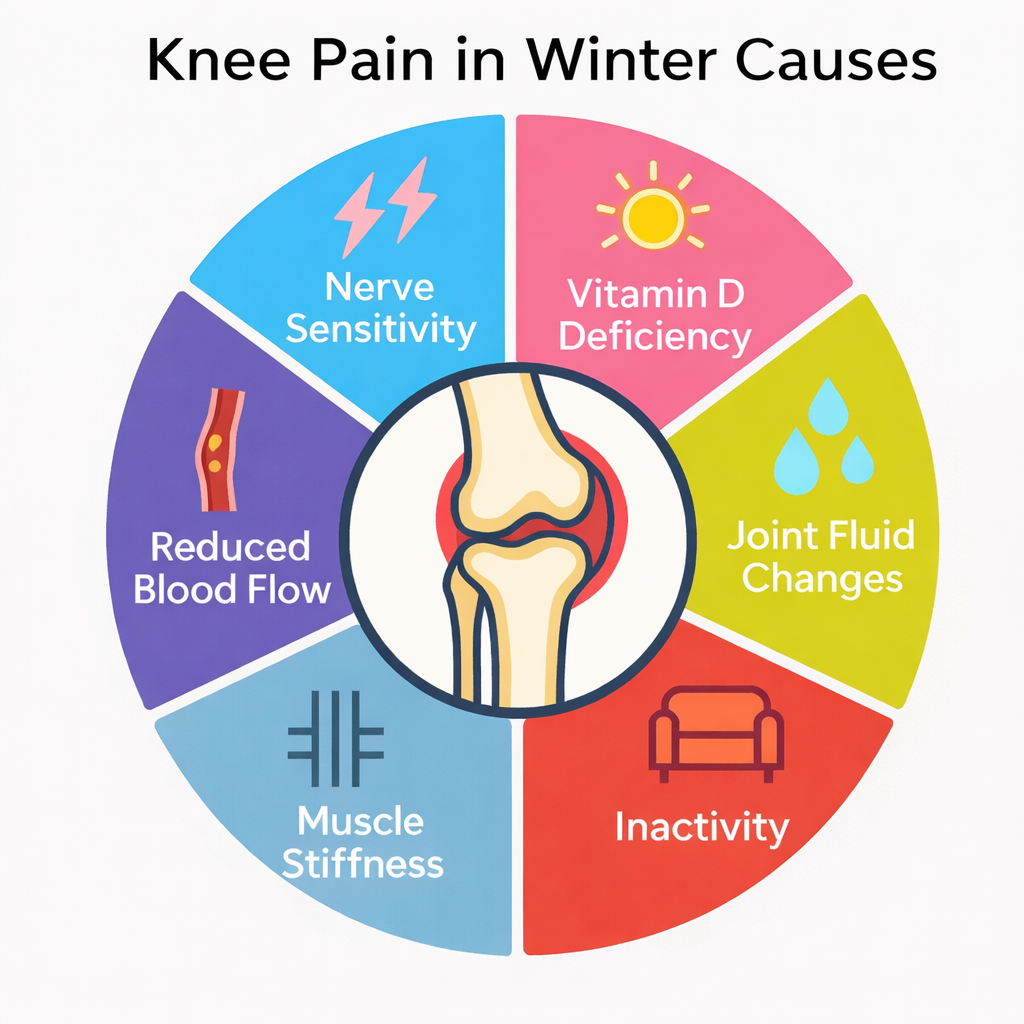
There is likely no single explanation. Instead, several small changes happen inside the body during winter. Joint fluid behaves differently in the cold, muscles tend to tighten, and people often move less. Together, these factors can make knee pain more noticeable in winter.
Causes of Knee Pain in Winter
Doctors and researchers have proposed several reasons behind knee pain in winter. Most relate to how the body responds to colder surroundings.
Barometric Pressure Changes
One widely discussed factor is barometric pressure knee pain. Barometric pressure refers to the weight of the air around us. When winter weather systems move in, this pressure often drops.
With less pressure pressing on the body from outside, tissues inside the joint may expand slightly. This small change can increase pressure within sensitive knees, especially in people with previous injuries or arthritis. Many patients notice their pain flares when weather changes quickly.
Decreased Blood Flow and Tissue Constriction
The body naturally tries to conserve heat in cold weather. To do this, it redirects blood toward vital organs such as the heart and lungs. Unfortunately, this means less warm blood reaches the arms and legs.
Reduced circulation can make the knees feel stiff and achy. Cold temperatures also cause muscles to tighten, which reduces flexibility and increases strain around the joint. Over time, this contributes to cold weather knee pain.
Arthritis and Inflammatory Conditions
People living with arthritis knee pain often feel the biggest difference during winter. Cold weather can cause synovial fluid, the joint’s natural lubricant, to become thicker.
When lubrication is less effective, joint movement feels rougher and more restricted. Combined with existing inflammation, this can significantly worsen knee pain in winter, particularly in those with osteoarthritis.
Reduced Physical Activity
Winter tends to make people less active. Short days and chilly mornings often lead to more time indoors and less regular movement.
This drop in activity is an important but often overlooked factor in knee pain in winter. Movement keeps joints nourished and muscles strong. When activity decreases, stiffness increases and the muscles that support the knee gradually weaken, placing more load on the joint.
Symptoms of Winter Knee Pain
Recognizing winter knee pain symptoms helps you decide whether your discomfort is seasonal or something that needs medical attention.
Stiffness
Morning stiffness is one of the earliest signs. Many people describe feeling as though the knee needs time to “loosen up” after waking or sitting for a while.
Increased Aching or Pain
A deep, dull ache that worsens in cold or windy conditions is typical of cold weather knee pain. Some people notice it more when stepping outside.
Reduced Mobility
You may find it harder to fully bend or straighten your knee compared with warmer months.
Swelling or Tenderness
Occasionally, the knee may look slightly swollen or feel sensitive to touch, particularly after sudden weather shifts.
Cracking or Clicking
Clicking sounds can become more noticeable in winter as muscles tighten and joint lubrication thickens.
Slower Warm Up Time
Many people report that their knees simply take longer to feel comfortable once they start moving in cold weather.
Difficulty with Movement
Daily tasks such as climbing stairs, getting out of a car, or walking outdoors may feel more challenging during knee pain in winter flare ups.
Who Is Most At Risk for Winter Knee Pain
While anyone can notice seasonal discomfort, certain groups are more likely to struggle.
- People with previous knee injuries
- Individuals with arthritis knee pain
- Adults with low vitamin D levels
- Those who are less physically active
- People sensitive to weather changes
Limited sunlight during winter can reduce vitamin D levels, which may increase pain sensitivity in some individuals.
When to See a Doctor for Winter Knee Pain
Mild seasonal discomfort often improves with simple care. However, medical advice is important if:
- Pain limits your daily routine
- The knee becomes very swollen or red
- You feel instability in the joint
- Home care is not helping
- Pain keeps getting worse
Early evaluation helps prevent long term joint problems.
Diagnosis of Winter Knee Pain
Accurate knee pain diagnosis begins with understanding your symptoms and examining the joint carefully.
Clinical History and Physical Examination
Your doctor will start with a detailed discussion and perform a knee examination. They will check movement, stability, and tender areas around the joint.
Imaging Studies (X ray, MRI)
If needed, imaging such as a knee x-ray or MRI may be ordered. X rays help detect arthritis and bone changes, while MRI scans show ligaments, cartilage, and other soft tissues in detail.
Treatment Options for Winter Knee Pain
Managing winter flare ups usually requires both short term comfort measures and long term joint care.
Home Remedies and Self Care
One of the simplest strategies is staying warm. Thermal wear, leggings, or knee supports help maintain joint warmth.
Moist heat, such as warm showers or baths, improves circulation and reduces stiffness. Maintaining a healthy weight also reduces stress on the knees. Good sleep is equally important because fatigue can amplify the perception of pain.
Physical Therapy for Winter Knee Pain
Structured physical therapy knee pain programs strengthen the muscles that support the knee and improve flexibility.
Low impact knee pain exercises like yoga, cycling, and swimming in a heated pool are especially helpful. Regular movement keeps joints lubricated and reduces stiffness.
Advanced Non Surgical Treatments at Alleviate
When symptoms persist, the clinic offers non surgical knee pain treatment options that target the source of discomfort without major procedures.
These modern approaches focus on reducing inflammation, improving joint function, and helping patients stay active even during colder months.
Prevention Tips for Winter Knee Pain
To Prevent Knee Pain in winter:
- Dress warmly outdoors
- Keep moving regularly
- Warm up before exercise
- Maintain a healthy weight
- Avoid prolonged exposure to cold
Small daily habits make a meaningful difference.
Lifestyle Modifications for Winter Joint Health
Joint health improves when overall wellness is addressed. Eat a balanced diet and discuss vitamin D supplementation with your doctor if sun exposure is limited.
Staying socially active and maintaining a positive routine can also help reduce the way the body perceives pain during winter.
Why Choose Alleviate Pain Clinic for Knee Pain
Managing knee pain in winter requires more than temporary fixes. At Alleviate Pain Clinic, care is personalized and focused on the root cause of cold weather knee pain.
Their team combines detailed assessment with targeted therapies designed to restore mobility and support long term joint health.
Frequently Asked Questions (FAQs)
For many people, knee pain in winter increases due to lower barometric pressure, reduced circulation, and thicker joint fluid in cold temperatures.
Yes. Many patients report worsening cold weather knee pain when temperatures drop or humidity rises.
Keeping the knee warm, using moist heat, staying active, and maintaining a healthy weight are among the most helpful steps.
Yes. Gentle knee pain exercises help maintain flexibility and reduce stiffness when performed within a comfortable range.
Low vitamin D levels are common in winter and may increase pain sensitivity in some people.
Arthritis knee pain is present year-round, but cold weather often makes symptoms feel more noticeable.


