



Knee pain in an adolescent is a common occurrence, which may be associated with development, activity, and biomechanics. Most episodes are acute, but chronic pain must not be disregarded. Early detection of the symptoms and prompt intervention can help to avoid chronic issues as well as promote healthy musculoskeletal development in these critical growth years.
Understanding Knee Pain in Teenagers
Adolescence is characterized by fast physical development, hormonal changes, and hyperactivity. These adjustments put strain on the knees, which become prone to pain and injury. Knee pain among the youths tends to arise when bone development occurs faster than muscle competence, and the condition needs to be assessed keenly to ascertain whether the pain is functional or structural.
Common Causes of Knee Pain in Teens
Overuse and Sports-Related Injuries
Knee pains in teens are usually brought about by repetitive stress associated with running, jumping, or intense training. Sharp movement or lack of rest will load the immature joints and tendons and cause inflammation, which gets aggravated with further strain.
Growth-Related Conditions
Temporary effects of growth spurts are on coordination and muscle flexibility. Osgood-Schlatter disease or patellofemoral stress are some conditions that are associated with bones growing at a faster rate in comparison to the muscles surrounding them, leading to strain across the knee and the resulting pain during movement.
Poor Biomechanics and Posture
Knee position is changed by abnormal movement patterns, flat foot, or poor posture. These biomechanical problems increase the stress on the joint, and they can be progressive, leading to the symptoms of knee pain in teens without any obvious injury, particularly when standing on the leg is prolonged or during sports.
Trauma and Acute Injuries
Ligaments, cartilage, or soft tissue around the knee can be damaged as a result of falls, collisions, or twisting injuries. Acute trauma usually causes immediate pain, swelling, or instability and needs immediate medical attention to avoid joint damage in the long term.
Sedentary Lifestyle and Muscle Weakness
The decrease in physical activity may make the muscles on which the knee is supported weaker, causing the inability to control the joint appropriately. The presence of weak quadriceps or hip muscles places a strain on the knee when performing daily tasks, which also causes pain among non-sporting teens.
Symptoms Associated with Knee Pain in Teens
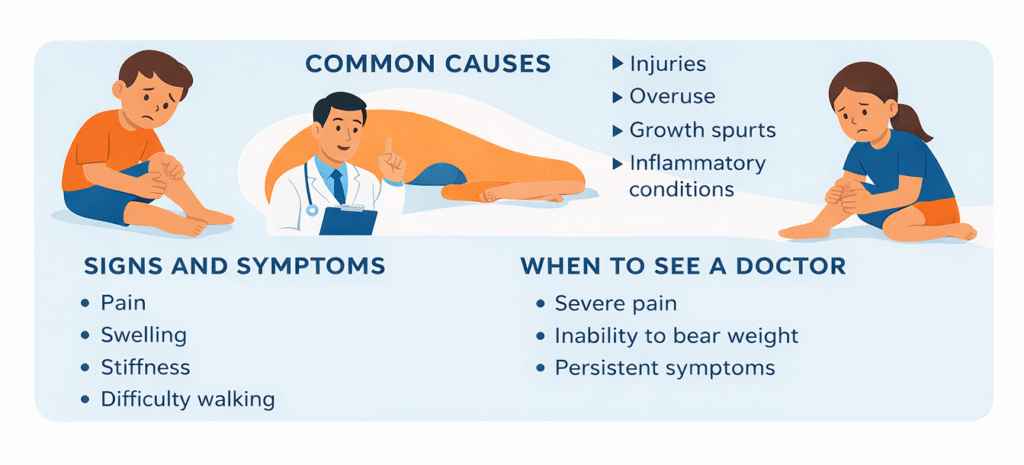
Knee pain symptoms depend on the underlying condition, but they tend to occur slowly. Treatment is timely and personalized, preventing the development of early signs and aiding in the prevention of their development and progression.
Pain Around or Below The Kneecap
Knee pain in teens may be prevalent and usually increases with the use of stairs, squat or long-term sitting. The pattern is commonly attributed to the stress of the patellafemoral or traction at the sites of tendon attachments caused by growth.
Swelling and Tenderness
Localized swelling or tenderness of the knee can be a sign of inflammation, overuse injury, or trauma. Continuous swelling is to be evaluated to eliminate internal joint irritation or involvement of the ligaments.
Stiffness or Reduced Mobility
Teens might experience stiffness of the knee following rest or difficulty in complete bending or straightening of the knee. Limited movement indicates irritation of the joints or tightening of muscles that should be measured.
Pain During or After Physical Activity
The pain, which increases during sports or persists after them, is the possible manifestation of overuse or poor recovery. Discomfort in activities is an indicator of load control and rehabilitation.
Clicking, Locking, or Instability
Mechanical symptoms like clicking or a sense of giving way can give evidence of cartilage involvement or ligament involvement. These symptoms of knee pain should be evaluated by doctors to avoid further deterioration of the joints.
Diagnosis of Knee Pain in Teens
Functional assessment is used in conjunction with clinical evaluation to make an accurate diagnosis. The knowledge of movement patterns and symptom triggers means receiving the necessary care and preventing the waste of restrictions.
Clinical Evaluation
A good history and physical is a detailed history that examines the location of pain, stability of the joints, muscle strength, and flexibility. Functional tests detect movement deficits as causes of knee pain.
Imaging Studies
X-rays or MRI can be applied when the pain is intense, chronic, or post-traumatic. Indication Imaging excludes fracture, cartilage trauma, or structural abnormality.
Mobility and Biomechanical Assessment
The gait and posture assessment reveals dysfunctional functions that strain the knee. These factors are important to correct to achieve long term recovery and prevention.
Treatment Options for Knee Pain in Teens
The management is aimed at pain alleviation, recovery of functioning, and management of contributing factors. The majority of the teens respond to conservative treatment without invasive interventions.
Activity Modification and Rest
Restraining inflamed tissues through a reduction in aggravating activity allows tissue healing. Full immobilization is hardly ever needed; a balance between movement and healing ensures the prevention of deconditioning.
Strengthening and Physiotherapy
Specific physiotherapy and strengthening exercise for knee pain provides muscle strength, better control of the joints, and flexibility. Exercise programs are structured as the basis of recovery and recurrence prevention.
Pain Control and Anti-Inflammatory
Ice or controlled use of medication may be used in short-term pain management. These are measures that assist rehabilitation but cannot substitute for corrective treatment.
Complex Non-Surgical Interventions
In rare situations, regenerative or injection-based non-surgical treatment of knee pain can be used to treat chronic inflammation or tissue irritation, and this always depends on the needs of adolescence.
Footwear Correction and Postural
The correct position is corrected by wearing proper footwear and orthotic support. Postural training minimizes unnecessary stress to the joints in day-to-day activities as well as in sporting activities.
Preventing Knee Pain in Teens
Prevention consists of slow training development, strength training, proper warm-up and flexibility exercises, and rest. Body mechanics and recovery education of teens lowers the risk of injuries and promotes healthy joints.
Why Choose Alleviate Pain Clinic for Teen Knee Pain?
Alleviate Pain Clinic provides all-inclusive and non-operative knee pain treatment to adolescents. Multidisciplinary assessment, evidence-based recovery, and personalized therapy guarantee effective and safe knee pain treatment and promote musculoskeletal health in the long-term.
Frequently Asked Questions (FAQs)
Mild discomfort can occur during growth spurts, but persistent or worsening pain is not normal. Ongoing symptoms should be evaluated to rule out injury or biomechanical issues.
Yes, repetitive stress without proper training or recovery can lead to chronic issues. Early management helps prevent long-term joint problems.
Sports should be paused if pain causes limping, swelling, or reduced performance. Continuing despite pain may worsen the injury.
The best approach combines activity modification, physiotherapy for knee pain, and biomechanical correction, tailored to the underlying cause.
Yes. Ignoring adolescent knee pain may lead to chronic weakness or joint dysfunction later in life, highlighting the importance of early care.


