



Every day, your feet carry you through life. From walking and standing to climbing stairs and running errands, they handle an enormous amount of pressure. Because of this constant use, foot pain is one of the most common physical complaints. Some discomfort may seem minor at first, but ignoring it can lead to long-term problems.
Understanding the real foot pain reasons is the first step toward lasting relief. Whether the pain is sharp, dull, sudden, or gradual, identifying the cause helps you choose the right care and return to your normal routine without discomfort.
Understanding Foot Pain
The foot is a highly complex structure made up of 26 bones, more than 30 joints, and a network of muscles, tendons, and ligaments. These parts work together to provide balance, movement, and shock absorption.
Because your feet support your entire body weight, they are exposed to repeated stress. Over time, this stress can cause inflammation, tissue damage, or joint strain. When this happens, finding the right foot pain relief becomes essential.
Relief does not always mean medication. It may involve proper footwear, stretching, physiotherapy, rest, or lifestyle changes. Understanding how your feet function helps you choose the right solution.
Why Foot Pain Should Not Be Ignored
Many people try to walk through discomfort, assuming it will go away on its own. Unfortunately, untreated foot pain often becomes worse.
- Ignoring pain can lead to:
- Worsening inflammation
- Chronic mobility problems
- Posture changes
- Knee, hip, or back pain
- Permanent joint damage
Your feet affect your entire body. When one part of the foot is injured, the rest of your body compensates, leading to new problems. Early care prevents long-term damage.
Types of Foot Pain
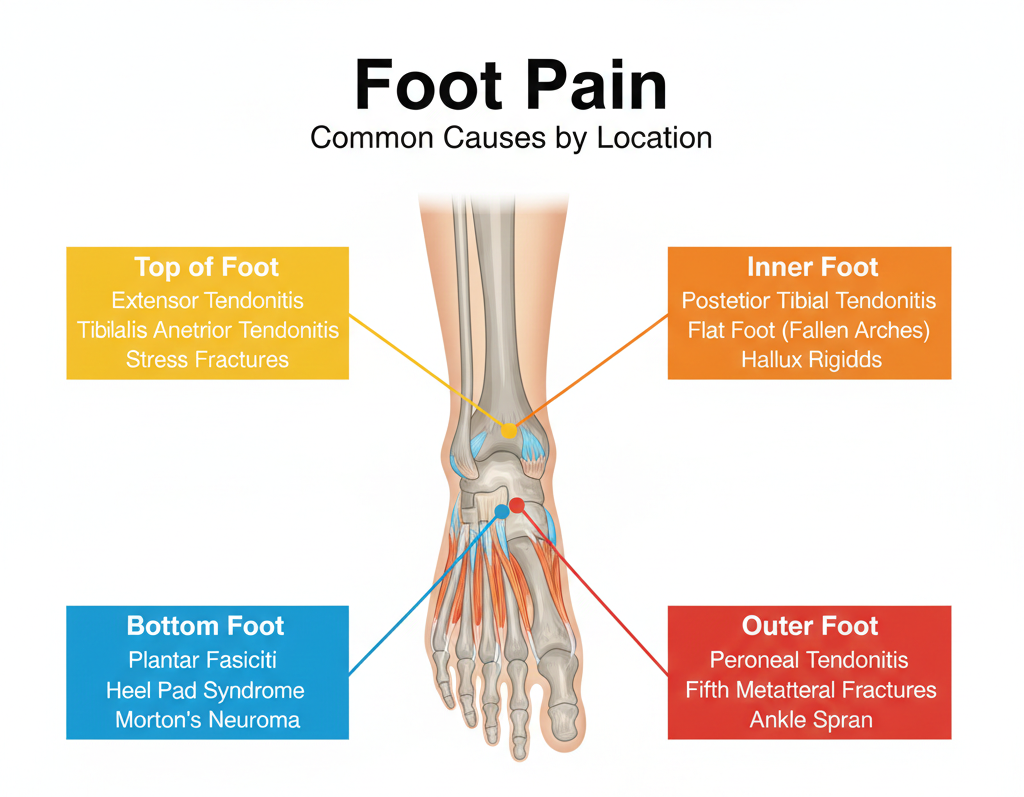
Pain can occur anywhere in the foot. The location of the pain often gives important clues about the cause.
Heel Pain
Heel pain is extremely common. One of the main heel pain causes is plantar fascitis, a condition where the thick band of tissue under the foot becomes inflamed. It often causes sharp pain when taking the first steps in the morning.
Other causes include Achilles tendon irritation, bursitis, and heel spurs.
Arch Pain
Pain in the arch usually develops from poor support or overuse. Flat feet, high arches, or unsupportive shoes can strain the ligaments. Over time, this leads to inflammation and soreness.
People with plantar fascitis often feel pain in the arch as well.
Ball of Foot Pain
Pain in the ball of the foot is commonly known as metatarsalgia. It can feel like walking on a pebble. This type of pain is often caused by pressure on the metatarsal bones, nerve irritation, or poorly fitting shoes.
Top of Foot Pain
Pain on the top of the foot may result from tendon strain, arthritis, or small fractures. It may worsen when walking or wearing tight shoes.
Toe Pain
Toe pain can come from bunions, corns, hammertoes, ingrown nails, or joint stiffness. These issues often develop slowly but can become painful over time.
Common Causes of Foot Pain
Understanding foot pain symptoms and causes helps you get the right treatment sooner.
Injury and Overuse
A foot injury can happen suddenly, such as a sprain, fracture, or torn ligament. Overuse injuries develop slowly due to repeated stress from activities like running, standing long hours, or improper movement.
Medical Conditions
Certain health conditions increase the risk of foot pain. Arthritis, diabetes, nerve disorders, and gout can all affect foot health.
Poor Footwear
Wearing tight, narrow, or unsupportive shoes is one of the biggest contributors to pain. High heels, thin soles, and shoes without arch support are common examples of shoes causing foot pain.
Age-Related Changes
As we age, natural cushioning in the feet thins. Joints become stiffer, and muscles weaken, increasing the risk of chronic pain.
Symptoms Associated With Foot Pain
Pain While Walking or Standing
Pain that worsens during movement often indicates inflammation or tissue strain. Foot pain while walking is common in conditions like plantar fascitis, arthritis, and tendon problems.
Swelling, Stiffness, or Tenderness
Swelling usually means inflammation or injury. Swollen feet pain in legs can also be linked to circulation issues or fluid retention.
Numbness or Tingling
Tingling, burning, or foot numbness often points to nerve compression or diabetic neuropathy.
Limited Mobility
Stiffness and reduced movement usually occur when tendons, ligaments, or joints are affected.
When Should You See a Doctor for Foot Pain
You should consult a foot pain doctor if:
- Pain lasts longer than two weeks
- Severe or sudden pain
- Swelling continues
- Inability to walk normally
- You have diabetes
- There are signs of infection
Early diagnosis prevents long-term damage.
Diagnosis of Foot Pain
Clinical Examination
Your foot is examined by the Doctor. They ask about your symptoms and check movement, alignment, and pressure points.
Imaging and Diagnostic Tests
An imaging test like X ray, MRI, or ultrasound is done. This is to detect fractures, tendon injuries, or soft tissue problems.
Treatment Options for Foot Pain
Physiotherapy and Stretching
Targeted physiotherapy and exercise for foot pain improve flexibility, strengthen muscles, and reduce strain. Stretching the calf muscles and plantar fascia is especially helpful.
Pain Management and Medications
Anti-inflammatory medicines and steroid injections may be prescribed in severe cases. A pain management clinic can offer specialized treatments.
Orthotics and Footwear Correction
Custom insoles reduce pressure, support arches, and correct posture. Proper footwear plays a major role in recovery.
Preventing Foot Pain
You can protect your feet by:
- Wearing supportive shoes
- Maintaining healthy weight
- Stretching daily
- Avoiding long periods of standing
- Replacing worn-out footwear
Simple habits reduce future problems.
Why Choose Alleviate Pain Clinic for Foot Pain Treatment
Alleviate Pain Clinic specializes in identifying true foot pain reasons and providing long-term foot pain relief without surgery whenever possible. Their team focuses on personalized care using modern diagnostics, physiotherapy, and advanced pain treatments.
With expert professionals, advanced tools, and a patient-first approach, they help you return to pain-free movement safely.
Frequently Asked Questions (FAQs)
Sudden pain can result from nerve compression, gout, inflammation, or circulation issues.
Heel pain, arch pain, toe pain, ball of foot pain, and top of foot pain are most common.
It is often caused by plantar fasciitis, arthritis, tendon strain, or nerve issues.
If pain lasts more than two weeks, worsens, or affects walking, see a doctor.
Common foot treatments include physiotherapy, orthotics, stretching, lifestyle changes, and pain management therapy.


