




A swollen or painful elbow can make even simple movements uncomfortable. Many people notice the problem after leaning on their elbow for long periods or after accidentally hitting it against a hard surface. One possible reason for this discomfort is elbow bursitis, also called olecranon bursitis. This condition often leads to a swollen elbow, pain, and limited movement. Understanding the causes of elbow pain and recognizing early symptoms can help you manage the condition before it becomes more serious.
What is Elbow Bursitis?
Bursitis occurs when the olecranon bursa, a small fluid-filled sac at the tip of the elbow, becomes inflamed. Normally it cushions the joint, allowing smooth movement. When irritated, the sac fills with excess fluid, causing swelling and elbow pain, often appearing as a noticeable lump at the back of the elbow.
Causes of Elbow Bursitis
There are several elbow bursitis causes, and many of them are related to daily habits, injuries, or infections.
Trauma and Direct Impact
A sudden injury or elbow trauma can cause the bursa to become inflamed. A fall, bump, or direct blow to the elbow may cause the sac to fill with fluid quickly.
Prolonged Pressure and Leaning
One of the most common causes of elbow pain is repeated pressure on the elbow. People who frequently lean on hard surfaces, such as desks or armrests, may develop irritation in the bursa over time.
Infection (Septic Bursitis)
Sometimes bacteria can enter the bursa through a small cut, scrape, or insect bite. When this happens, the condition is called infected bursitis.
Repetitive Motion and Overuse
Activities that involve repeated arm movement can also lead to bursitis. Sports such as baseball, golf, or weight training can place repeated stress on the elbow joint.
Types of Elbow Bursitis
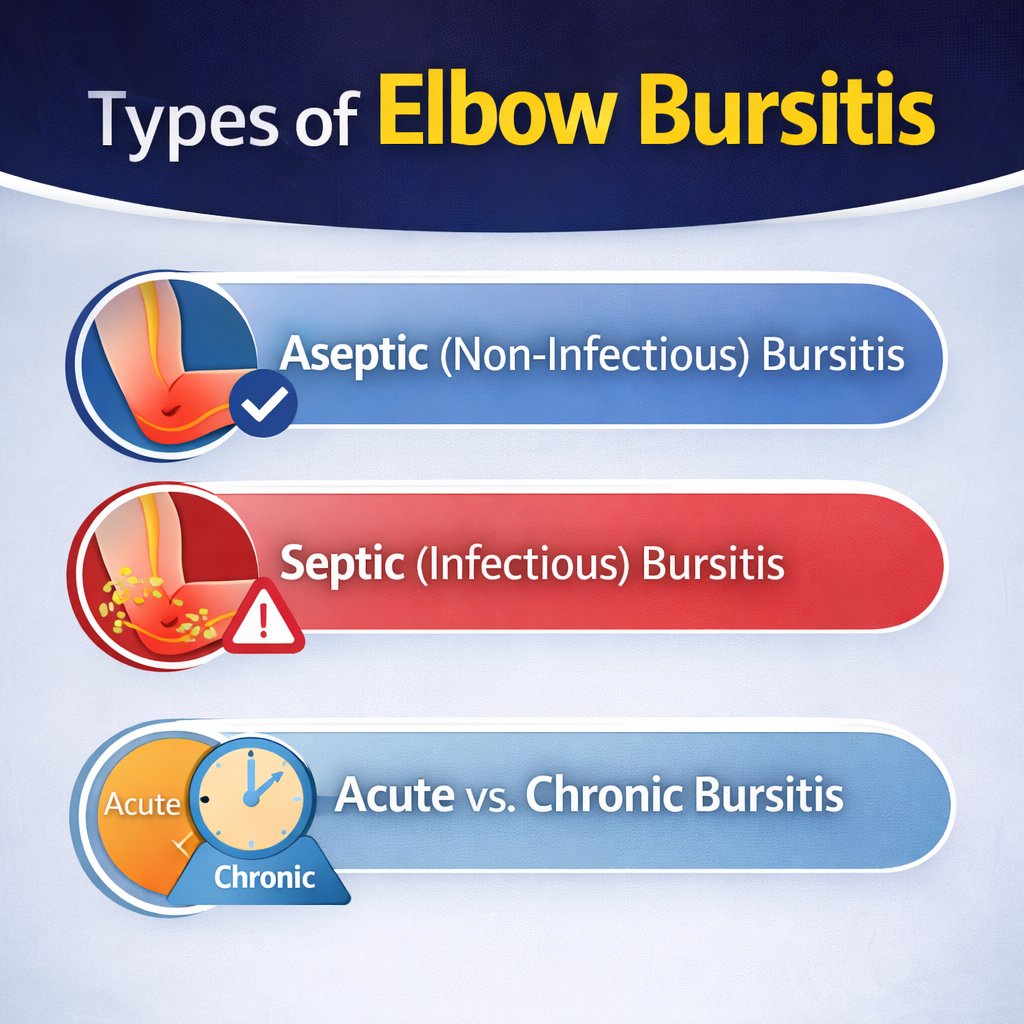
Doctors often categorize bursitis into different forms to determine the best treatment approach. These types of bursitis help guide medical decisions.
Aseptic (Non-Infectious) Bursitis
This is the most common form of bursitis and is not caused by bacteria. It usually develops after repetitive stress, minor injuries, or prolonged pressure on the elbow.
Septic (Infectious) Bursitis
When bacteria infect the bursa, the condition becomes septic bursitis. An infected elbow bursa typically appears very red and warm, and the swelling may increase quickly.
Acute vs. Chronic Bursitis
Acute bursitis develops suddenly, often after an injury or infection. The swelling and pain appear quickly.
Symptoms of Elbow Bursitis
Recognizing elbow bursitis symptoms early can help prevent the condition from worsening.
Swelling at the Elbow Tip
The most noticeable sign is elbow swelling at the tip of the joint. At first, it may look like a small lump but can grow larger if fluid continues to accumulate.
Pain and Tenderness
As the swelling increases, the area may become sensitive. Elbow pain often worsens when bending the arm or leaning on the elbow.
Redness and Warmth (Infection Signs)
A red elbow that feels warm may indicate infection. This symptom should not be ignored, especially if swelling increases quickly.
Limited Range of Motion
Large swelling can restrict movement, creating a stiff elbow that is difficult to bend or straighten fully.
Fever and Systemic Symptoms (Septic)
If the infection spreads, symptoms such as fever, fatigue, or general illness may appear. These signs require immediate medical attention.
Diagnosing Elbow Bursitis
Doctors use several methods to confirm the diagnosis.
Physical Examination
During an elbow examination, the doctor checks the joint for swelling, tenderness, and warmth. They will also evaluate your range of motion and look for signs of infection.
Bursa Aspiration (Fluid Removal and Analysis)
In some cases, the doctor may remove a small amount of fluid from the bursa using a needle. This procedure helps determine whether the swelling is caused by infection or other conditions such as gout.
Imaging Studies (X-ray, Ultrasound, MRI)
An X-ray elbow scan may be used to check for bone spurs or other joint issues. Ultrasound or MRI scans may also be recommended to examine the surrounding soft tissues.
Blood Tests (If Infection Suspected)
Blood tests may be performed if doctors suspect a systemic infection. These tests help identify signs of inflammation or bacterial infection.
Treatment Options for Elbow Bursitis
Most cases of elbow bursitis improve with simple treatment and proper care.
Conservative (Non-Surgical) Treatments
Initial treatment often focuses on reducing swelling and pain. Anti-inflammatory medications such as ibuprofen may help control inflammation. Protective elbow pads may also reduce irritation and prevent further injury.
Rest and Activity Modification
Rest is an important part of healing. Avoiding activities that place pressure on the elbow can help the bursa recover. Simple changes, such as adjusting work posture or avoiding leaning on hard surfaces, can prevent further irritation.
Ice Therapy and Compression
Applying an ice pack elbow treatment several times a day can reduce swelling and relieve pain. Compression wraps or elastic bandages may also help support the joint and limit fluid buildup.
Preventing Elbow Bursitis
Preventing bursitis often involves protecting the elbow from repeated pressure or injury. Using elbow pads, taking breaks during repetitive tasks, and maintaining proper posture can all reduce stress on the joint. Warming up before sports and avoiding excessive strain can also help prevent elbow pain.
Specialized Treatment at Alleviate Pain Clinic
For patients seeking advanced elbow bursitis treatment, Alleviate Pain Clinic offers modern, non-surgical options. Their specialists focus on identifying the root cause of joint pain and using innovative therapies to promote natural healing.
Treatments such as PRP therapy and prolotherapy aim to restore joint health while minimizing invasive procedures. The clinic’s personalized approach helps patients return to daily activities with improved comfort and mobility.
FAQs About Elbow Bursitis
Olecranon bursitis is the inflammation of the fluid-filled sac located at the tip of the elbow.
Common elbow bursitis causes include injury, prolonged pressure on the elbow, infection, and repetitive arm movement.
Signs include redness, warmth, increased swelling, and sometimes fever.
Many mild cases improve with rest, ice, and avoiding pressure on the elbow.
Effective elbow bursitis treatment often includes rest, anti-inflammatory medication, ice therapy, and protective padding.
Yes. A doctor may drain the fluid from the bursa to relieve pressure and check for infection.
Most cases improve within three to six weeks with proper care and activity modification.


