




Lower back pain is a nearly universal experience that affects roughly 80 percent of people at some point in their lives. Whether it is a dull ache after a long workday or a sharp pull from lifting something heavy, Low Back Pain can significantly affect your quality of life. At Alleviate Pain Clinic, we regularly see how Back Pain limits movement and daily comfort. Finding the best medicine for lower back pain is often the first step toward effective Back Pain Treatment and long-term recovery.
Understanding Lower Back Pain and Medication Options
Lower back pain explained in simple terms usually involves the complex interaction between bones, muscles, discs, and nerves. In many adults, especially with aging, the root cause is a combination of weak core muscles and gradual muscle loss. Other common contributors include osteoarthritis, acute strain injuries, and even stress or depression.
The right medication for back pain does more than mask symptoms. Properly selected medicines for back pain help reduce inflammation, ease discomfort, and allow you to stay active. Movement and physical therapy remain essential parts of successful back pain treatment, and medication often supports that process.
Types of Lower Back Pain and Appropriate Medications
Understanding the Types of Lower Back Pain helps guide treatment choices. Acute pain usually follows a specific injury and often improves within a few weeks using home care and over the counter medicines for back pain. Chronic pain persists for months and may require prescription therapy or advanced interventions.
Response to medication for back pain varies widely between individuals. What works well for one person may not work for another. This is why a personalized approach to Back Pain Treatment is important.
Top 10 Medicines for Lower Back Pain Relief
Choosing the best medicine for lower back pain requires understanding how different drug classes work in the body.
1. Ibuprofen (Advil, Motrin) First Line NSAID
Ibuprofen for back pain is often the first recommendation. It belongs to the group known as NSAIDs for back pain and works by reducing both pain and inflammation around muscles, discs, and arthritic joints. It is widely available over the counter but should be used according to label instructions to avoid side effects.
2. Naproxen (Aleve) Long Acting NSAID
This treatment is popular because it lasts longer in the body than ibuprofen. Many patients only need twice daily dosing for consistent relief. Like other NSAIDs for back pain, it blocks inflammatory enzymes that contribute to discomfort.
3. Acetaminophen (Tylenol) Pain Reliever
Tylenol for back pain is commonly used when patients cannot tolerate NSAIDs. It works primarily in the brain to reduce pain perception but does not reduce inflammation. It is generally safer for the stomach but must be used cautiously in patients with liver disease.
4. Diclofenac (Voltaren) Prescription NSAID
When over the counter options fail, clinicians may recommend diclofenac back pain therapy. This prescription strength anti-inflammatory provides stronger relief for moderate to severe inflammation but requires medical supervision.
5. Muscle Relaxants (Cyclobenzaprine, Methocarbamol)
Muscle relaxants back pain therapy is helpful when painful muscle spasms accompany low back pain. These medications act on the central nervous system to reduce muscle tightness. Because they may cause drowsiness, they are typically used short-term.
6. Topical NSAIDs (Voltaren Gel, Aspercreme)
Topical treatments deliver anti-inflammatory medication directly through the skin to the painful area. They are useful for localized back pain and reduce the risk of stomach irritation associated with oral NSAIDs for back pain.
7. COX 2 Inhibitors (Celecoxib or Celebrex) Selective NSAID
Celecoxib is a selective NSAID designed to be gentler on the stomach. It targets the enzymes responsible for inflammation while sparing protective stomach pathways. It is commonly prescribed for chronic arthritis related Low Back Pain.
8. Oral Corticosteroids (Prednisone, Methylprednisolone)
Short courses of prednisone for back pain may be used for severe inflammatory flare ups. These medications are powerful and must be tapered under medical supervision to avoid complications.
9. Antidepressants for Chronic Pain (Duloxetine, Amitriptyline)
Duloxetine back pain therapy is increasingly used for chronic pain management. These medications modify how the brain processes pain signals and are especially helpful in long-standing Back Pain that has a neuropathic component.
10. Topical Lidocaine (Patches, Creams)
Lidocaine products numb local nerve endings and provide targeted relief for surface-level discomfort. They are useful when patients want to avoid systemic medication for back pain.
How to Choose the Right Medicine for Your Back Pain
Choosing the right medicines for back pain depends on identifying the cause and considering your overall health profile.
- Determine if pain is muscular, joint related, or nerve driven.
- Review medical history and current medications.
- Consider stomach and kidney tolerance.
- Maintain a pain diary.
- Help your doctor select the best medicine for lower back pain.
Potential Side Effects and Drug Interactions
All medication for back pain carries potential risks, so careful and informed use is essential for safe Back Pain Treatment.
- Overuse of NSAIDs for back pain may cause stomach irritation or ulcers.
- Possible kidney issues or gastrointestinal bleeding.
- Muscle relaxants may cause drowsiness and dizziness.
- Inform your doctor about all medications and supplements.
When Medications Alone Are Not Enough
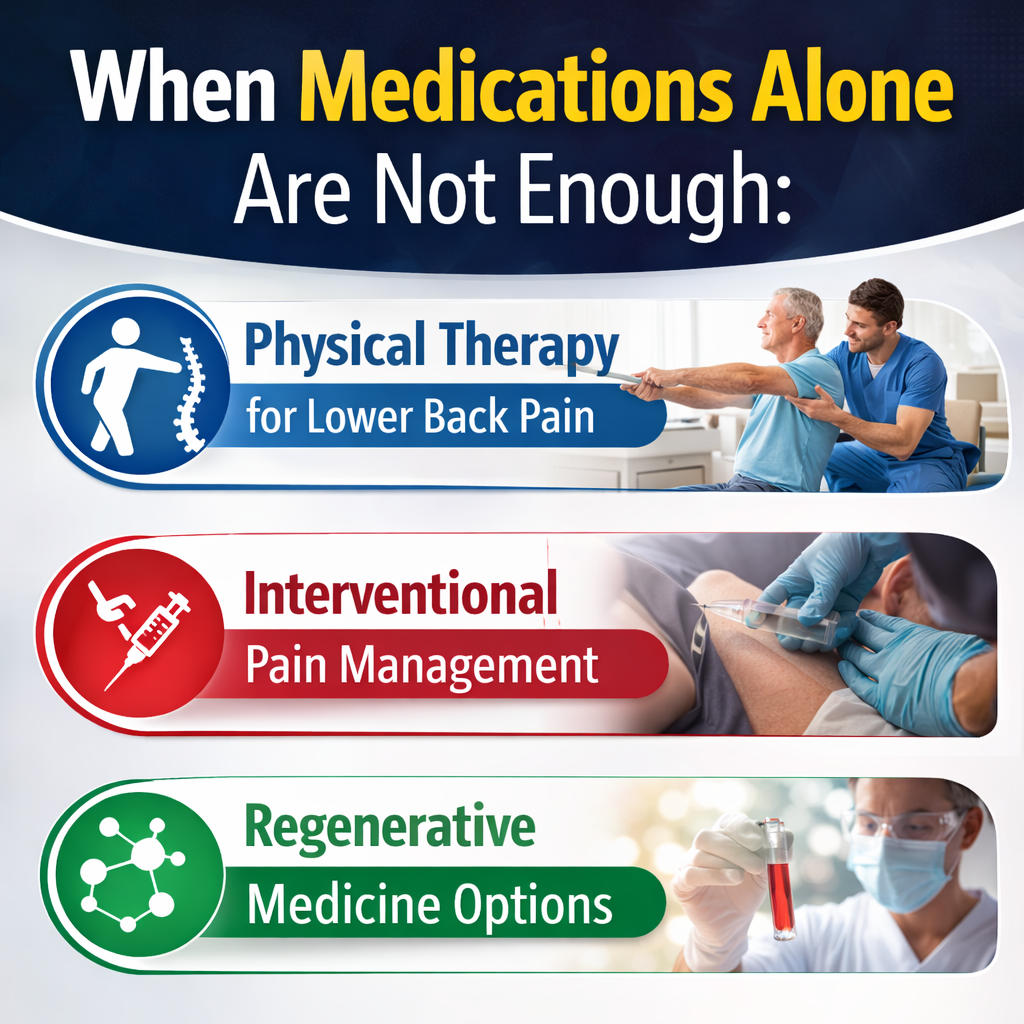
Medication is only one part of managing persistent low back pain. If symptoms continue for several weeks, additional therapies may be necessary.
Physical Therapy for Lower Back Pain
Structured physical therapy back pain programs strengthen core muscles, improve flexibility, and correct posture. Physical therapy is one of the most effective long-term strategies for preventing recurrent back pain.
Interventional Pain Management
When oral medicines for back pain fail, interventional procedures may help. Options include targeted steroid injections, nerve blocks, and radiofrequency ablation, which interrupts pain signals traveling to the brain.
Regenerative Medicine Options
At Alleviate Pain Clinic, advanced regenerative therapies are available. Treatments such as prp for back pain and prp for low back pain aim to stimulate natural tissue healing. Prolotherapy is another option that strengthens weakened ligaments and supports long-term back pain treatment.
When to See a Doctor for Lower Back Pain
Seek medical care if back pain does not improve after several weeks of home care. Immediate evaluation is necessary if pain is associated with fever, unexplained weight loss, leg weakness, or changes in bowel or bladder function.
Diagnostic tools such as X rays, MRI scans, or nerve studies may be required to determine the exact cause of Low Back Pain.
Why Choose Alleviate Pain Clinic for Back Pain Treatment
Alleviate Pain Clinic follows a philosophy of healing without surgery. Our specialists use modern, minimally invasive techniques to restore movement and comfort. Every patient receives a personalized plan that combines the right medicines for back pain with advanced interventional and regenerative care when needed.
FAQs About Back Strains & Sprains
For many people, NSAIDs for back pain such as ibuprofen or naproxen provide effective relief because they reduce both pain and inflammation.
Ibuprofen for back pain is usually better when inflammation is present. Tylenol may be safer for individuals with stomach sensitivity.
Use NSAIDs for back pain only as directed on the label or by your physician. Long term overuse increases the risk of ulcers and kidney problems.
Doctors sometimes combine these medicines for back pain, but this should only be done under medical supervision.
Prescription strength NSAIDs or short term opioids may be used for severe cases, but careful monitoring is essential.
Topical medication for back pain can work very well for localized symptoms and carries a lower risk of systemic side effects.


