




It often happens in a simple moment. You bend to lift a heavy bucket. You twist while reaching into the back seat of a car. Later that evening, your lower back feels tight. By the next morning, it hurts to stand straight. Many people in Bangalore visit clinics with similar stories. Most of these cases turn out to be back sprains and strains, especially involving the lower back strain.
Back injuries like these can feel alarming. The pain may be sharp, stiff, or deep and aching. The good news is that most back sprains and strains respond well to proper care. Understanding what happened inside the muscles and ligaments helps reduce fear and guide the right back sprain treatment.
What Are Back Sprains and Strains? Understanding the Difference
When people ask about back strain and sprain, they often use the terms interchangeably. They sound similar, but there is a clear difference between sprain and strain. A strain involves muscle or tendon injury. When someone pulls a muscle in the lower back, that is a strain. It may involve tiny tears in muscle fibers. A sprain, on the other hand, affects ligaments. Ligaments connect bones and support joints. A lower back sprain happens when these supportive tissues stretch beyond their limit.
If someone asks about the difference between lower back strain and sprain, the answer lies in the tissue involved. Muscle versus ligament. The symptoms may overlap, but the internal structure affected is different. So when people wonder what are sprain and strain injuries, the simple explanation is this. Strains involve muscles. Sprains involve ligaments.
Common Causes of Back Strains & Sprains
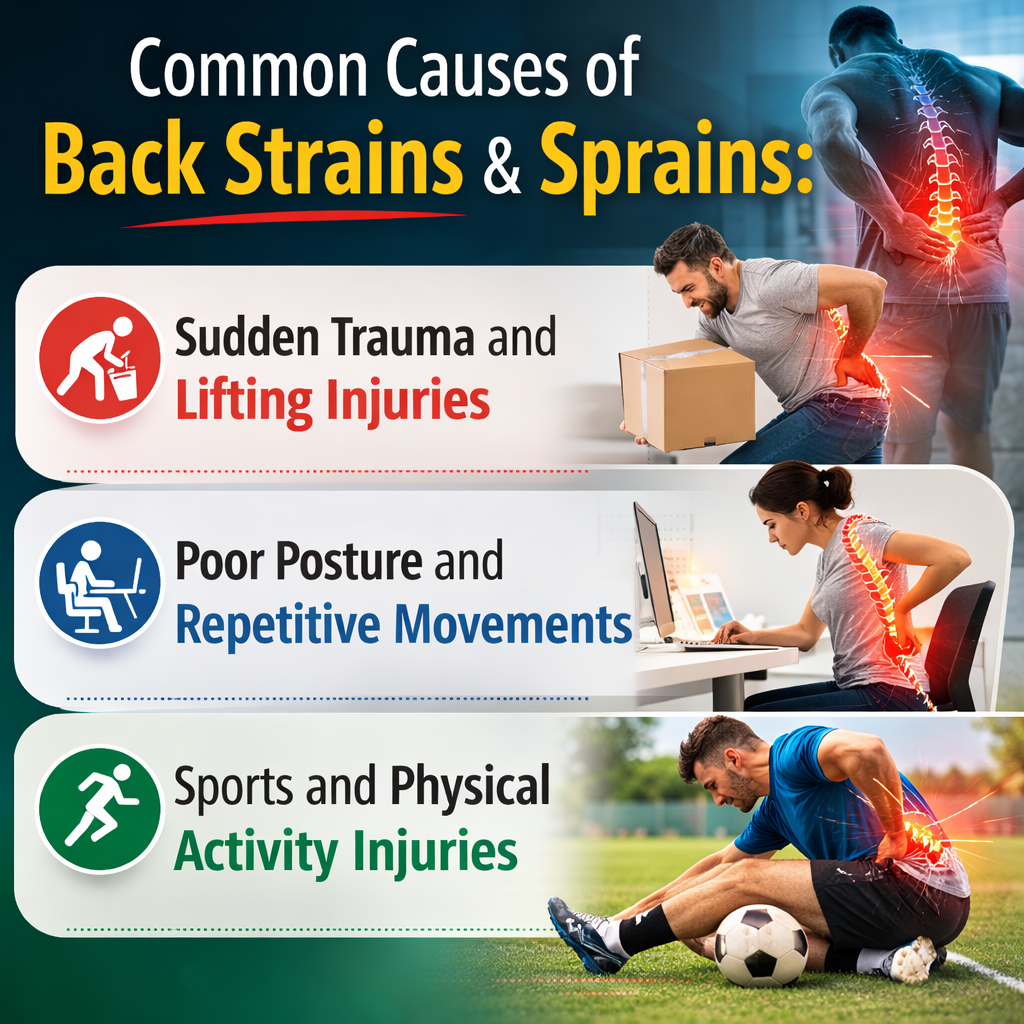
Sudden Trauma and Lifting Injuries
One of the most common triggers is improper lifting. A sudden twist while holding weight may overload muscles or ligaments. Many people experience a pulled back muscle after lifting without bending the knees. If someone asks what causes back sprain, the answer often includes sudden movement combined with load.
Poor Posture and Repetitive Movements
Long hours at a desk without proper support can weaken back muscles. Repetitive bending or twisting during daily tasks builds strain over time. Eventually, a minor movement may trigger pain.
Sports and Physical Activity Injuries
Sports injury back pain cases are common in active individuals. Sudden direction changes, jumping, or contact sports may strain muscles or sprain ligaments.
Risk Factors for Back Sprains and Strains
Certain factors increase risk. Weak core muscles. Lack of flexibility. Previous injury. Sudden increase in activity. Excess body weight. All contribute to vulnerability.
Symptoms of Back Strains & Sprains
Recognizing back strain symptoms early helps prevent worsening.
Pain usually appears in the lower back. It may feel sharp during movement and dull at rest. Muscle tightness and limited flexibility often follow.
Common signs of pulled back muscle include:
- Pain that worsens with bending or twisting
- Stiffness in the morning
- Muscle spasms
- Tenderness when touching the area
A sprain may produce swelling or bruising in some cases. Pain may increase with specific movements that stress the ligaments.
When to See a Doctor for Back Sprains
While most back sprains and strains are mild, some symptoms require attention. Watch for signs of serious back problems such as:
- Pain that spreads down the leg
- Numbness or weakness in the limbs
- Loss of bladder or bowel control
- Severe pain after a fall or accident
These signs may suggest nerve involvement or structural injury beyond a simple sprain or strain.
Diagnosis of Back Strains & Sprains
Accurate back strain diagnosis begins with conversation and examination.
Physical Examination
The doctor checks posture, muscle tenderness, and range of motion. Specific movements help identify the injured tissue. Evaluation may include guided back strain exercise movements to observe pain patterns and flexibility.
Imaging Tests (X-ray, MRI, CT Scan)
Imaging is not always necessary for simple injuries. X-rays rule out fractures. MRI scans help detect disc problems or ligament tears when symptoms persist. CT scans may assist in certain trauma cases. Diagnosis depends on clinical findings rather than imaging alone.
Non-Surgical Treatment Options
Most cases respond to conservative back strain treatment and pulled back muscle treatment without surgery.
RICE Therapy for Back Sprains
Rest allows tissues to recover. Ice helps reduce inflammation during the early phase. Compression may be less common for the back, but gentle support can help. Elevation applies less directly but reducing strain through proper posture supports healing. Early rest should not become prolonged inactivity. Gentle movement aids recovery.
Physical Therapy & Exercises
Structured back strain exercises strengthen core muscles and improve flexibility. Gradual stretching reduces stiffness. Controlled strengthening supports the spine. These exercises aim to restore normal movement patterns and prevent recurrence.
Pain Management Injections
In persistent cases, targeted injections may reduce inflammation around irritated tissues. These are considered when pain does not respond to initial care. Most individuals experience improvement within weeks when treatment begins early.
Prevention Tips for Back Strains & Sprains
To prevent back strain, simple habits make a difference.
Lift with bent knees and straight back. Avoid twisting while holding weight. Maintain regular core strengthening exercises. Stretch before heavy physical activity. Good posture during sitting reduces long-term strain. Frequent breaks during desk work help maintain muscle balance.
Why Choose Alleviate Pain Clinic for Back Sprain Treatment in Bangalore
People experiencing back sprains and strains often seek clarity about their injury. Proper evaluation identifies whether the issue is a lower back strain or ligament sprain. At Alleviate Pain Clinic in Bangalore, assessment focuses on understanding movement patterns and identifying the exact source of pain before planning back sprain treatment. The goal remains restoring comfort and function while reducing the chance of recurrence.
FAQs About Back Strains & Sprains
A strain affects muscles or tendons. A sprain involves ligaments that connect bones.
Mild pulled back muscle cases may improve within two to three weeks. Severe strains may take longer.
Light walking is often helpful. Complete bed rest may delay recovery.
Numbness, weakness, severe leg pain, or loss of bladder control are signs of serious back problems.
Ice helps in the first few days. Heat may help relax tight muscles later.
Most heal without permanent damage if treated properly and not ignored.
Gentle stretching and guided back strain exercises under supervision are generally safe.
Seek care if pain is severe, persists beyond a few weeks, or includes neurological symptoms.
Use proper lifting posture, bend the knees, keep weight close to the body, and avoid twisting while carrying loads.


