




Key Highlights
- Many people experiencing digestive discomfort often wonder if gas can cause Back Pain. Gas buildup in the digestive tract can create pressure that radiates toward the spine.
- This pressure may lead to symptoms such as Lower Back Pain or Middle back pain.
- Gas-related pain may occur due to diet, hormonal changes, stress, or digestive disorders.
- Identifying triggers and making diet and lifestyle adjustments can help manage symptoms effectively.
Understanding the Gas Back Pain Connection
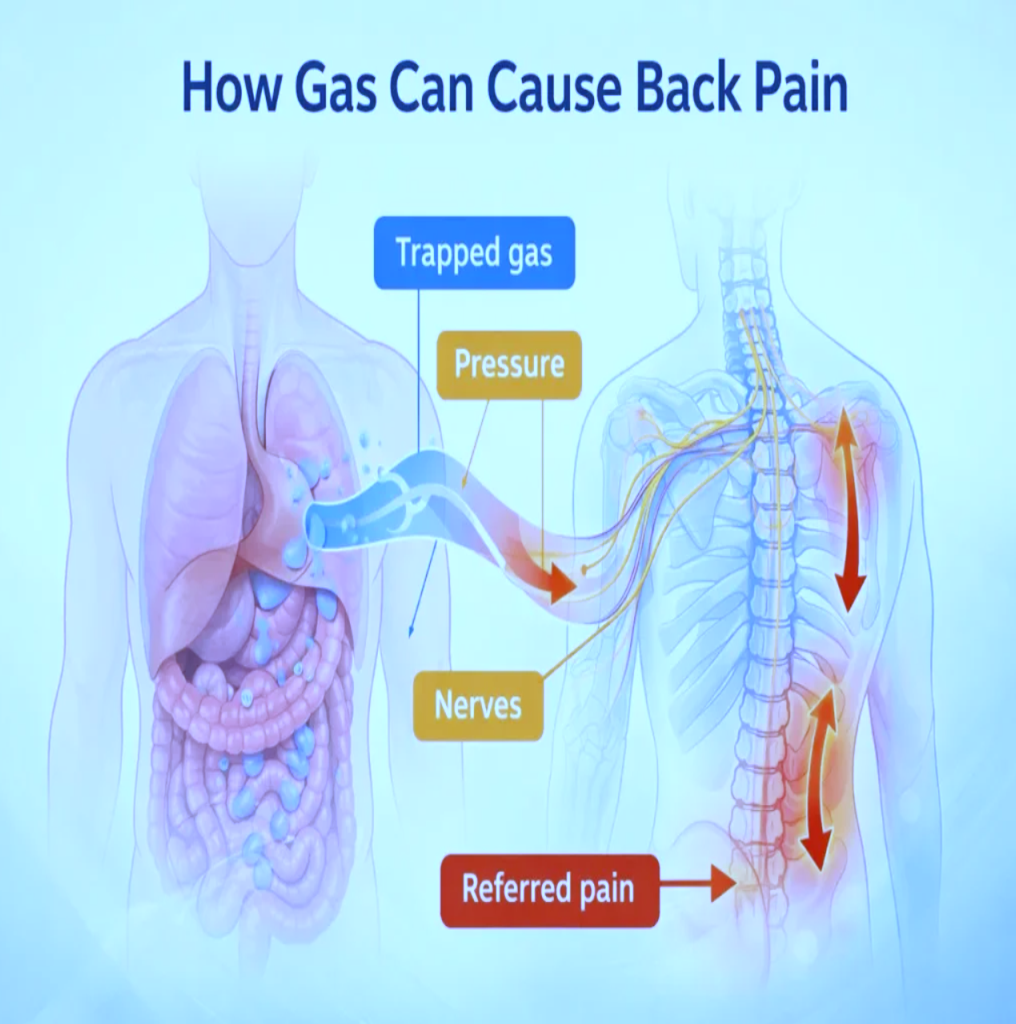
The body functions as an interconnected system, so discomfort in one area can affect another. When excess gas builds up in the digestive tract, it creates abdominal pressure that may radiate toward the spine and cause back pain. Digestive nerves share pathways with spinal nerves, which can lead to referred pain. In rare cases, gas bubbles in spinal discs may also contribute to discomfort.
Types of Gas Related Back Pain
Lower Back Pain from Gas
Gas buildup in the lower intestine can create pressure that leads to Lower Back Pain. The large intestine lies close to the lumbar spine, so bloating or constipation may irritate nearby muscles and nerves. Hormonal changes during menstruation or menopause may also contribute to gas-related back discomfort. During pregnancy, the expanding uterus can compress digestive organs and increase pressure on the lower back.
Middle Back Pain from Gas
Gas trapped in the stomach or upper colon can cause Middle back pain that feels like deep pressure in the mid back or chest area. Digestive nerves share pathways with the thoracic spine, so the brain may interpret abdominal pressure as pain in the middle back. Severe bloating in the transverse colon can also create fullness that radiates toward the thoracic spine.
Upper Back and Shoulder Pain from Gas
Gas trapped in the stomach or upper colon may irritate the diaphragm, leading to discomfort that spreads to the upper back or shoulder blades. Because the body sometimes misinterprets internal digestive pressure as musculoskeletal pain, the sensation may feel similar to a typical back strain even though the underlying cause is digestive pressure.
Common Causes of Gas That Lead to Back Pain
Dietary Factors and Food Intolerances
Gas-producing foods such as beans, cabbage, and carbonated drinks can cause bloating. Food intolerances such as lactose intolerance may lead to fermentation in the gut and increased gas that contributes to back pain.
Irritable Bowel Syndrome
Individuals with irritable bowel syndrome often experience digestive flare-ups along with abdominal discomfort and back pain. Stress may worsen symptoms by slowing digestion and increasing sensitivity to pain.
Constipation and Bowel Obstruction
Chronic constipation can cause pressure inside the intestines, which may lead to lower back pain due to the close proximity of the bowel and lumbar spine. Severe bowel obstruction is rare but requires immediate medical care.
Swallowing Air
Eating too quickly, drinking through straws, or chewing gum can lead to swallowing excess air. This trapped air may cause bloating and eventually radiate discomfort toward the back.
Small Intestinal Bacterial Overgrowth
In small intestinal bacterial overgrowth, bacteria ferment food earlier than normal in the digestive process. This produces excessive gas that may cause abdominal pressure and middle back pain.
Inflammatory Bowel Disease
Conditions such as Crohn disease involve chronic inflammation of the digestive tract. In addition to digestive symptoms, inflammation may contribute to joint or back pain.
Celiac Disease and Gluten Sensitivity
People with celiac disease may experience severe bloating and gas after consuming gluten. The resulting digestive distress may also cause referred back pain.
Gastroesophageal Reflux Disease
Some individuals report back pain when acid reflux and trapped gas create burning discomfort that radiates between the shoulder blades.
Symptoms: How to Recognize Gas Related Back Pain
Characteristics of Gas-Related Back Pain
Gas-related Back Pain is usually described as a dull ache or feeling of pressure rather than a sharp stabbing sensation. It often spreads across the abdomen and back rather than being localized to one specific point.
Accompanying Digestive Symptoms
Gas-related pain is commonly accompanied by bloating, belching, flatulence, or abdominal fullness. These digestive symptoms help differentiate gas-related discomfort from spinal injuries.
Timing and Triggers
The discomfort often appears after large meals, consumption of gas-producing foods, or during periods of high stress. Hormonal changes may also contribute to symptoms.
Pain Relief Patterns
A key indicator is that the pain often improves after passing gas or having a bowel movement. When the digestive pressure decreases, the associated Back Pain usually subsides.
Diagnosing Gas Related Back Pain
Medical History and Symptom Assessment
Doctors usually begin diagnosis by evaluating the patient’s symptoms and medical history. They may ask about dietary habits, digestive issues, and the timing of back pain episodes.
Physical Examination
During an abdominal examination, healthcare providers check for bloating, tenderness, or abnormal swelling in the abdomen.
Diagnostic Tests
In certain cases doctors may recommend imaging studies or breath tests to rule out conditions such as kidney stones, infections, or digestive disorders.
Elimination Diet and Food Diary
Keeping a food diary can help identify dietary triggers that lead to gas buildup and back pain. Eliminating certain foods may significantly reduce symptoms.
Treatment and Relief Strategies for Gas Related Back Pain
Treatment for gas related Back Pain focuses on relieving digestive pressure. Over the counter anti gas medications may help reduce bloating and discomfort. Drinking adequate water and practicing deep breathing exercises can also assist in moving gas through the digestive system.
Light physical activity such as walking can stimulate digestion and relieve pressure in the abdomen. In some cases doctors may recommend dietary changes or medications to treat underlying digestive disorders.
Prevention Tips: Reducing Gas and Back Pain
Preventing digestive discomfort often helps reduce Back Pain. Eating smaller meals, chewing food slowly, and avoiding known gas producing foods can reduce bloating.
Regular exercise improves digestion and prevents constipation, which may reduce the risk of Lower Back Pain associated with digestive pressure. Managing stress through relaxation techniques may also help regulate digestive function.
When to See a Doctor for Gas and Back Pain
Medical evaluation is recommended if Back Pain becomes severe, appears suddenly, or is accompanied by symptoms such as fever, vomiting, or rectal bleeding. Persistent digestive discomfort that lasts several days should also be assessed by a healthcare professional to rule out underlying conditions.
Specialized Care at Alleviate Pain Clinic
Individuals experiencing persistent Back Pain, Lower Back Pain, or Middle back pain may benefit from specialized evaluation. Alleviate Pain Clinic provides advanced nonsurgical treatments for chronic pain conditions. Their team focuses on identifying the root cause of discomfort and developing personalized treatment plans that help patients regain mobility and improve overall quality of life.
FAQs About Gas Cause Back Pain
Yes. Excess gas can create abdominal pressure that radiates toward the spine and leads to Back Pain.
It usually feels like a dull ache or pressure in the back and is often accompanied by bloating or stomach discomfort.
Gas may cause Lower Back Pain, Middle back pain, or upper back discomfort depending on where the gas is trapped in the digestive tract.
If the pain improves after passing gas or is accompanied by bloating, it is likely related to digestive pressure.
Hydration, gentle movement, anti-gas medication, and dietary adjustments can help relieve symptoms.
Seek medical attention if the pain is severe, persistent, or accompanied by symptoms such as fever, vomiting, or bleeding.


