




Key Highlights
- Tendinopathy is a common condition that causes tendon pain and reduced function due to injury or repetitive overuse.
- It is a broad term for tendon disease, including both tendinitis (inflammation) and tendinosis (degeneration of tendon tissue).
- The condition commonly affects high stress areas such as the shoulder, elbow, knee, and heel.
- Modern tendinopathy treatment focuses on nonsurgical care like physical therapy, activity modification, and regenerative treatments such as PRP therapy.
What is Tendinopathy?
A tendinopathy definition refers to any condition affecting a tendon, the strong connective tissue that attaches muscles to bones. It is a general term for tendon disease that leads to pain, swelling, and reduced joint function. While many people use tendinitis to describe tendon injuries, tendinopathy is the broader and more accurate medical term. Tendinitis involves short term inflammation, whereas tendinosis refers to long term degeneration of tendon fibers. Tendinopathy often develops when repeated strain prevents the tendon from healing properly, causing structural damage, persistent pain, and reduced mobility.
What Are Common Types of Tendinopathy by Location?
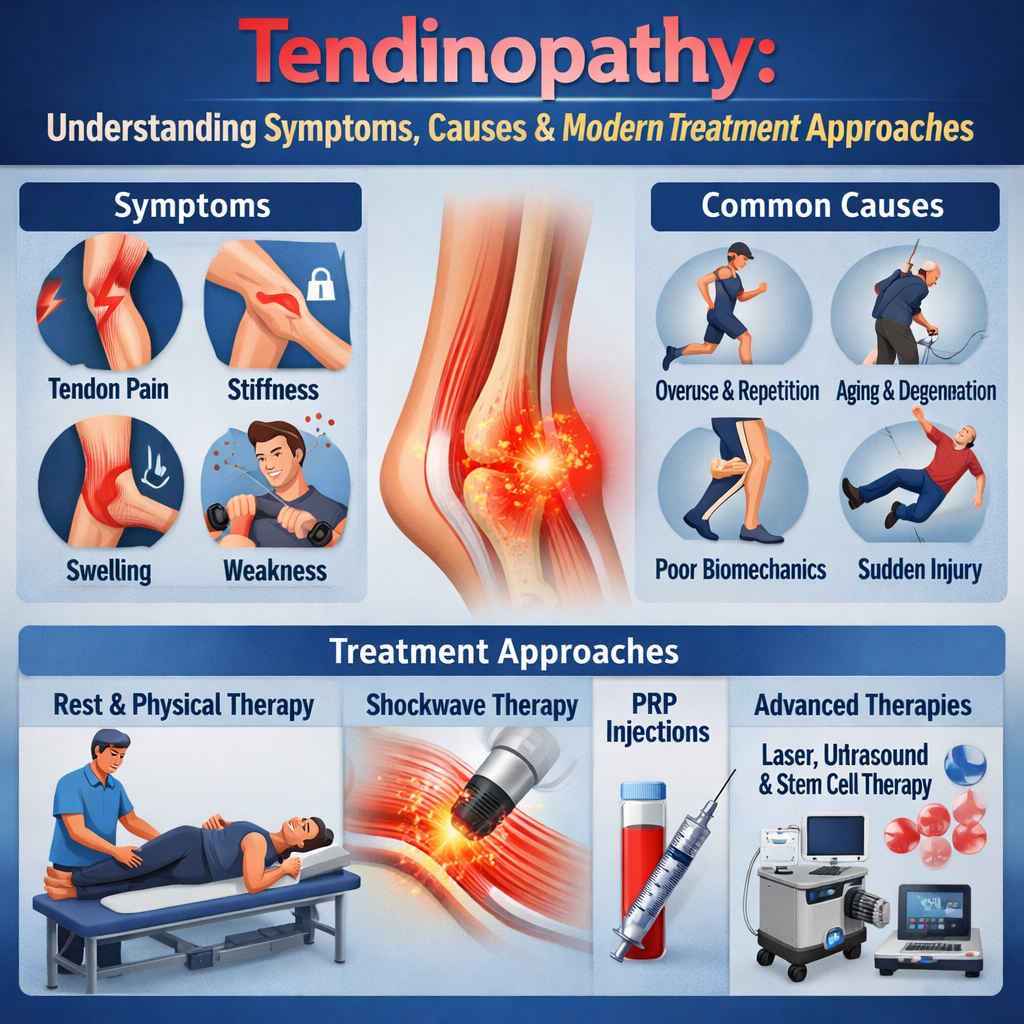
Tendinopathy can affect many tendons throughout the body, but it most commonly appears in areas that experience repetitive movement or heavy mechanical stress.
Achilles Tendinopathy
Achilles Tendinopathy affects the tendon connecting the calf muscles to the heel bone. It often causes Achilles tendon pain at the back of the ankle. This condition frequently occurs in runners or athletes who suddenly increase their training intensity. The pain typically worsens during activity such as running, jumping, or climbing stairs.
Rotator Cuff Tendinopathy
Rotator cuff tendinopathy involves the group of muscles and tendons that stabilize the shoulder joint. It commonly leads to rotator cuff pain, especially when lifting the arm or reaching overhead. Repetitive overhead movements such as swimming, painting, or carpentry are common triggers. Patients often experience a dull shoulder ache that becomes worse at night.
Tennis Elbow (Lateral Epicondylitis)
Tennis Elbow is a form of tendinopathy that affects the tendons attaching to the outer part of the elbow. It causes pain where the forearm muscles connect to the bony bump on the outside of the elbow. Although associated with tennis players, the condition commonly occurs in people who perform repetitive wrist movements such as typing, cooking, or using tools.
Golfer’s Elbow (Medial Epicondylitis)
Golfer’s Elbow causes pain on the inner side of the elbow where tendons attach to the bone. The condition results from repeated gripping, wrist flexion, or forearm rotation. Pain may spread along the forearm and can make everyday tasks such as lifting objects uncomfortable.
Patellar Tendinopathy (Jumper’s Knee)
Patellar tendinopathy occurs in the tendon connecting the kneecap to the shinbone. This condition is common among athletes involved in sports that require frequent jumping such as basketball or volleyball. It produces persistent pain just below the kneecap and may worsen during running, jumping, or squatting.
Gluteal Tendinopathy
Gluteal tendinopathy affects the tendons located on the outer side of the hip. It is more frequently diagnosed in women and may cause pain when walking, climbing stairs, or lying on the affected side. The discomfort often occurs near the bony part of the hip known as the greater trochanter.
De Quervain’s Tenosynovitis
De Quervain’s Tenosynovitis is a painful condition involving the tendons on the thumb side of the wrist. It develops when repetitive hand or wrist movements irritate the tendon sheath. Individuals may experience pain while gripping objects, turning the wrist, or making a fist.
What Are The Causes and Risk Factors of Tendinopathy?
Understanding tendinopathy causes helps people reduce risk and seek early treatment.
Overuse and Repetitive Strain
The most common cause of tendinopathy is repeated stress on a tendon. Activities like typing, gardening, scrubbing, or weight training can create small tears in tendon fibers. Without adequate rest, these micro injuries accumulate and lead to chronic tendon pain.
Aging and Degenerative Changes
With age, tendons lose flexibility and strength. Reduced blood flow and elasticity increase the risk of injury, making tendons more vulnerable to damage even during routine physical activities.
Sudden Increase in Activity
A sudden rise in physical activity or intense exercise can overload tendons that are not conditioned for higher stress levels. This commonly occurs when people start demanding workouts without gradual training progression.
What Are Symptoms of Tendinopathy?
Recognizing early tendinopathy symptoms can prevent the condition from progressing.
Pain with Activity and Loading
The most common symptom is tendon pain that worsens during movement or when weight is placed on the affected area. The discomfort is often described as a dull ache.
Morning Stiffness and Warm-Up Pain
Many patients experience morning stiffness around the affected tendon. Pain may initially improve as the joint warms up but often returns after activity.
Localized Tenderness
The tendon insertion point where it attaches to bone often becomes sensitive to touch. Doctors commonly check for this tenderness during physical examination.
Swelling and Thickening
In some cases the tendon becomes slightly swollen or thickened. A grating sensation may also be felt when the tendon moves.
Key Diagnosis Steps For Tendinopathy
Accurate diagnosis is essential because several other conditions can cause similar symptoms.
Clinical Examination
Doctors typically begin with a detailed physical exam and medical history. They assess tenderness, strength, joint stability, and range of motion
Imaging Studies
Medical imaging such as musculoskeletal ultrasound can help visualize tendon damage. These tests may reveal tendon thickening, microtears, or degenerative changes.
Ruling Out Other Conditions
Healthcare providers also rule out other causes of pain such as arthritis, bursitis, or nerve compression that may mimic tendinopathy.
What Are The Treatment Options For Tendinopathy?
Effective tendinopathy treatment usually begins with conservative approaches. Rest, ice, and anti inflammatory medications are commonly used to manage pain in the early stages.
Physical therapy plays a major role in recovery. Strengthening the muscles surrounding the affected tendon helps distribute mechanical load more effectively and reduces strain.
Modern treatment approaches may include regenerative medicine techniques. Platelet Rich Plasma therapy uses components from a patient’s own blood to stimulate healing in damaged tendon tissue. Other options such as prolotherapy and stem cell therapy may also help support tissue repair when traditional treatments are insufficient.
How To Prevent Tendinopathy?
Preventing tendinopathy involves reducing repetitive strain on the body. Gradually increasing exercise intensity allows tendons to adapt to higher physical demands.
Cross training can also reduce stress on a single tendon by varying movement patterns. Using proper technique during exercise and wearing supportive footwear are important preventive measures. Strengthening muscles around joints further improves the ability of tendons to handle daily activities and sports.
When to Seek For Professional Help?
Medical evaluation is recommended if tendon pain persists despite rest or begins interfering with normal daily activities. Ignoring ongoing symptoms may lead to more serious complications such as tendinosis or tendon rupture.
Early professional care ensures an accurate diagnosis and allows doctors to create an effective treatment plan that restores mobility and function.
The success of treatment depends on the severity of the joint condition and the overall health of the patient.
Frequently Asked Questions About Tendinopathy
Tendinitis refers to short-term inflammation of a tendon, while tendinopathy is a broader term that includes both inflammation and long-term tendon degeneration.
The most common tendinopathy causes include repetitive strain, aging-related tendon changes, and sudden increases in physical activity.
Mild tendinopathy may improve with rest and activity modification, but continued stress on the injured tendon can worsen the condition without proper treatment.
The most effective tendinopathy treatment usually combines rest, physical therapy, strengthening exercises, and in some cases regenerative treatments such as PRP therapy.
Recovery time varies. Mild cases may improve within a few weeks, while chronic tendon degeneration can take several months to fully heal.
Cortisone injections can temporarily reduce pain and inflammation, but excessive use may weaken tendons and increase the risk of rupture.
Eccentric exercises strengthen muscles as they lengthen. This type of training improves tendon resilience and stimulates the repair of damaged tendon fibers.


