




Key Highlights
1. Modern treatments offer several injection options to help manage Knee Pain without surgery.
2. These injections deliver medication directly into the joint to reduce inflammation and improve movement.
3. Options include cortisone shots, PRP knee injection, and stem cell knee injection.
4. They are commonly used to treat knee arthritis and Knee Osteoarthritis.
Understanding Knee Injections: How They Work
Knee injections deliver medication directly into the knee joint to treat Knee Pain at its source. By targeting inflammation within the joint capsule, these treatments reduce swelling, improve lubrication, and relieve discomfort. Some injections reduce inflammation while others promote healing. Doctors often recommend them when conservative treatments fail before considering surgery.
7 Main Types of Knee Injections for Pain Relief
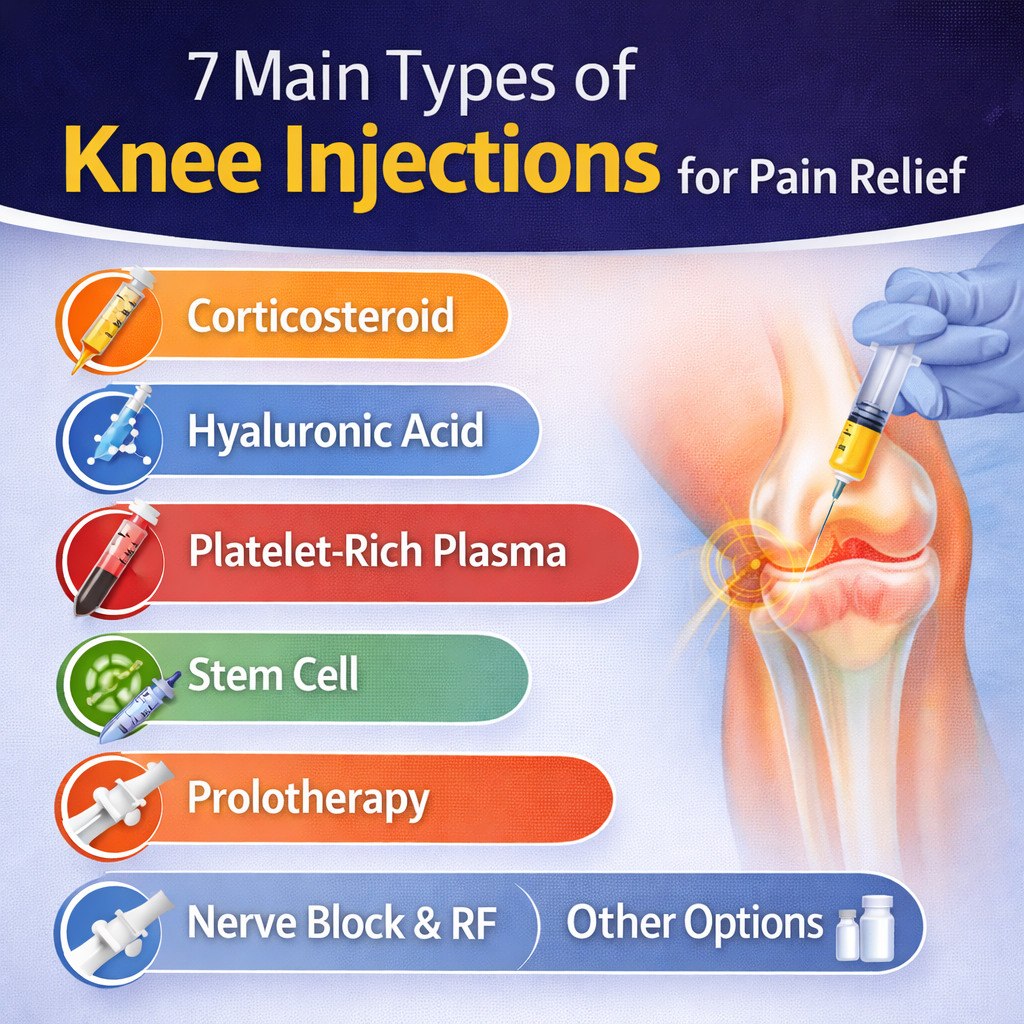
Type 1 Corticosteroid Injections
Corticosteroid injections are commonly used to relieve Knee Pain caused by inflammation. These injections contain strong anti-inflammatory medication that reduces swelling inside the joint. They are often used for knee arthritis flare-ups and may provide relief within a few days. However, doctors usually limit these injections to three or four times per year to protect cartilage health.
Type 2 Hyaluronic Acid Injections
Hyaluronic acid injections, often called gel injections, improve joint lubrication. They act as a cushion and help bones move smoothly within the knee joint. These injections are widely used for Knee Osteoarthritis and may provide relief for several months.
Type 3 Platelet-Rich Plasma Injections
A PRP knee injection uses the patient’s own blood platelets to stimulate healing. Growth factors released from the platelets help repair damaged tissues and reduce inflammation in the knee.
Type 4 Stem Cell Injections
A stem cell knee injection introduces specialized cells into the joint to support cartilage repair and reduce inflammation. This regenerative treatment may help slow the progression of Knee Osteoarthritis.
Type 5 Prolotherapy
Prolotherapy uses a sugar-based solution to stimulate the body’s healing response. It helps strengthen ligaments and improve joint stability.
Type 6 Genicular Nerve Block and Radiofrequency Treatment
This treatment blocks pain signals from nerves around the knee. If successful, radiofrequency therapy may provide longer-lasting relief.
Type 7 Other Injection Options
Emerging treatments such as autologous conditioned serum and botulinum toxin injections may also help reduce inflammation and manage knee pain.
Although still being studied, these options provide additional possibilities for patients who have not responded well to conventional injections.
Comparing Different Knee Injection Types
When comparing injection treatments for Knee Pain, it is helpful to consider how quickly each option works and how long the effects last.
Corticosteroid injections provide rapid relief and are particularly effective during inflammatory flare ups. However, the benefits may only last a few months.
Hyaluronic acid injections and PRP knee injection treatments often take longer to produce noticeable improvement, but their benefits may last six months or longer. Regenerative therapies such as stem cell knee injection aim to support tissue repair and provide longer lasting improvements.
The right treatment depends on the patient’s condition, level of joint damage, and treatment goals.
Which Knee Injection Is Best for Your Condition
For Osteoarthritis
Patients with Knee Osteoarthritis often benefit from corticosteroid or hyaluronic acid injections. These treatments help reduce inflammation and improve joint lubrication.
For Sports Injuries
Ligament injuries, tendon problems, or meniscus damage often respond well to regenerative therapies such as PRP knee injection or stem cell knee injection because these treatments promote tissue healing.
For Chronic Pain
Chronic knee pain that persists despite other treatments may be managed with nerve blocks or radiofrequency procedures that interrupt pain signals.
For Ligament and Tendon Injuries
Conditions affecting the ligaments or tendons around the knee can often improve with prolotherapy or PRP knee injection therapy.
The Injection Procedure: What to Expect
Before the Injection
Before performing a knee injection, the doctor reviews the patient’s medical history and symptoms. Imaging studies such as X rays or MRI scans may be used to confirm the cause of Knee Pain.
Patients are usually advised to try conservative treatments such as exercise therapy or lifestyle modifications before considering injections.
During the Injection
The procedure begins with cleaning the skin and applying a local anesthetic to reduce discomfort. A thin needle is then inserted into the knee joint, and the medication is delivered directly into the joint capsule.
In some cases, the doctor may remove excess joint fluid before administering the injection. This process can relieve pressure and help determine the cause of inflammation.
Ultrasound Guided Injections
Many clinics use ultrasound imaging to guide the needle precisely into the joint. This technique improves accuracy and ensures the medication reaches the exact location needed.
After the Injection
Most patients can walk immediately after the procedure. Doctors usually recommend avoiding heavy physical activity for forty eight hours. Mild swelling or soreness may occur but usually resolves quickly.
Risks and Side Effects of Knee Injections
Knee injections are generally safe when performed by trained specialists. The most common side effects include temporary soreness or swelling at the injection site.
In rare cases infection or allergic reactions may occur. Patients with diabetes should be aware that corticosteroid injections may temporarily increase blood sugar levels.
How Long Do Knee Injections Last
The duration of relief depends on the type of injection used. Corticosteroid injections usually provide relief for two to three months.
Hyaluronic acid injections and PRP knee injection therapy may provide benefits for six months or longer. Some patients who receive stem cell knee injection therapy may experience improvement lasting a year or more.
Success Rates of Knee Injections
Many patients experience meaningful improvements in pain and mobility after receiving injections. While these treatments do not cure Knee Osteoarthritis, they can significantly reduce symptoms and delay the need for joint replacement surgery.
The success of treatment depends on the severity of the joint condition and the overall health of the patient.
Knee Injection Treatment at Alleviate Pain Clinic
Alleviate Pain Clinic in Bangalore specializes in non surgical treatments for joint conditions and knee pain. Their team of specialists uses advanced interventional techniques and imaging guidance to deliver precise injection treatments.
The clinic offers a wide range of options including corticosteroid injections, PRP knee injection, and stem cell knee injection therapies. By creating personalized treatment plans, they help patients manage knee arthritis, reduce pain, and improve joint mobility without surgery.
FAQs About Types of Injections for Knee Pain
The best treatment depends on the cause of Knee Pain. Corticosteroid injections provide quick relief, while regenerative treatments such as PRP knee injection or stem cell knee injection aim for longer lasting healing.
Most injections provide relief for three to six months, although some regenerative treatments may last longer.
The procedure is usually well tolerated. Doctors use local anesthesia and fine needles to minimize discomfort.
Doctors typically recommend limiting cortisone injections to three or four per year to protect joint tissues.
Many insurance plans cover traditional treatments such as corticosteroid or hyaluronic acid injections. Coverage for regenerative therapies may vary.
Yes. Most patients can walk immediately after the procedure, although strenuous activity should be avoided for the first two days.


