




Key Highlights
- Headaches in children are common and usually linked to everyday factors like stress, lack of sleep, dehydration, screen time, or minor illnesses.
- Common types include tension headaches, migraines, sinus headaches, and rarely cluster headaches, with symptoms such as head pain, nausea, irritability, and sensitivity to light.
- Most cases improve with lifestyle changes like proper sleep, hydration, balanced diet, and reduced screen time, along with guided medication if needed.
- However, severe, frequent, or unusual symptoms require medical evaluation to rule out underlying conditions and ensure proper treatment.
Watching your child deal with pain can be upsetting, especially when they struggle to explain what they are feeling. A child holding their head, avoiding bright light, or wanting to lie down quietly can leave parents feeling worried and unsure of what to do. The good news is that Headaches are fairly common during childhood and are usually manageable once the cause is understood.
Are Headaches Common in Children?
Yes, headaches in children are more common than many parents realize. Studies show that about one in four younger children experiences headaches at some point, and the number rises significantly during the teenage years.
While parents often worry about serious medical problems, only a small percentage of childhood headaches are related to serious illness. In most cases, the pain is linked to everyday factors such as stress, lack of sleep, dehydration, or changes in routine. Understanding the causes of headaches can help parents identify triggers and manage symptoms early.
Types of Headaches in Children
Children can experience several types of headaches. Each type has its own pattern of symptoms and triggers.
Tension-Type Headaches
Tension headaches are the most common type of headache seen in school-aged children. They usually feel like a dull, tight pressure around the head or neck.
Migraine Headaches
Migraine headaches can also occur in children and tend to be more intense than tension headaches. A migraine in children often causes throbbing pain across the front or both sides of the head.
Cluster Headaches (Rare in Children)
Cluster headaches are very uncommon in children, especially those under ten years old. These headaches cause severe pain on one side of the head and may occur several times in a single day.
Sinus Headaches
A sinus headache children experience usually appears during illnesses such as colds or sinus infections. When the sinuses become inflamed, pressure builds up around the forehead, cheeks, and eyes.
Secondary Headaches (Underlying Conditions)
Some headaches develop because of another health condition. These are called secondary headache causes and may be linked to fever, ear infections, head injuries, or other medical problems.
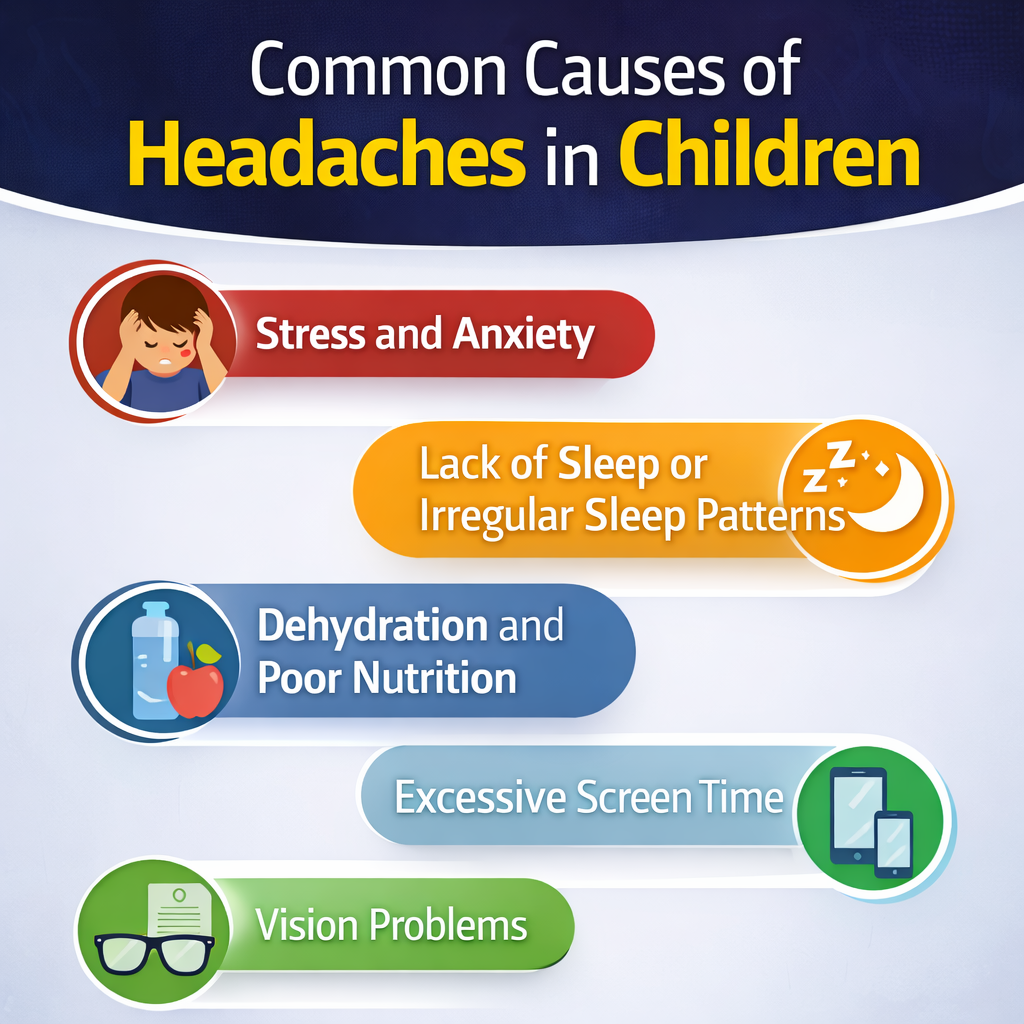
Common Causes of Headaches in Children
Understanding the Causes of Headaches is one of the most helpful steps in preventing them.
Stress and Anxiety
Children experience stress just like adults. School pressure, social challenges, or changes at home can trigger stress headaches.
Lack of Sleep or Irregular Sleep Patterns
Sleep is essential for growing bodies. A sleep deprivation headache can occur when children do not get enough rest or when their sleep schedule is inconsistent.
Dehydration and Poor Nutrition
Skipping meals or not drinking enough water can also lead to Headaches. Dehydration is a frequent but often overlooked cause.
Excessive Screen Time
Long hours spent using phones, tablets, or computers may lead to a screen time headache. Staring at screens for extended periods can strain the eyes and tighten neck muscles.
Vision Problems
Sometimes headaches are related to eyesight issues. An eye strain headache may occur when a child has trouble focusing or needs glasses.
Symptoms of Headaches in Children
Children may not always describe their symptoms clearly, so parents often need to watch for subtle clues.
Pain Location and Description
Some children say their whole head hurts, while others may point to a specific area. Younger children might even describe stomach discomfort instead of head pain.
Associated Symptoms
Headaches may come with other symptoms such as nausea, dizziness, blurred vision, or increased tiredness.
Behavioral Changes
Behavior can also provide important hints. A child with a headache may become irritable, withdrawn, or unusually quiet.
Younger children might stop playing or lose interest in activities they normally enjoy.
Warning Signs: When to Worry About Your Child's Headache
Most Headaches are harmless, but certain symptoms should not be ignored.
Seek medical attention if a headache wakes your child from sleep, becomes increasingly severe, or follows a head injury. Other warning signs include fever, stiff neck, confusion, weakness, or sudden vision problems.
If these symptoms appear, a doctor should evaluate the child as soon as possible.
Diagnosing Headaches in Children
When headaches occur frequently, a doctor may perform a detailed evaluation.
Medical History and Symptom Diary
A child’s medical history is often the starting point. Doctors may ask about family history, since migraines often run in families.
Keeping a symptom diary can be helpful. Parents can record when headaches occur, how long they last, and possible triggers.
Physical and Neurological Examination
During an examination, the doctor may check blood pressure, balance, reflexes, and vision. These tests help determine whether the headaches are related to neurological issues.
Diagnostic Tests (When Necessary)
In some situations, imaging tests such as MRI or CT scans may be recommended. These scans allow doctors to examine the brain and rule out more serious conditions.
Treatment Options for Childhood Headaches
The goal of pediatric headache treatment is to relieve pain and reduce how often headaches occur.
Lifestyle changes are often the first step. Maintaining regular sleep schedules, eating balanced meals, and staying hydrated can make a significant difference.
Doctors may recommend over-the-counter medications such as ibuprofen or acetaminophen for occasional headaches. However, these medications should only be used according to medical guidance.
Relaxation methods like deep breathing or mindfulness exercises may also help children manage stress-related headaches.
When to Seek Professional Help
If headaches begin interfering with school, sports, or social activities, it is time to seek professional advice.
Frequent headaches may require a more detailed evaluation and a personalized treatment plan.
Specialized Care at Alleviate Pain Clinic
At Alleviate Pain Clinic, specialists focus on identifying the root cause of chronic pain. Their team uses modern, non-surgical techniques and personalized treatment plans designed to help children regain comfort and return to normal daily activities.
Early care can help prevent headaches from becoming a long-term problem.
FAQs About Headaches in Children
Yes, headaches in children are fairly common and often occur during school-age years and adolescence.
Tension headaches are the most common, followed by Migraine Headaches.
Common triggers include stress, dehydration, lack of sleep, and excessive screen time.
Parents should seek medical care if headaches are severe, sudden, or accompanied by fever, stiff neck, or vision problems.
Yes, prolonged device use can cause eye strain and muscle tension, leading to headaches.


