




What is Thumb Arthritis?
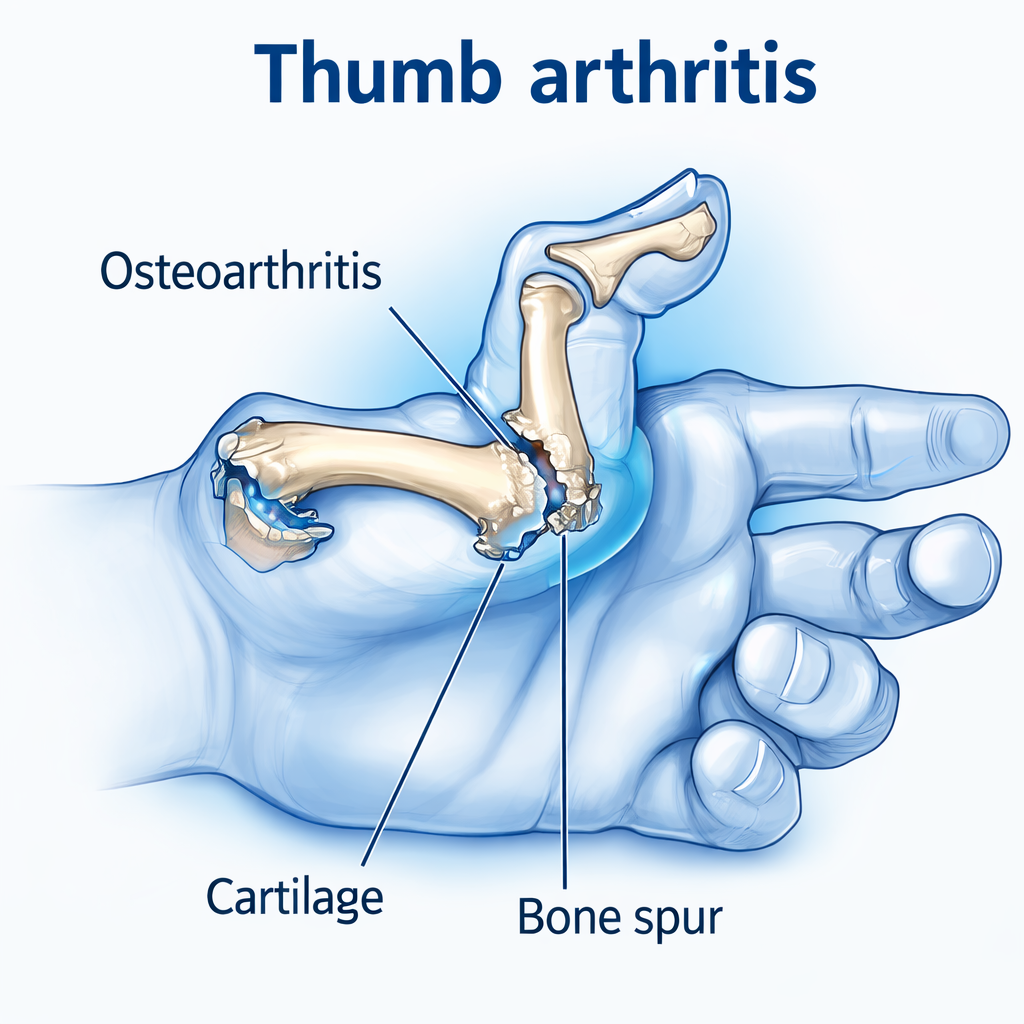
The thumb is essential for everyday tasks like writing, opening bottles, or using a phone. At its base is the carpometacarpal (CMC) joint, which allows the thumb to move freely and grip objects. Thumb arthritis, also called CMC arthritis, develops when the cartilage in this joint gradually wears down. As the cushioning disappears, bones begin to rub together, causing pain, swelling, and stiffness, making simple activities like gripping or turning objects increasingly difficult.
Causes and Risk Factors of Thumb Arthritis
Age and Gender
Growing older increases the risk of thumb arthritis because joint cartilage naturally wears down over time. Studies also show women, especially after forty, are more likely to develop this condition due to hormonal and structural joint differences.
Previous Thumb Injuries
Past injuries such as fractures, sprains, or dislocations can damage the thumb joint and lead to post-traumatic arthritis. Even after healing, the joint may remain unstable and wear out faster.
Repetitive Stress and Overuse
Frequent gripping, pinching, or twisting motions can place long-term stress on the CMC joint. Activities like sewing, gardening, manual work, or heavy smartphone use may gradually damage cartilage.
Joint Laxity and Hypermobility
Some people naturally have loose ligaments that allow joints to move more than usual. This extra movement can create instability in the thumb joint and increase the risk of arthritis over time.
Symptoms of Thumb Arthritis
Symptoms often appear gradually and worsen as joint damage progresses. Recognizing thumb arthritis symptoms early can help prevent further joint damage.
Pain at the Base of the Thumb
One of the earliest signs is thumb base pain. This discomfort usually appears near the base of the thumb where it meets the wrist. The pain often becomes noticeable during activities that require gripping, pinching, or twisting. Tasks such as opening jars, turning keys, or writing may trigger the discomfort.
Swelling and Tenderness
Many people also experience thumb joint swelling and tenderness. The joint may look slightly enlarged or feel warm after repeated use. Inflammation in the joint may cause stiffness, especially in the morning or after long periods of inactivity.
Decreased Strength and Grip
As the condition progresses, hand strength may decline. People with arthritis in the thumb may struggle to hold heavy objects or maintain a strong grip. Even everyday tasks like carrying groceries or opening a bottle can become challenging.
Limited Range of Motion
Another common symptom is reduced mobility in the thumb joint. Movement may feel stiff or restricted, making it harder to stretch the thumb away from the palm. In some cases, the joint may develop visible bumps due to bone spurs forming around the damaged cartilage.
Stages of Thumb Arthritis
Doctors often divide thumb arthritis into stages based on the amount of joint damage.
Early Stage (Stage 1)
In the early stage, symptoms are usually mild. People may experience occasional discomfort after heavy hand use. This stage is often described as mild arthritis, where cartilage damage is minimal but irritation in the joint has begun.
Moderate Stage (Stage 2–3)
As the condition progresses, symptoms become more noticeable. Pain may appear more frequently and may continue even during rest. During moderate arthritis, the joint may produce a grinding or clicking sensation during movement. Bone spurs may begin forming as the body attempts to stabilize the joint.
Advanced Stage (Stage 4)
In the final stage, the joint may become severely damaged. Severe arthritis often leads to constant pain and visible joint deformity. Movement becomes very limited, and everyday activities may become extremely difficult.
Diagnosing Thumb Arthritis
A proper diagnosis is important for choosing the right treatment plan.
Physical Examination
A doctor will begin with a physical examination of the hand and thumb. The joint may be gently moved to check for pain, stiffness, or grinding sensations known as crepitus. Grip strength, swelling, and joint alignment are also evaluated during the exam.
Imaging Studies (X-ray, MRI)
Imaging tests help confirm the diagnosis. X-rays are commonly used to detect joint space narrowing, bone spurs, or other structural changes caused by arthritis. In some cases, MRI scans may be recommended to provide a more detailed view of soft tissues, cartilage, and surrounding ligaments.
Treatment Options for Thumb Arthritis
The good news is that thumb arthritis treatment often begins with simple, non-surgical options. Many people are able to manage symptoms effectively without surgery.
Conservative (Non-Surgical) Treatments
Early treatment typically focuses on reducing pain and protecting the joint. Doctors may recommend anti-inflammatory medications such as ibuprofen to reduce swelling and discomfort. Applying ice packs or warm compresses may also provide relief.
Wearing a thumb splint can help stabilize the joint and reduce strain during daily activities. In some cases, corticosteroid injections may be used to decrease inflammation and provide longer-lasting pain relief.
Lifestyle adjustments, such as using ergonomic tools or avoiding repetitive pinching motions, can also help protect the joint.
Exercises for Thumb Arthritis
Targeted thumb arthritis exercises can help improve flexibility and strengthen surrounding muscles.
A physical or occupational therapist may recommend gentle stretching and strengthening routines designed to support the joint. These exercises help improve stability and reduce stress on the thumb during everyday activities.
Regular exercise may also help maintain joint mobility and prevent stiffness.
Prevention and Early Intervention
Although arthritis cannot always be prevented, certain habits may help protect the thumb joint.
Using tools with larger handles, taking breaks during repetitive tasks, and maintaining good hand posture can reduce strain on the CMC joint.
Early intervention is especially important. Addressing symptoms when they first appear may slow the progression of thumb arthritis.
When to Seek Professional Help
Persistent pain at the base of the thumb should not be ignored. If symptoms such as swelling, stiffness, or reduced grip strength interfere with daily activities, it is best to consult a healthcare professional.
Early treatment can help manage symptoms and preserve joint function for many years.
FAQs About Thumb Arthritis
Thumb arthritis occurs when cartilage in the CMC joint wears down, causing bone friction, pain, and reduced movement.
Common causes include aging, joint stress, previous injuries, and genetic factors that affect joint stability.
Early thumb arthritis symptoms often include thumb base pain, mild stiffness, and discomfort during gripping or pinching activities.
While cartilage damage cannot be fully reversed, many people manage symptoms effectively through non-surgical treatments.
The best thumb arthritis treatment usually combines splints, medication, physical therapy, and lifestyle changes.
Activities involving strong pinching, gripping, or repetitive thumb movements should be minimized to protect the joint.


