




Key Highlights
- Burning knee pain is often caused by inflammation, nerve irritation, or overuse of joint structures, leading to a warm or tingling sensation around the knee.
- Common causes include patellofemoral pain syndrome, IT band syndrome, bursitis, arthritis, tendonitis, nerve compression, or cartilage injuries.
- Symptoms may include warmth, stiffness, mild swelling, and discomfort during movement or after prolonged sitting.
- Treatment depends on the cause and includes rest, ice, medications, physiotherapy, and strengthening exercises.
- Persistent or severe symptoms require medical evaluation to diagnose underlying joint or nerve issues.
Not all knee pain feels the same. Some people describe a dull ache after a long walk. Others feel sharp pain when bending the leg. A burning feeling is different from both. It often feels like warmth spreading through the joint or around the kneecap. The sensation can be mild at first, but it tends to draw attention because it feels unusual.
A burning sensation in the knee area usually signals irritation somewhere around the joint. The knee contains many small structures such as tendons, nerves, cartilage, and fluid sacs. When one of these becomes inflamed or compressed, the body may respond with burning knee pain instead of the typical aching discomfort. This type of pain often appears during ordinary activities. Some people notice it while climbing stairs. Others feel it after sitting for a long time and then standing up. Understanding the possible knee pain causes helps explain why the knee sometimes produces this burning feeling.
What Does Burning Knee Pain Feel Like?
People often describe the sensation as warmth inside the joint. For some, the feeling stays around the front of the knee. Others notice it along the side of the joint. The discomfort may appear during movement or after activity stops. Sitting for long periods with the knee bent sometimes makes the burning sensation worse. Once the leg straightens, the joint may feel irritated for a short time. Burning pain often suggests irritation of soft tissues or nerves in the knee.
Common Causes of Burning Knee Pain
Nerve Compression and Damage
A Pinched nerve in the neck can create tingling or burning sensations. Nerves carry signals from the body to the brain. When a nerve becomes irritated, the signal may feel different from typical pain. Swelling or muscle tension near the knee may place pressure on nearby nerves.
Iliotibial Band Syndrome (IT Band)
The iliotibial band runs down the outer thigh and connects near the knee. If this band becomes tight, it may rub against the outer knee during movement. This repeated friction may create irritation that feels like burning along the side of the joint.
Patellofemoral Pain Syndrome (Runner’s Knee)
Patellofemoral syndrome occurs when the kneecap does not move smoothly in its groove on the thigh bone. This condition often appears in people who run or perform repeated knee movements. Pain usually appears around the front of the knee. Some people also report warmth or burning near the kneecap.
Bursitis and Inflammation
Bursae are small fluid-filled sacs that reduce friction between tissues. When one becomes inflamed, bursitis develops. Prepatellar bursitis occurs in the sac located in front of the kneecap. Swelling and irritation here can create warmth and tenderness.
Meniscus Tears and Cartilage Damage
The meniscus tear acts as a cushion between bones in the knee joint. A sudden twist or sports injury can damage this cartilage. Typical cartilage damage symptoms include swelling, stiffness, and discomfort while bending the knee.
Osteoarthritis and Degenerative Changes
With age, cartilage in the knee may wear down. Bones begin to move closer together, which irritates the joint lining. Some individuals with arthritis notice warmth or burning around the joint.
Tendinitis and Tendinopathy
Tendons connect muscles to bones. Repeated strain may irritate these tissues. Quadriceps tendinitis affects the tendon above the kneecap. The area may feel sore and warm during activity.
Overuse Injuries and Strain
A common overuse knee injury develops when the knee experiences repeated stress without enough recovery time. Running, jumping, or frequent stair climbing may contribute.
Diabetes-Related Neuropathy
People with diabetes sometimes develop nerve damage called neuropathy. This condition may produce burning sensations in different parts of the body, including around the knee.
Symptoms Associated with Burning Knee Pain
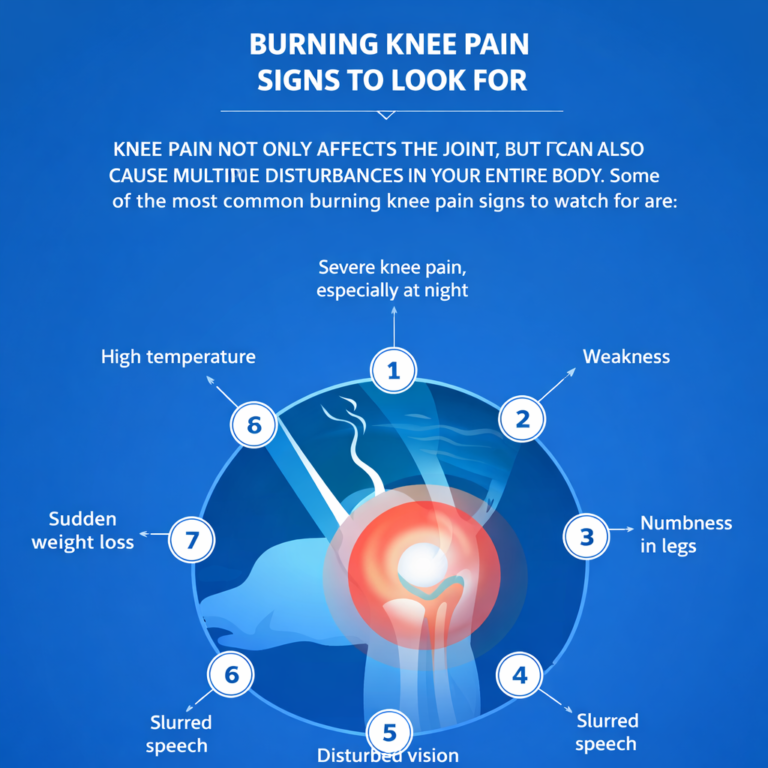
Primary Symptoms to Watch For
The knee may feel warm to the touch. Mild swelling may appear around the joint. Some individuals notice stiffness after resting.
Pain Patterns and Triggers
Certain movements can trigger the sensation. Climbing stairs, kneeling, or standing after long sitting periods often makes the knee feel irritated.
Warning Signs Requiring Immediate Attention
Some severe knee pain symptoms require medical evaluation. Sudden swelling, inability to move the knee, or intense pain after injury may signal joint damage.
Diagnosing Burning Knee Pain
Physical Examination
A knee examination allows the doctor to check swelling, tenderness, and joint movement. The doctor may gently press around the kneecap and surrounding structures.
Imaging Studies (X-ray, MRI, CT Scan)
Imaging tests help doctors see inside the joint. X-rays reveal bone changes. MRI scans show cartilage, ligaments, and other soft tissues. These tests help confirm the cause of knee discomfort.
Treatment Options for Burning Knee Pain
The right burning knee pain treatment depends on the underlying condition.
Conservative Treatments
Rest often allows irritated tissues to recover. Ice packs may help calm inflammation. Elevating the leg may reduce swelling. Supportive braces sometimes help stabilize the knee.
Medications for Pain Relief
Doctors may recommend medication that reduces inflammation and discomfort.
Physical Therapy and Rehabilitation
Physical therapy focuses on strengthening muscles that support the knee. Stronger muscles help reduce stress on the joint during movement.
Prevention Tips for Burning Knee Pain
Simple habits can help protect the knee joint and reduce the risk of irritation or injury:
- Stretch regularly: Gentle stretching prepares muscles and tendons around the knee before physical activity.
- Strengthen supporting muscles: Exercises that strengthen the thighs and surrounding muscles help keep the knee stable.
- Increase activity gradually: Avoid sudden increases in workout intensity or duration to prevent overuse injuries.
- Wear supportive footwear: Proper shoes help maintain healthy leg alignment and reduce strain on the knee joint.
When to Seek Professional Help
Occasional knee discomfort may improve with rest, but certain signs should not be ignored:
- Persistent burning pain: Burning sensations that last for several weeks.
- Ongoing swelling: Swelling that does not improve with rest or basic care.
- Difficulty moving the knee: Trouble bending, straightening, or bearing weight on the joint.
- Worsening symptoms: Pain that gradually becomes more intense or frequent.
Specialized Treatment at Alleviate Pain Clinic
Doctors evaluate knee conditions through physical examination and imaging tests. Treatment plans depend on the diagnosis and may include therapy, medication, or other medical procedures.
FAQs About Burning Knee Pain
It may indicate nerve irritation, inflammation, or strain in tissues around the knee.
It depends on the cause. Mild irritation may resolve with rest, but persistent pain requires medical evaluation.
Yes. A pinched nerve in the knee may create burning or tingling sensations.
Treatment may include rest, medication, physical therapy, and other medical care, depending on the cause.
Pressure on the front of the knee may irritate tissues such as bursae or nerves.
Yes. Nerve damage from diabetes may create burning sensations in joints.
Yes. Iliotibial band irritation can create pain and burning along the outer knee.


