





Key Highlights
- Flatback syndrome occurs when the natural curve of the lower spine (lumbar lordosis) is lost, causing a forward-leaning posture and imbalance.
- Common causes include spinal surgery, degenerative disc changes, arthritis, fractures, or conditions like ankylosing spondylitis, leading to symptoms such as lower back pain, fatigue, stiffness, and difficulty standing upright.
- Treatment typically begins with physical therapy, posture correction, and pain management, while severe cases may require surgery to restore spinal alignment.
- Early diagnosis and lifestyle changes help improve posture, reduce pain, and prevent progression of the condition.
What is Flatback Syndrome?
Flatback syndrome occurs when the lower spine loses its natural inward curve and becomes straight. This loss of lumbar lordosis creates a forward imbalance in the body, known as sagittal imbalance. As the spine flattens, the body’s center of gravity shifts forward, making it difficult to stand upright. People with a flatback deformity often compensate by leaning their head forward, bending their knees, or tilting their pelvis. Over time, these adjustments strain the back and leg muscles, leading to fatigue, stiffness, and persistent lower back pain.
Understanding Normal Spinal Curvature
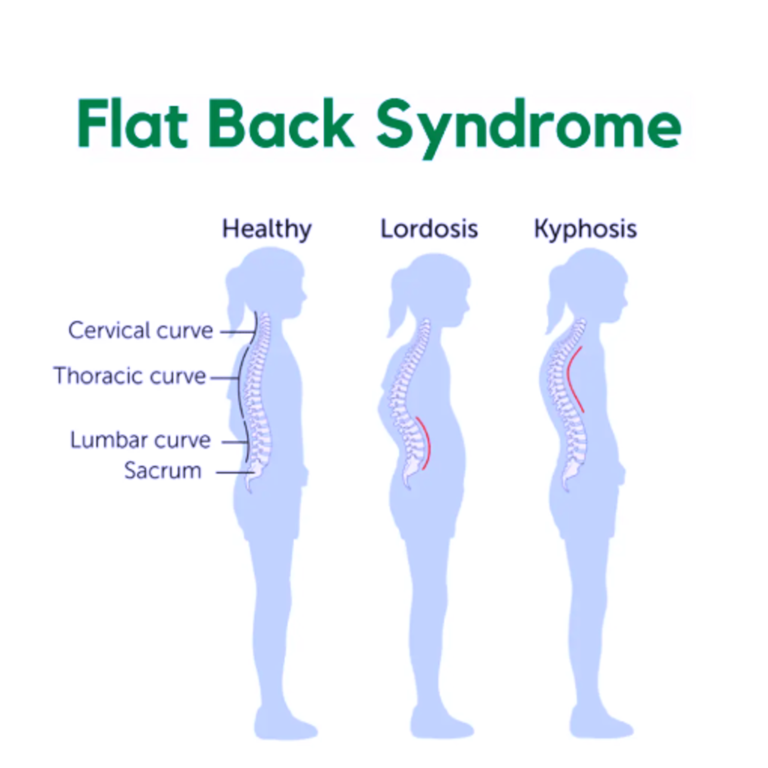
A healthy spine naturally forms gentle curves rather than being completely straight. This natural spine curve looks similar to the shape of the letter “S.”
The lower back has a backward curve called lordosis, while the upper back has a forward curve known as kyphosis. These curves create proper lumbar spine curvature, helping the body maintain balance and absorb shock when walking or moving.
When these curves disappear or become flatter than normal, the spine cannot support body weight properly. This imbalance can affect posture and make everyday movements more difficult.
Causes of Flatback Syndrome
Post-Surgical Causes
Flatback syndrome can occur after certain spinal surgeries. Older scoliosis treatments using Harrington rods sometimes flattened the natural lower back curve. Over time, discs below the fused spine may degenerate, making it difficult to stand upright. Some cases also develop after a laminectomy performed to treat spinal stenosis.
Degenerative Disc Changes
As people age, spinal discs gradually lose height and flexibility. This degeneration can reduce the natural curve of the lower back and slowly lead to a straighter spine.
Inflammatory Conditions
Inflammatory diseases such as arthritis and Spondylitis can affect the spine. These conditions may cause stiffness, structural changes, and reduced spinal mobility.
Vertebral Compression Fractures
Vertebral compression fractures, often linked to osteoporosis, weaken spinal bones. When these bones collapse, spinal alignment changes and the body may lean forward.
Ankylosing Spondylitis
Ankylosing Spondylitis can cause inflammation and fusion of spinal bones. This reduces flexibility and may result in a forward-leaning posture over time.
Common Symptoms of Flatback Syndrome
Physical Signs and Postural Changes
One of the clearest flatback syndrome symptoms is a noticeable change in posture. A person may develop a flatback posture, where the upper body leans forward instead of standing upright.
To keep balance, many people bend their knees or tilt their hips. Walking in this position can be exhausting and often limits mobility.
Pain and Discomfort Patterns
Lower back pain is very common with flatback syndrome. The pain may spread into the hips or thighs because nearby muscles work harder to support the body.
Fatigue is another frequent complaint. Standing or walking for long periods may increase discomfort as the day goes on.
How is Flatback Syndrome Diagnosed?
Physical Examination
Doctors usually begin with a detailed physical examination. They observe posture, walking patterns, and how the spine moves during different activities. Muscle strength and nerve function are also checked. This helps doctors understand how the spine and surrounding muscles are working together.
Imaging Tests
Imaging tests provide a clearer picture of the spine. A standing X-ray that captures the full spine is often used to examine alignment. MRI or CT scans may also be ordered. These scans help doctors evaluate discs, nerves, and other structures that may be affected.
Non-Surgical Treatment Options
Most doctors begin flatback syndrome treatment with non-surgical approaches. These treatments focus on reducing pain and improving spinal support.
Physical Therapy and Exercises
Physical therapy plays an important role in managing this condition. Exercises focus on strengthening the muscles that support the spine, especially the core and lower back. Common exercises include planks, back extensions, and controlled stretching. Improving flexibility in the hamstrings and chest muscles can also help improve posture.
Pain Management Techniques
Pain can often be managed with anti-inflammatory medications such as ibuprofen. In cases of severe pain, doctors may recommend steroid injections to reduce inflammation around the nerves.
Simple home treatments like heat packs or ice can also help relieve soreness and swelling.
Bracing and Posture Correction
Sometimes doctors recommend a lumbar brace to support the lower back. A brace may help improve posture during certain activities. However, braces should not be worn constantly because they may weaken muscles over time. In some cases, walking aids may also help maintain balance and reduce strain on the spine.
Surgical Treatment for Flatback Syndrome
If symptoms become severe or non-surgical treatments are not effective, surgery may be considered. The main goal of surgery is to restore the natural curve of the spine and improve overall alignment. This may involve spinal fusion, where bones are joined together to stabilize the spine.
Another option is osteotomy, a procedure where a section of bone is reshaped to recreate the proper spinal curve.
Recovery and Rehabilitation After Surgery
Recovery from spinal surgery takes time and patience. After surgery, patients usually follow a structured rehabilitation plan that includes physical therapy.
Exercises gradually restore strength, mobility, and posture. Although recovery may take several months, many people experience improved comfort and better posture once healing is complete.
Living with Flatback Syndrome: Lifestyle Modifications
Small lifestyle changes can make daily life easier for people with flatback syndrome.
- Sleeping positions are important. Many doctors recommend sleeping on the back with minimal pillow support. People who sleep on their side may find it helpful to place a pillow between their knees.
- Regular stretching and staying active can also help reduce stiffness and maintain muscle flexibility.
Preventing Flatback Syndrome Progression
Maintaining good posture is one of the best ways to protect spinal health. Strengthening the back and core muscles helps provide better support for the spine.
Avoiding long periods of sitting and taking short breaks to stretch during the day can also help prevent stiffness and strain.
When to Seek Medical Attention
A doctor should be consulted if standing upright becomes difficult or if posture changes significantly.
Persistent back pain that interferes with daily activities or sleep should also be evaluated. Early treatment for flatback syndrome, flatback deformity, or loss of lumbar lordosis may help prevent the condition from worsening.
FAQs About Flatback Syndrome
In mild cases, therapy and exercise may improve symptoms. However, severe structural changes may require surgery.
It was more common with older surgical techniques. Modern procedures focus on preserving the natural spinal curve.
Flatback syndrome involves a straightened lower spine, while kyphosis refers to excessive rounding of the upper back.
Yes, it can worsen over time if spinal imbalance continues.
Physical therapy can improve posture and reduce pain, though it may not fully reverse structural changes.
Exercises that strain the lower back without proper guidance should be avoided. Stabilization and core-strengthening exercises are usually recommended.


