



Key Highlights
- Neck pain after waking up is commonly caused by poor sleeping posture, incorrect pillow support, muscle strain, or underlying cervical spine issues, leading to overnight stress on neck muscles.
- Symptoms include morning stiffness, limited neck movement, soreness, and sometimes pain radiating to the shoulders or arms.
- Most cases improve with simple changes like proper sleep alignment, supportive pillows, and gentle stretching, while persistent pain may require evaluation.
- Treatment focuses on physiotherapy, posture correction, and targeted therapies to relieve tension, improve mobility, and prevent recurring neck pain.
A person wakes up, turns their head to look at the clock, and feels a sharp pull along one side of the neck. The rest of the body feels fine, but the neck refuses to move comfortably. Many people experience this situation at least once. Some notice it only after a long work week. Others feel it almost every morning.
This type of neck pain after waking up often surprises people because sleep is supposed to help the body recover. Instead, the first movement of the day reveals stiffness or soreness. In most situations, the discomfort relates to sleep posture, muscle tension, or poor support during the night. Understanding the reasons behind morning neck stiffness helps people make practical changes that reduce the problem.
Why Is My Neck Pain Worse in the Morning?
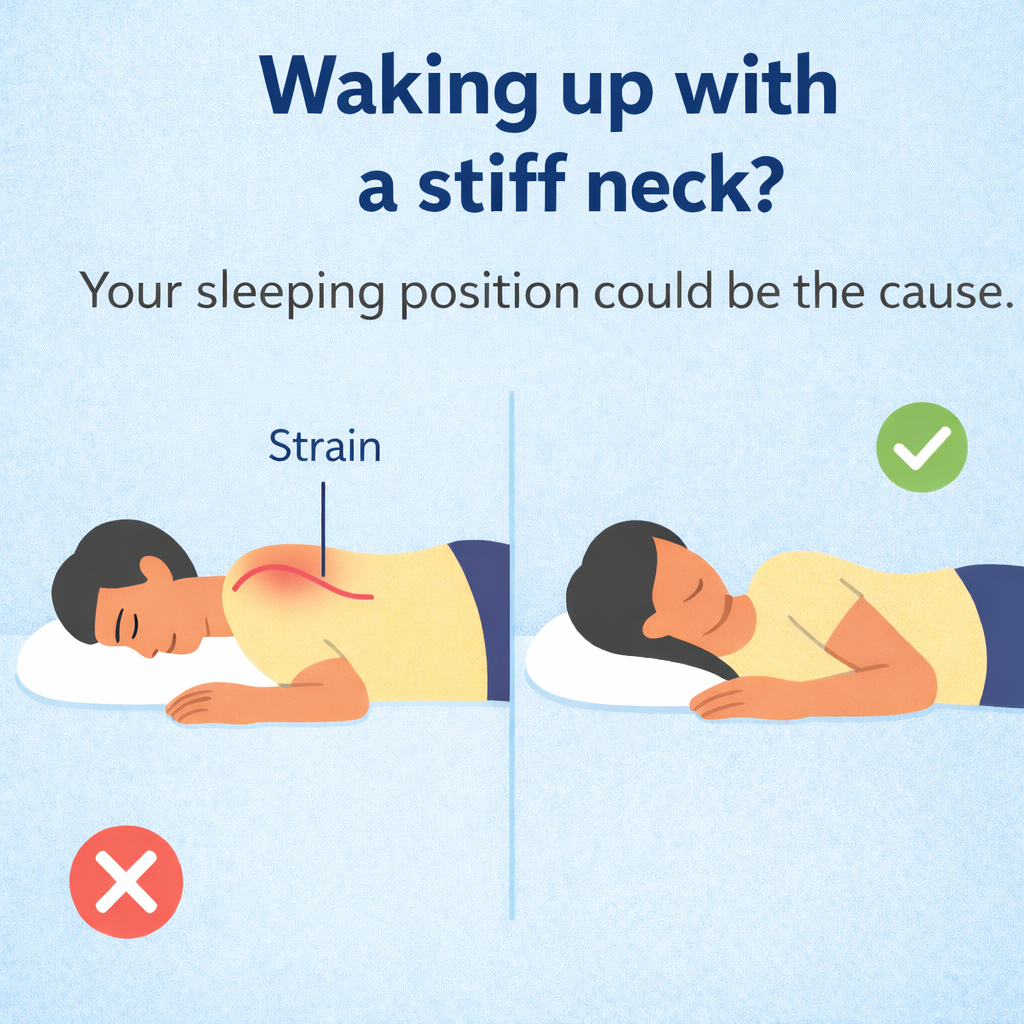
The neck supports the weight of the head all day. Muscles constantly adjust posture while a person walks, works, or looks at a screen. During sleep, those muscles relax. The spine then depends on the pillow and mattress for alignment. If the head rests at an awkward angle during the night, muscles remain stretched or compressed for several hours. When the person wakes up, the result may be morning neck stiffness or limited movement. Another factor relates to stillness. Joints and muscles remain inactive during sleep. After several hours without movement, the first motion in the morning may feel tight or uncomfortable.
10 Common Causes of Neck Pain After Waking Up
Poor Sleeping Position
A wrong sleep position places the neck at an unnatural angle. For example, if the head turns sharply to one side for several hours, muscles may tighten and produce soreness in the morning.
Incorrect Pillow (Too High, Too Low, or Too Old)
Pillow height plays an important role. Wrong pillow neck pain often appears when the pillow pushes the head too far forward or allows it to drop too low. Either situation strains the neck during sleep.
Unsupportive or Old Mattress
An uneven mattress may cause bad mattress neck pain. When the body sinks in certain areas, the spine loses its natural alignment. The neck then compensates for the imbalance.
Cervical Spondylosis (Age-Related Wear)
Age-related changes in the spine can cause cervical arthritis. These changes affect joints and discs in the neck. Stiffness after rest is a common symptom.
Muscle Strain or Overuse
Daily activities sometimes lead to neck muscle strain. Long hours of computer work, lifting heavy objects, or intense exercise may irritate neck muscles. Pain may appear the following morning.
Text Neck and Forward Head Posture
Frequent phone use has introduced a modern condition known as text neck syndrome. Looking down at devices for long periods shifts the head forward. This posture places stress on neck muscles.
Stress and Muscle Tension
Emotional stress affects the body in physical ways. Stress-related neck pain occurs because muscles remain tight, even during sleep.
Cervical Disc Problems
Discs between the neck vertebrae act as cushions. Cervical Disc Problems may develop when discs lose flexibility or bulge outward. This can irritate nerves and lead to stiffness after waking.
Sleeping in a Cold Room or Draft
Cold air sometimes causes muscles to tighten. If the neck remains exposed to cold air during sleep, stiffness may appear by morning.
Sudden Movements During Sleep
A quick twist of the neck during sleep may lead to a stiff neck. The muscle stretches suddenly, which produces soreness once the person wakes up.
When Morning Neck Pain Is Serious
Most cases of morning neck pain improve within a few hours. Gentle movement often helps muscles relax. Medical attention may become necessary if the pain becomes severe or spreads toward the arm or shoulder. Numbness, tingling, or weakness may also require evaluation.
Persistent pain lasting several days may indicate deeper problems, such as nerve irritation or disc changes.
Long-Term Treatment Strategies
Optimizing Your Sleep Setup
Sleep support plays a major role in neck comfort. A pillow should support the natural curve of the neck. The head should remain aligned with the spine. Side sleepers often need a pillow that fills the space between their shoulder and head. Back sleepers usually benefit from moderate pillow height.
Physical Therapy and Exercise
Guided movement programs help improve flexibility and posture. Stretching reduces muscle tension, while strengthening exercises support the spine. Regular exercise also improves blood circulation in neck muscles.
Advanced Treatment Options at Alleviate Pain Clinic
Persistent neck discomfort sometimes requires medical evaluation. Specialists examine posture, muscle tension, and spinal alignment. Treatment may include therapeutic exercises, posture correction programs, and targeted pain management techniques.
Prevention: How to Stop Waking Up with Neck Pain
Simple habits help with the prevention of neck pain. Maintain an upright posture during daily activities. Avoid long periods of forward head posture when using phones or computers. Choose a pillow that supports the neck properly. Regular movement and stretching before bedtime may also reduce tension.
Exercises and Stretches for Morning Neck Pain
Gentle morning neck exercises help restore movement after waking. Slow side stretches release tension in the neck. Shoulder rolls loosen tight upper back muscles. Chin tuck exercises help correct forward head posture. These movements should remain gentle and controlled. Sudden stretching may worsen discomfort.
Why Choose Alleviate Pain Clinic for Morning Neck Pain?
Recurring neck pain after waking up often requires careful evaluation. Specialists assess posture habits, muscle tension patterns, and spinal alignment. Treatment plans focus on addressing the cause of pain rather than only relieving symptoms.
Frequently Asked Questions (FAQs)
Frequent morning neck pain often relates to poor sleep posture, wrong pillow support, muscle strain, or stress-related neck tension.
Improve sleep posture, select proper pillow support, and practice gentle stretching before and after sleep.
Heat often helps relax stiff muscles, while ice may help if inflammation is present.
Yes. Stress-related neck pain occurs because muscles remain tense during sleep.
Most cases improve within minutes to a few hours after waking and gentle movement.
Yes. A worn mattress may disturb spinal alignment and contribute to bad mattress neck pain.
A pillow that keeps the neck aligned with the spine helps reduce neck pain.


