
Running is one of the most popular ways to stay fit. Unfortunately, many runners eventually face a common hurdle: knee pain after running. While some discomfort might be a temporary sign of a tough workout, persistent pain can signal a more serious issue like a runner’s knee. Understanding why your knees hurt and knowing when to seek professional help at Alleviate Pain Clinic can make the difference between a quick recovery and a long term injury.
Understanding Knee Pain After Running
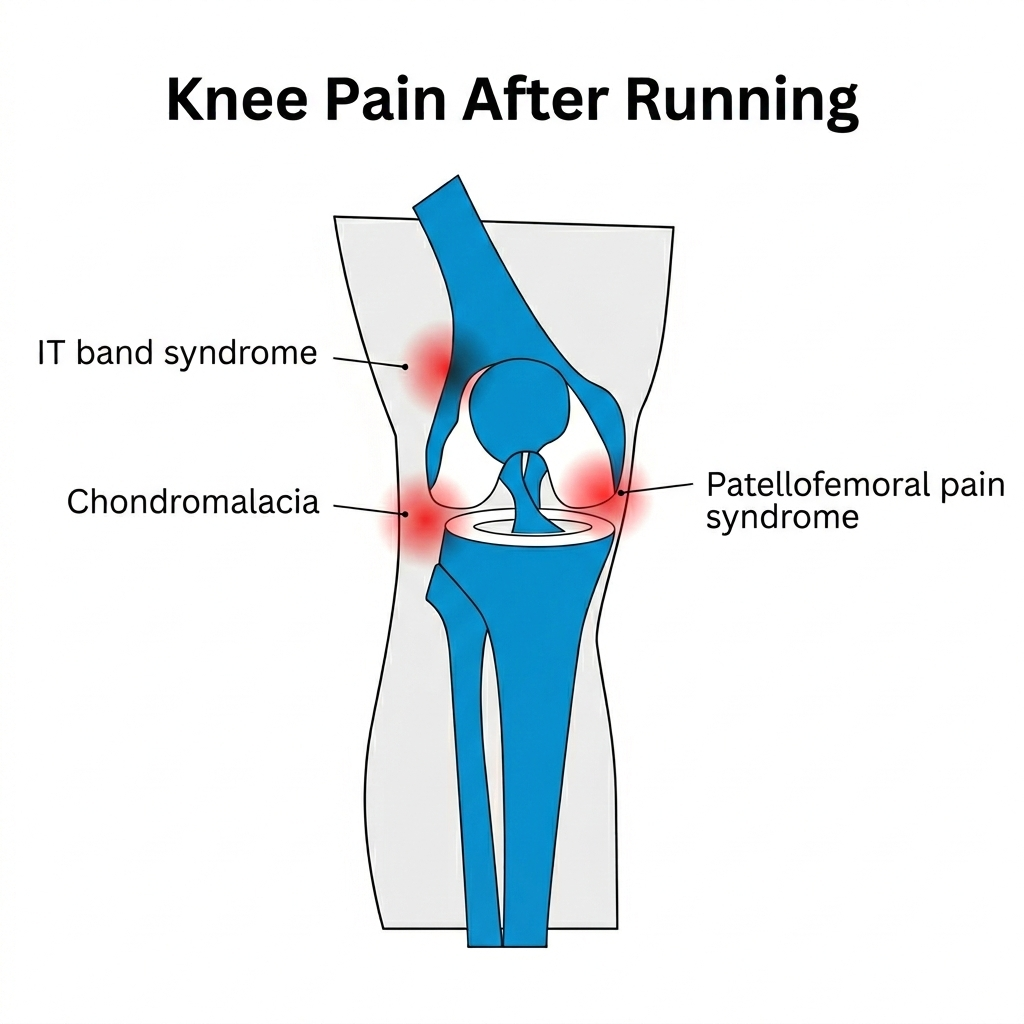
If you have ever wondered why the knee hurts after running, you are not alone. Knee pain is very common and may result from minor strain or an ongoing condition. Since the knee connects the thigh bone to the shin bone, it absorbs significant mechanical stress during every run. The discomfort can appear and disappear, worsen with movement, and ease with rest. You may also notice morning stiffness or a dull ache later in the day. Pinpointing where the pain occurs helps identify the underlying cause.
Common Causes of Knee Pain After Running
There are several reasons your knees might ache after a session on the pavement or treadmill.
Patellofemoral Pain Syndrome
Widely known as runners knee, this is a broad term for pain at the front of the knee or around the kneecap. It often happens when the kneecap moves incorrectly in its groove on the thighbone, wearing down the protective cartilage.
IT band syndrome
The iliotibial band is a thick tissue running down the outside of your leg. When it becomes irritated, it causes sharp pain on the outside edge of your knee.
Overuse
This is perhaps the most common trigger of knee pain after running. Repeating the same motion too often, especially during high-stress activities like long-distance running or hill sprints, can irritate the tissues around the kneecap.
Muscle Weakness or Imbalance
If your quadriceps are weak or tight, they cannot keep the kneecap in the right spot as you bend your leg, leading to knee pain and discomfort.
Types of Knee Pain After Running
Where you feel the pain often tells the story of the injury.
• Front of the Knee: Usually associated with runners knee, bursitis, or arthritis.
• Outside Edge: Often points toward IT band syndrome or a meniscus injury.
• Inside Edge: Could indicate an MCL tear or common issues like arthritis.
• Behind the Knee: Frequently caused by tendon injuries, tight leg muscles, or even a Baker cyst.
Symptoms of Runner's Knee
Recognizing the signs of runner’s knee early can help you start treatment before the damage worsens. Common symptoms include:
- A dull ache in and around the kneecap during or after activity.
- Pain that flares up after sitting for long periods with your knees bent.
- A rubbing, grinding, or clicking sound and sensation when you straighten or bend your knee.
- Tenderness when you touch the kneecap.
- Mild swelling that appears shortly after exercise.
When to See a Doctor for Knee Pain
You should not play through the pain if it persists. It is time to see a healthcare provider if your pain lasts more than a few days, is bad enough to interrupt your daily routine, or makes it difficult to move. If you experience a sudden trauma, like a severe fall, or if you cannot move your leg at all, you should seek emergency care immediately.
Diagnosis of Running Related Knee Pain
To get you back on your feet, a doctor needs to find the root cause of the discomfort through a detailed knee examination.
Physical Examination
During the exam, a provider will review your health history and ask about the nature of the pain whether it is sharp, dull, or stabbing. They may press on the knee to check for tenderness and watch how the joint moves while you walk, squat, or jump.
Imaging Tests: X-ray, MRI
If a physical exam is not enough, doctors use imaging to look deeper. X-rays are common for evaluating the alignment of the kneecap and checking for bone issues. An MRI or ultrasound may be ordered to rule out soft tissue damage, such as ligament tears or osteoarthritis.
Treatment Options for Knee Pain After Running
The primary goal of runners knee treatment is to relieve pain and restore your range of motion.
RICE Method and Home Care
For many people, simple home care is the first step to treat knee pain after running. The RICE method is highly effective for managing immediate pain and swelling:
- Rest: Avoid activities that worsen the pain, such as running or lunging.
- Ice: Apply cold packs for twenty to thirty minutes every few hours for the first two to three days.
- Compression: Use an elastic bandage or sleeve to support the joint.
- Elevation: Keep your leg raised on a pillow when sitting or lying down.
Over the counter medications like ibuprofen can also help reduce inflammation. These simple knee pain remedies are often very effective in the early stage.
Physical Therapy for Runners
Physical therapy runners knee programs focus on strengthening the muscles surrounding the knee, particularly the quadriceps and hips. Increasing flexibility and strength reduces the pressure on your joint and prevents the kneecap from slipping out of alignment. Structured knee strengthening exercises are a key part of long term recovery.
Regenerative Treatments PRP and Stem Cell
For runners seeking advanced nonsurgical options, Alleviate Pain Clinic offers regenerative medicine. Treatments like Platelet Rich Plasma therapy and Stem Cell therapy use the body’s natural healing mechanisms to repair damaged tissues and promote lasting relief without the need for surgery.
Prevention Tips for Runners
To prevent runners knee and keep your joints healthy, follow these simple guidelines:
- Warm up and cool down properly before and after your runs.
- Choose the right surface. Try to avoid running on hard concrete since softer surfaces are easier on the joints.
- Update your gear. Replace your running shoes once the soles become worn or lose their support.
- Listen to your body. Do not make sudden, intense changes to your workout routine. Increase your distance and intensity gradually.
- Run with good form. Leaning slightly forward with your knees bent can reduce stress on the joint.
Recovery Timeline: How Long Does Runner's Knee Take to Heal
A common question is how much time is needed after feeling knee pain after a run. Recovery is personal and depends on the severity of the injury. A runner’s knee can last anywhere from a few days to several weeks or even months. You should only return to your full running routine once you can bend and straighten the knee without pain and the injured leg feels as strong as the healthy one.
When to See a Doctor for Knee Pain After Running
Seek medical attention if your knee pain after running continues despite rest and home care, worsens over time, or is associated with swelling, instability, or difficulty bearing weight. Early evaluation helps prevent long term damage and speeds up recovery.
Why Choose Alleviate Pain Clinic for Runner's Knee Treatment in Bangalore
If you are struggling with knee pain after running, Alleviate Pain Clinic provides world class nonsurgical interventional pain management. With multiple branches across Bangalore including Whitefield, Indiranagar, Jayanagar, Sadashivanagar, and Dasarahalli, expert care is always nearby.
Our team, led by specialists like Dr Swagatesh Bastia and Dr Roshan Adappa, focuses on Cure Without Surgery. We combine modern techniques like PRP therapy, physiotherapy, and ultrasound guided injections to help you regain mobility and get back to doing what you love with effective runners knee treatment.
Frequently Asked Questions (FAQs)
Yes. Neck dysfunction can disturb balance signals, leading to cervicogenic dizziness and non-rotatory dizziness.
Cervicogenic dizziness refers to an imbalance linked to cervical spine problems rather than inner ear disorders.
If dizziness appears with neck movement and neck pain with dizziness occurs together, cervical origin becomes likely.
Yes. Muscle tension may contribute to neck stiffness, dizziness, and nausea with neck pain.
Duration varies. Mild strain may improve in weeks. Chronic cervical issues may require longer treatment.
Cervical vertigo treatment usually includes physical therapy, posture correction, and cervicogenic dizziness exercises.
Gentle neck mobility work, deep cervical strengthening, and balance retraining exercises are commonly recommended.
