



We have all been there. You wake up, try to turn your head to see the alarm clock, and a sharp pain shoots through your shoulder. Or maybe after hours at your computer, your neck suddenly feels locked and heavy. A stiff neck is more than a small inconvenience. It can interfere with work, sleep, and daily comfort.
Understanding stiff neck causes and knowing when to move from home care to professional treatment is the key to lasting stiff neck relief.
Understanding Stiff Neck: What Causes Neck Stiffness?
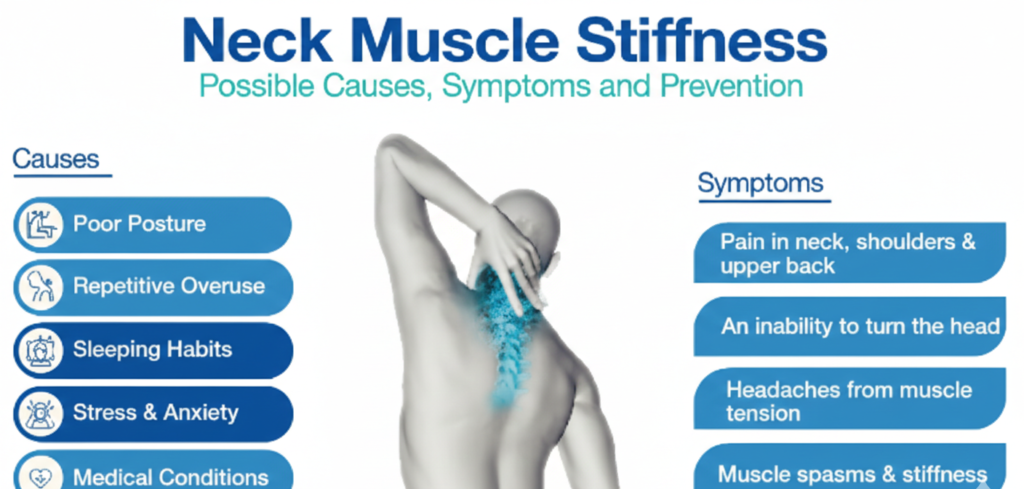
In simple terms, a stiff neck refers to pain or difficulty when moving your head. The neck, medically called the cervical spine, is a highly mobile and complex structure. It contains seven vertebrae, multiple discs, ligaments, and more than twenty muscles working together.
Because this system is delicate, what causes a stiff neck can vary widely. At any given time, roughly 10% of adults experience some degree of neck stiffness. Most cases arise from irritated muscles or ligaments, but nerves, joints, and discs may also be involved.
Identifying the exact pain generator is essential for choosing the right stiff neck treatment.
Common Causes of Stiff Neck
Below are the most frequent stiff neck causes seen in clinical practice.
Poor Sleeping Position
One of the most common triggers is sleeping position neck pain. Spending several hours with your neck bent at an awkward angle can lead to overnight muscle spasm.
Muscle Strain from Poor Posture
Modern lifestyles have made poor posture and neck strain extremely common. Looking down at phones, tablets, or laptops places significant mechanical load on the cervical spine.
Whiplash and Neck Injuries
Sudden trauma can also produce severe neck stiffness. Whiplash injuries typically occur during car accidents or sports impacts when the head snaps forward and backward rapidly.
Cervical Spondylosis (Neck Arthritis)
With aging, the cervical joints undergo wear and tear. Symptoms of cervical spondylosis refers to degenerative changes in the neck, including disc dehydration and bone spur formation.
Cervical Disc Problems
Cervical discs are between vertebrae and act as shock absorbers. When a disc bulges or herniates, it may compress nearby nerves.
Meningitis (Serious Cause Red Flag)
Although uncommon, meningitis is a critical condition where when a stiff neck is serious it must be recognized immediately.
Warning signs include high fever, severe headache, confusion, etc. If these symptoms occur with neck rigidity, seek emergency medical care without delay.
Symptoms of Stiff Neck
Typical stiff in the neck symptoms may include:
- Sharp pain when turning the head
- Muscle tightness in the neck and shoulders
- Reduced range of motion
- Headaches starting at the base of the skull
- Numbness or tingling in the arms
Symptoms that radiate into the arm often suggest nerve involvement and require closer evaluation.
When to See a Doctor for Stiff Neck
Most mild cases improve with basic stiff neck remedies at home. However, you should consult a specialist if:
- Pain lasts longer than one week
- Symptoms follow a fall or accident
- You notice arm weakness or coordination problems
- There is associated fever and severe headache
- Pain keeps recurring
Early assessment prevents minor neck stiffness from becoming a chronic issue.
Diagnosis of Stiff Neck
A proper stiff neck diagnosis focuses on identifying the exact tissue causing pain rather than simply suppressing symptoms.
Physical Examination
During a neck physical exam, the doctor evaluates posture, movement, and muscle strength. They gently press along the neck and shoulder region to identify trigger points, joint tenderness, or muscle spasm.
Neurological testing may also be performed to check reflexes and nerve function.
Imaging Studies (X ray, MRI)
If the cause remains unclear, imaging such as a neck x-ray or MRI may be recommended. These tests help detect bone spurs, disc herniation, joint degeneration, structural abnormalities, etc.
Treatment Options for Stiff Neck
The best neck pain treatment depends on the underlying cause and duration of symptoms.
Home Remedies and Self-Care
For early symptoms, many patients benefit from simple stiff neck remedies. Apply ice during the first 24 to 48 hours to reduce inflammation, then switch to heat to relax tight muscles. Over the counter medicines like ibuprofen or acetaminophen may help. Practice relative rest but continue gentle movement.
Physical Therapy for Neck Stiffness
Physical therapy supports long-term stiff neck relief by strengthening cervical stabilizers, correcting posture, restoring mobility, and reducing recurrence risk. Targeted physiotherapy is often the first line of care.
Pain Management Injections
For persistent pain, image guided nerve blocks interrupt pain signals, while steroid injections reduce local inflammation when conservative care is insufficient.
Advanced Treatments
PRP therapy promotes tissue healing using growth factors from your blood, and radiofrequency ablation uses controlled heat to deactivate pain-carrying nerves for longer lasting relief.
Best Exercises for Stiff Neck Relief
Gentle daily movement is one of the most effective stiff neck exercise strategies.
- Shoulder rolls: Lift your shoulders toward your ears, then roll them back and down slowly. Repeat ten times.
- Head tilts: Bring your ear toward your shoulder gently, hold briefly, then switch sides. Follow with a slow chin tuck.
- Shoulder blade squeezes: Sit upright and pull your shoulder blades together as if holding a pencil between them. Hold for fifteen seconds.
Perform these movements within a comfortable range to promote steady stiff neck relief.
Prevention Tips: Prevent Stiff Neck
If you are looking for relief from neck pain without surgery, then these tips can be helpful.
- Ergonomics: Keep your screen at eye level to avoid prolonged forward head posture.
- Phone habits: Use earphones or speaker mode rather than trapping the phone between your ear and shoulder.
- Sleep support: Choose a pillow that maintains neutral neck alignment to reduce neck pain.
- Take movement breaks: Stand, stretch, and move at least once every hour if you work at a desk.
These simple steps significantly reduce repeated episodes of neck stiffness.
Why Choose Alleviate Pain Clinic for Stiff Neck Treatment
If your stiff neck has become persistent or disabling, Alleviate Pain Clinic offers a comprehensive nonsurgical approach. Their specialists focus on precise diagnosis of stiff neck causes followed by targeted, minimally invasive care.
The clinic provides personalized programs that may include physiotherapy, image guided injections, and regenerative therapies. The goal is durable stiff neck relief while avoiding unnecessary surgery.
Frequently Asked Questions (FAQs)
The quickest way to ease a stiff neck is usually a combination of gentle stretching, short-term anti-inflammatory medication, and alternating ice and heat. Maintaining light movement and correcting posture during the day also helps speed recovery in most uncomplicated cases.
To reduce sleeping position neck pain, sleep on your back or side with a pillow that supports the natural curve of your neck. Avoid stomach sleeping because it forces the head to remain rotated for long periods and increases morning neck stiffness.
Yes. While most stiff neck symptoms are due to muscle strain, warning signs such as high fever, severe headache, confusion, or progressive arm weakness require urgent medical evaluation to rule out serious conditions like meningitis or significant nerve compression.
Most mild stiff neck cases caused by muscle strain improve within two to five days. If pain persists beyond one week, keeps recurring, or progressively worsens, medical evaluation is recommended to identify underlying structural or nerve-related causes.
For the first 24 to 48 hours, ice helps reduce inflammation in a stiff neck. After the acute phase settles, switching to gentle heat improves blood flow and relaxes tight muscles, which often provides better comfort and mobility.
Simple stiff neck exercises such as shoulder rolls, chin tucks, and gentle side bending help restore mobility. These movements reduce muscle tightness and improve posture when performed regularly within a pain-free range.
The most effective stiff neck treatment depends on the cause. Mild cases respond well to home care and physiotherapy, while chronic or nerve-related pain may require image-guided injections or regenerative therapies for sustained relief.


