
Vertebrogenic Low Back pain is a type of chronic back pain. It originates from inflammation of the vertebral endplates and not in muscles or discs. Since it is not always diagnosed, patients experience a long period of suffering and poor quality of life. It is crucial to learn its mechanisms, clinical manifestations, and treatment to achieve continuous relief.
Understanding Vertebrogenic Low Back Pain
Vertebrogenic pain is the result of the vertebral bodies, particularly the endplates between the spinal discs and the bone. These are highly innervated by the basivertebral nerve, and thus are highly susceptible to degeneration and inflammation. This type is in contrast to mechanical back pain, which causes deep and long-lasting pain that is not easily treated with the help of the usual methods unless a specific treatment is used.
Causes of Vertebrogenic Low Back Pain
The most common causes include:
Degeneration of Vertebral Endplates
The degeneration of the endplate interferes with the nutrient flow between the disc and the vertebral body. Inflammation may be caused by microfractures and structural weakening. This degeneration activates nerve endings that are sensitive to pain, which develops chronic pain that does not resemble normal discogenic or muscular pain effects.
Modic Changes in the Spine
Modic changes are the changes that are identified in vertebral bone marrow with the use of MRI and are associated with persistent inflammation. They have very close relations with Vertebrogenic pain and reflect persistent endplate pathology. Patients with Modic changes usually have chronic pain that increases with day-to-day activities.
Chronic Disc Degeneration
Mechanical stress on endplates adjacent to the spinal discs increases as the spinal discs lose their hydration and height. This overload increases inflammatory and structural damage.
Vertebrogenic pain is commonly associated with degeneration of the discs, hence making it difficult to diagnose and postponing effective treatment strategies for low back pain relief.
Inflammation of the Basivertebral Nerve
Pain signals sent out by the vertebral body are sent by the basivertebral nerve. This nerve is sensitized by chronic inflammation, increasing the perception of pain. This process can be applied to the explanation of why vertebrogenic pain tends to be deep, aching, and difficult to treat using conventional muscle-based therapies.
Repetitive Spinal Loading and Poor Posture
Sedentary jobs, heavy lifting, or poor body posture are high axial spinal loads. In the long run, chronic stress enhances endplate lesions and nerve aggravation, as a cause of progressive Vertebrogenic Low Back Pain.
Symptoms of Vertebrogenic Low Back Pain
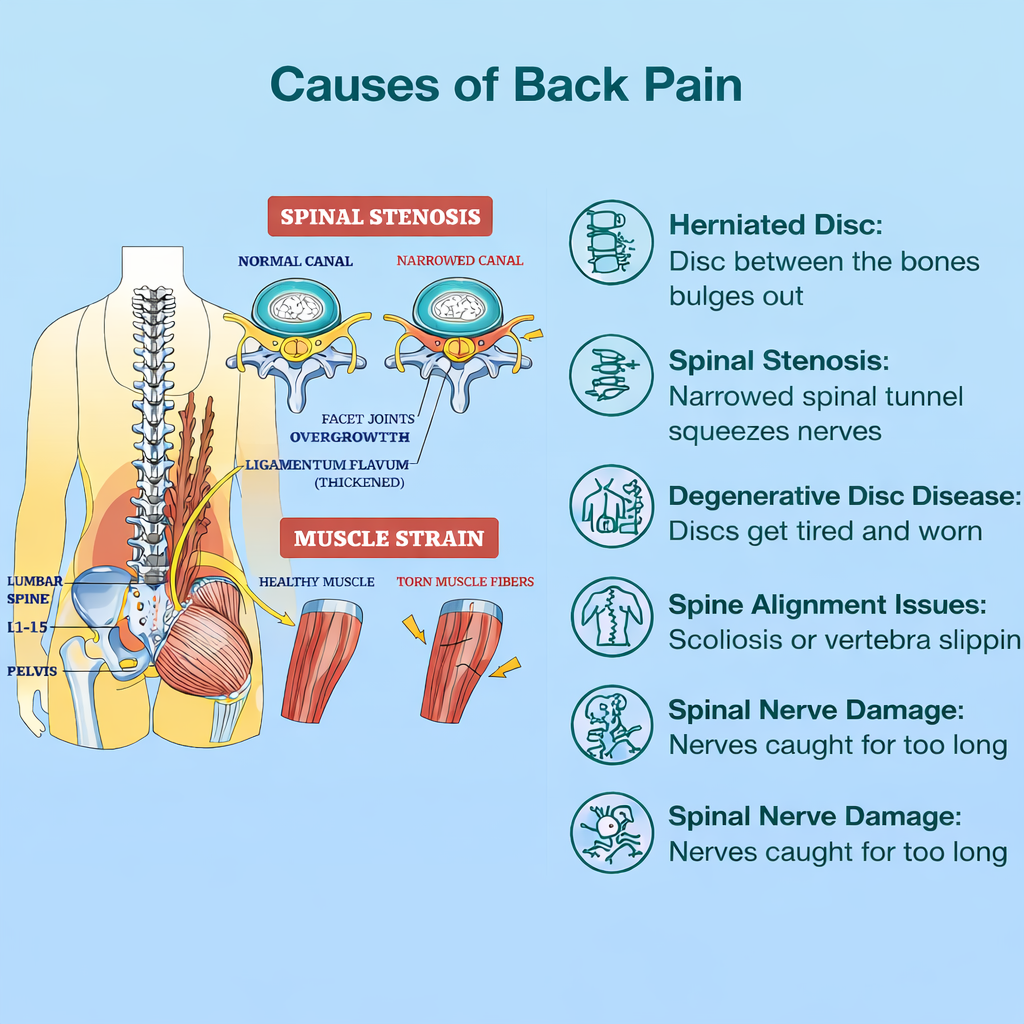
Deep, Aching Low Back Pain
The classical history of patients is a persistent and intense pain in the lower back. The pain can be hard to pinpoint, and most of the time it can be felt in the spine, not on top or in the muscles.
Pain Worsening With Sitting or Bending
The sitting position, forward bending, or long stationary positions usually exacerbate the symptoms. Such activities put pressure on endplates that are already injured, which worsens inflammation and pain.
Morning Stiffness and Activity-Related Pain
Rigidity at the time of waking is usual, and the pain progressively worsens as the day goes on. In contrast with inflammatory arthritis, movement is not always sufficient in the alleviation of symptoms, and even overactivity can aggravate pain.
Localized Pain Without Leg Radiation
As opposed to disc herniation or sciatica, the pain is normally limited to the lower back only. This is mainly characterized by the non-appearance of leg pain or numbness.
Reduced Functional Mobility
Chronic pain causes guarded movement, loss of flexibility, and loss of tolerance to physical activity. This may lead to dysfunction in everyday living and the general health of the spine in the long run.
How Vertebrogenic Low Back Pain Is Diagnosed
It can be effectively diagnosed with:
Clinical Evaluation and Pain Pattern Assessment
Doctors also test pain characterization, precipitants, and reactions to physical activity. Chronic midline pain, with no neurological loss, causes one to question a vertebrogenic cause, particularly when the conservative management shows no response.
MRI Findings and Modic Changes
MRI is necessary in detection of Modic changes and endplate degeneration. The results are excellent indicators of a vertebrogenic diagnosis of low back pain in cases that are correlated with clinical symptoms.
Differentiating Vertebrogenic Pain From Other Spine Conditions
Disc herniation, pain in the facet joints, and muscle tension should be ruled out. Diagnostic blocks or targeted imaging assist in distinguishing between overlapping pain generators, and when the treatment is planned.
Treatment Options for Vertebrogenic Low Back Pain
Conservative Care and Activity Modification
Primary management involves correction of posture, ergonomic modification, and prevention of aggravating movements. These are to minimize the mechanical stress and help in the early resolution of low back pain.
Physiotherapy and Core Stabilization
Specific intensive physiotherapy enhances the spinal support by deep core strengthening. Stabilization exercises lower the activity of endplates and contribute to the recovery of regulated patterns of movement.
Medications and Inflammation Control
Relapse of pain could be minimized by short-term use of anti-inflammatory drugs. Drugs are not a permanent intervention for chronic vertebrogenic disease.
Basivertebral Nerve Radiofrequency Ablation
This is a low-resistance surgery that involves the basivertebral nerve and interrupts the transmission of pain. It is tailored specifically to the Vertebrogenic Low Back Pain related to the presence of Modic changes and demonstrated long-lasting results.
Image-Guided Interventional Pain Procedures
Image-guided interventions are accurate and minimize inflammation and facilitate rehabilitation. These methods are more safety-enhancing and accurate, as well as recovery-reducing.
When to See a Spine Specialist for Vertebrogenic Low Back Pain
Specialist assessment is indicated where pain does not respond to conservative care for a number of months, is limiting, or does not respond to conservative care. Early diagnosis enhances the effectiveness of treatment, and it eliminates long-term disability.
Preventing Progression of Vertebrogenic Low Back Pain
The measures to be taken to prevent it are adherence to the correct posture, frequent core training, regulated weight, and absence of long-lasting use of static loads. Prompt treatment and healthy living lessen the disease development and relapse.
Why Choose Alleviate Pain Clinic for Vertebrogenic Low Back Pain
Alleviate Pain Clinic provides Non-surgical treatment of the spine, which is of high quality with experience in diagnosing and treating vertebrogenic pain. Support of effective, long-term relief of low back pain is supported by evidence-based protocols, image-guided interventions, and individualized rehabilitation plans.
Frequently Asked Questions (FAQs)
It is chronic back pain arising from inflamed or damaged vertebral endplates, mediated by the basivertebral nerve, rather than muscles or spinal discs alone.
Vertebrogenic pain is deep and localized without leg radiation, while disc pain often causes nerve compression symptoms such as sciatica or numbness.
While a complete reversal of degeneration is unlikely, targeted treatments can provide long-lasting symptom control and functional improvement.
Surgery is rarely required. Most patients respond well to non-surgical and minimally invasive treatments, including nerve-targeted procedures.
Patients with chronic midline low back pain, Modic changes on MRI, and failure of conservative therapy may be suitable candidates.
