



Key Highlights
- Lower back pain on the right side is a common condition caused by musculoskeletal issues, spinal problems, or sometimes organ-related conditions, requiring accurate diagnosis for effective treatment.
- Common causes include muscle strain, facet joint arthritis, sacroiliac joint dysfunction, disc bulge, sciatica, and piriformis syndrome.
- Symptoms may include localized or radiating pain, stiffness, muscle spasms, tingling, or weakness in the leg, depending on nerve involvement.
- Diagnosis involves clinical evaluation and imaging when needed.
- Treatment focuses on physiotherapy, posture correction, lifestyle changes, medications, and image-guided non-surgical treatments for long-term relief.
Lower back pain on the right side is a high-volume search term because it is extremely common and often confusing. While muscle strain is frequently blamed, right-sided lower back pain often originates from specific spinal joints, nerves, deep muscles, or pelvic structures. Missing these causes leads to delayed recovery and recurrent pain.
At Alleviate Pain Clinic, we focus on precise diagnosis and targeted, image-guided non-surgical treatments for lower back pain to address the true source of pain.
Understanding Lower Right Back Pain
The right lower back includes:
- Lumbar vertebrae and discs
- Facet joints (small stabilizing joints of the spine)
- Sacroiliac (SI) joint
- Lumbar and sciatic nerves
- Deep muscles such as the piriformis
- Nearby organs (kidney, appendix, pelvic organs)
Pain may be:
- Localized or radiating
- Mechanical (movement-related)
- Constant or activity-dependent
Common Causes of Lower Right Back Pain
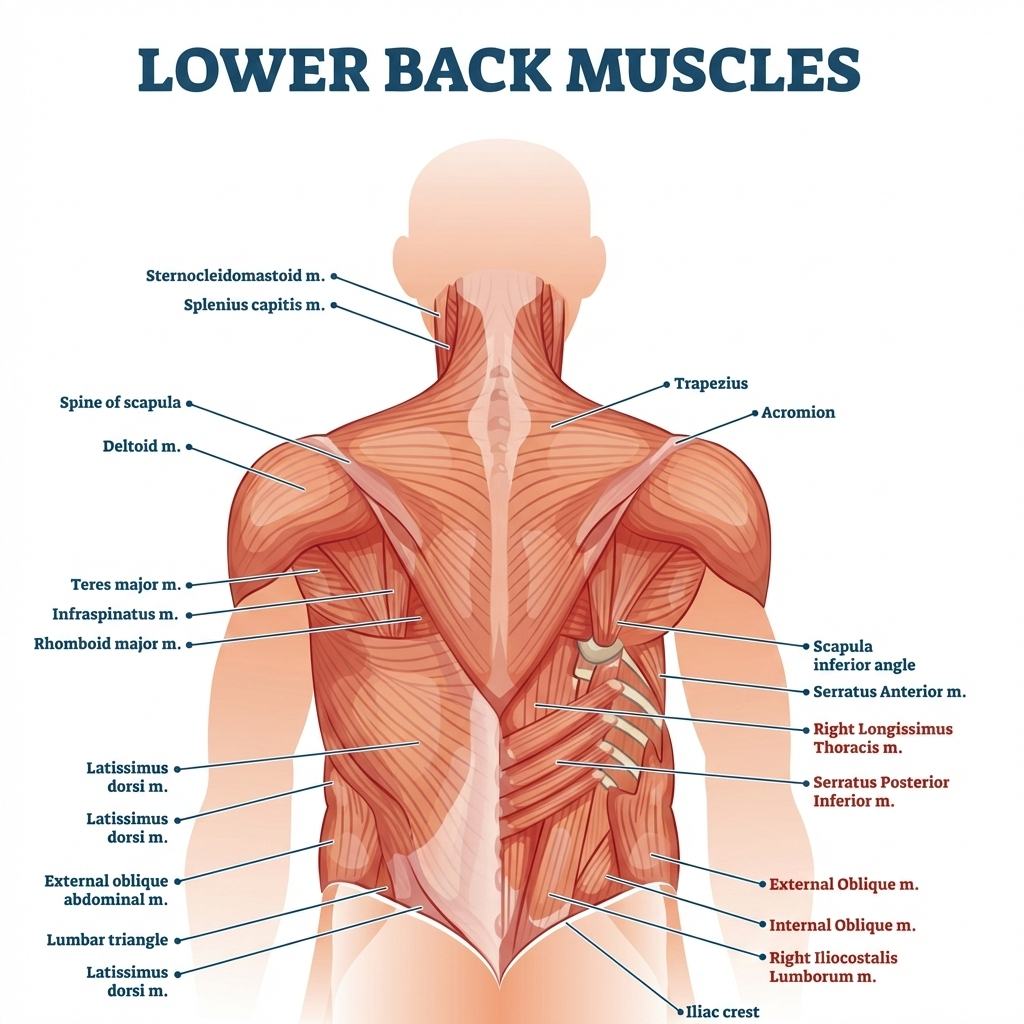
Musculoskeletal Causes
Muscle Strain or Ligament Sprain
What it is
Overstretching or tearing of muscles or ligaments due to sudden movement, poor posture, or overuse.
Key features
- Localized right-sided pain
- Muscle tightness or spasm
- Pain improves with rest
Usually resolves in 1–3 weeks with conservative care.
Paraspinal Muscles (Most Commonly Involved)
Muscles
- Erector spinae group (iliocostalis, longissimus, spinalis)
- Multifidus
Role
- Maintain upright posture
- Stabilize each lumbar segment
How they cause right-sided pain
- Muscle strain from bending, lifting, or twisting
- Chronic spasm due to poor posture or disc/facet irritation
Pain pattern
- Localized pain on the right side of the lower back
- Worse with movement, better with rest
- Tenderness and stiffness
Clinical note: Multifidus atrophy is commonly seen in chronic unilateral low back pain.
Quadratus Lumborum (QL) – A Major Culprit
Muscle
- Quadratus lumborum
Role
- Stabilizes pelvis
- Controls side bending of the spine
Why it causes right-sided pain
- Prolonged sitting
- Leg length discrepancy
- Sacroiliac joint dysfunction
Pain pattern
- Deep aching pain on one side (right)
- Pain increases with standing, walking, or side bending
- Referred pain to buttock or hip
Frequently misdiagnosed as kidney pain
Gluteal Muscles (Gluteus Medius & Maximus)
Muscles
- Gluteus medius
- Gluteus maximus
Role
- Pelvic stability
- Shock absorption during walking
How they contribute
- Weakness leads to overload of lumbar spine
- Overactivity causes trigger points
Pain pattern
- Pain over right buttock
- Worse with walking or standing on one leg
- Associated hip instability
Common in SI joint dysfunction and postural imbalance
Iliopsoas (Hip Flexor Complex)
Muscles
- Psoas major
- Iliacus
Role
- Hip flexion
- Lumbar spine stabilization
Why it causes back pain
- Prolonged sitting shortens the muscle which causes lower back pain
- Causes excessive lumbar lordosis
Pain pattern
- Deep right-sided lower back pain
- Pain increases with standing upright or walking
- Relief when lying down
Often overlooked in desk-job professionals
Hamstrings (Indirect Contributor)
Muscles
- Biceps femoris
- Semitendinosus / Semimembranosus
How they contribute
- Tight hamstrings increase lumbar strain
- Alter pelvic tilt
Pain pattern
- Pulling sensation in lower back
- Worse on bending forward
Also read : Sudden sharp lower back pain when bending, causes and treatment
Muscle Involvement by Condition (Quick Clinical Mapping)
Condition | Muscles Commonly Involved |
|---|---|
Muscle strain | Erector spinae, multifidus |
Facet joint arthritis | Multifidus, erector spinae (secondary spasm) |
Sacroiliac joint dysfunction | Quadratus lumborum, gluteus medius |
Piriformis syndrome | Piriformis, gluteus maximus |
Disc bulge / sciatica | Paraspinals, piriformis |
Postural pain | Iliopsoas, QL, paraspinals |
Herniated or Bulging Disc
What it is
The disc bulges or leaks inflammatory material, irritating nearby nerves.
Key features
- Pain radiating from right lower back to buttock or leg
- Tingling, numbness, or weakness
- Worse with sitting, bending, or coughing
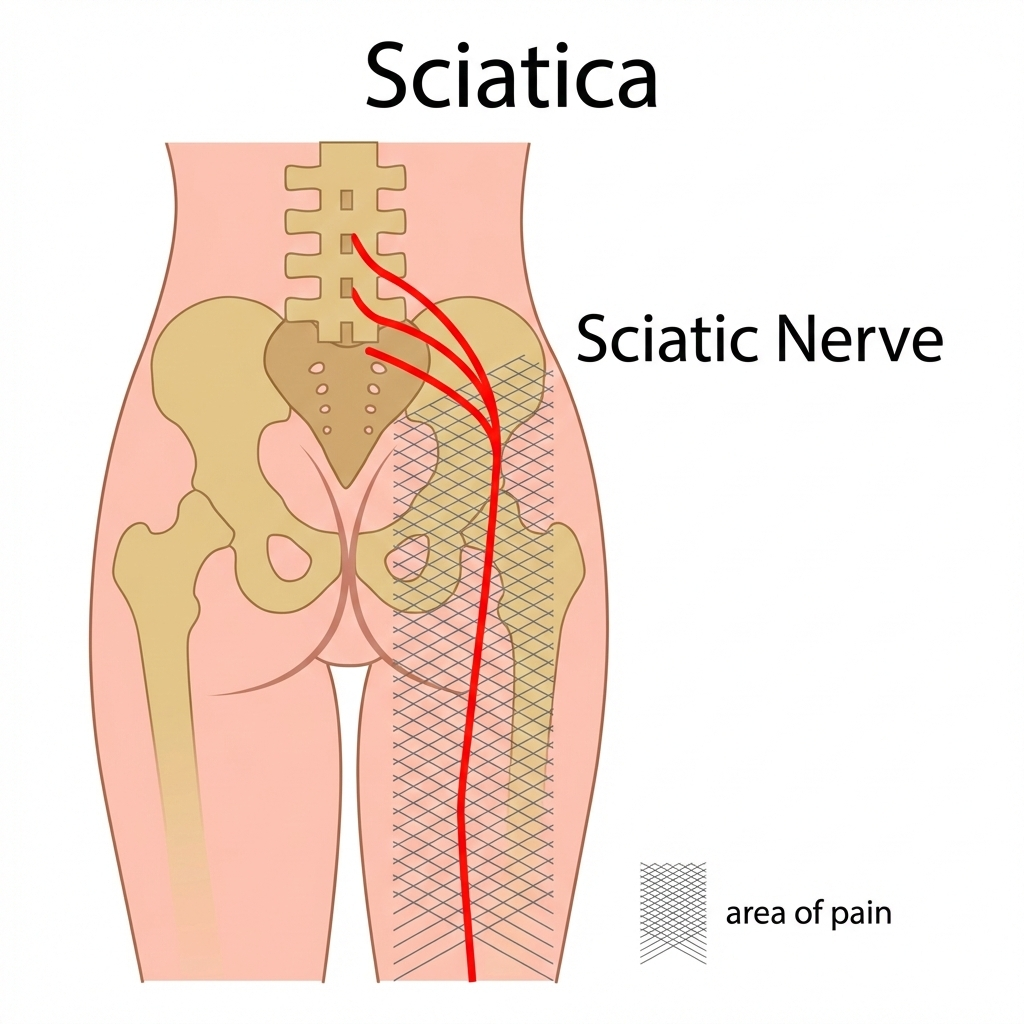
Sciatica
What it is
Compression or irritation of the sciatic nerve, often from disc bulge, spinal stenosis, or piriformis muscle involvement.
Key features
- Shooting or burning pain down the right leg
- Electric-shock–like sensations
- Foot numbness or weakness
Facet Joint Arthritis (Very Common & Frequently Missed)
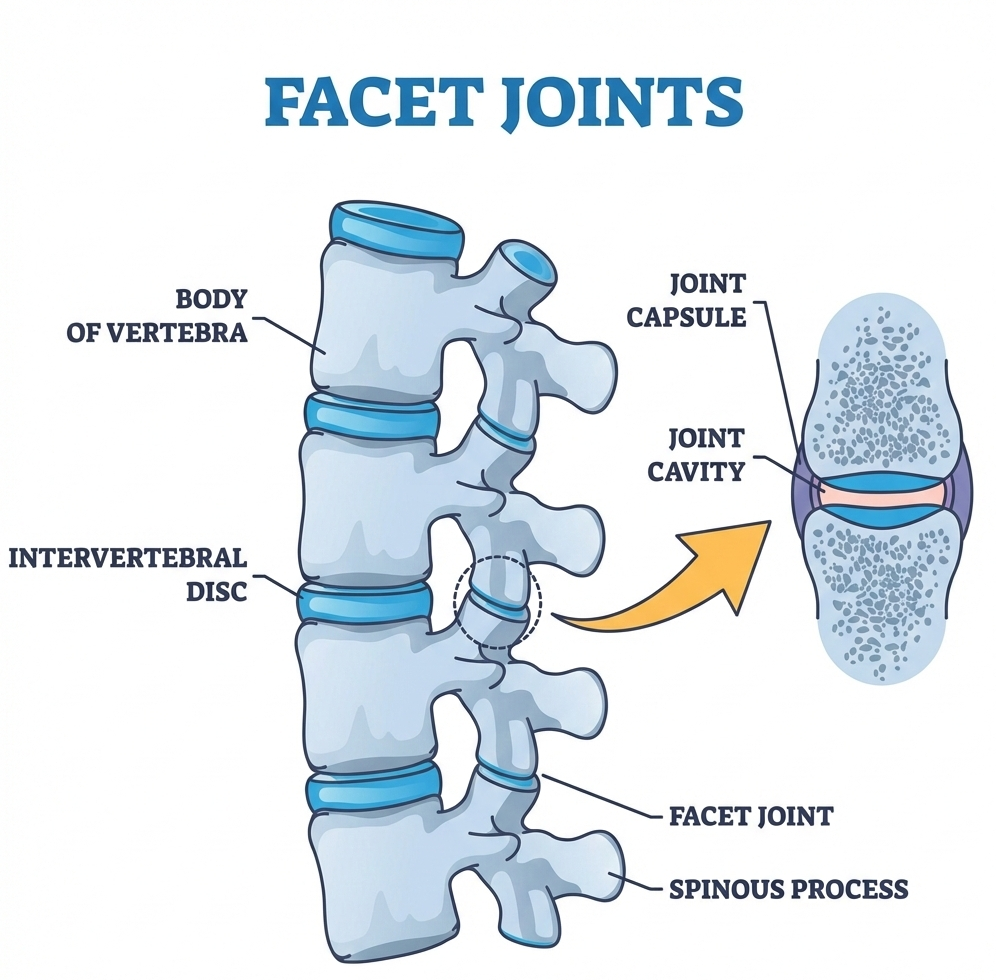
What are facet joints?
Facet joints are small stabilizing joints at the back of the spine that guide movement and bear load.
What happens in arthritis?
- Cartilage wears down
- Joint becomes inflamed and stiff
- Pain is typically one-sided
Key symptoms
- Right-sided lower back pain
- Pain worse on standing, twisting, or arching backward
- Pain improves on sitting or bending forward
- No true leg numbness (unless severe)
Also read : Why does my lower back hurt when sitting
Why it’s important
Facet joint arthritis is a leading cause of chronic unilateral lower back pain, especially in people over 35.
Sacroiliac (SI) Joint Dysfunction / Arthritis
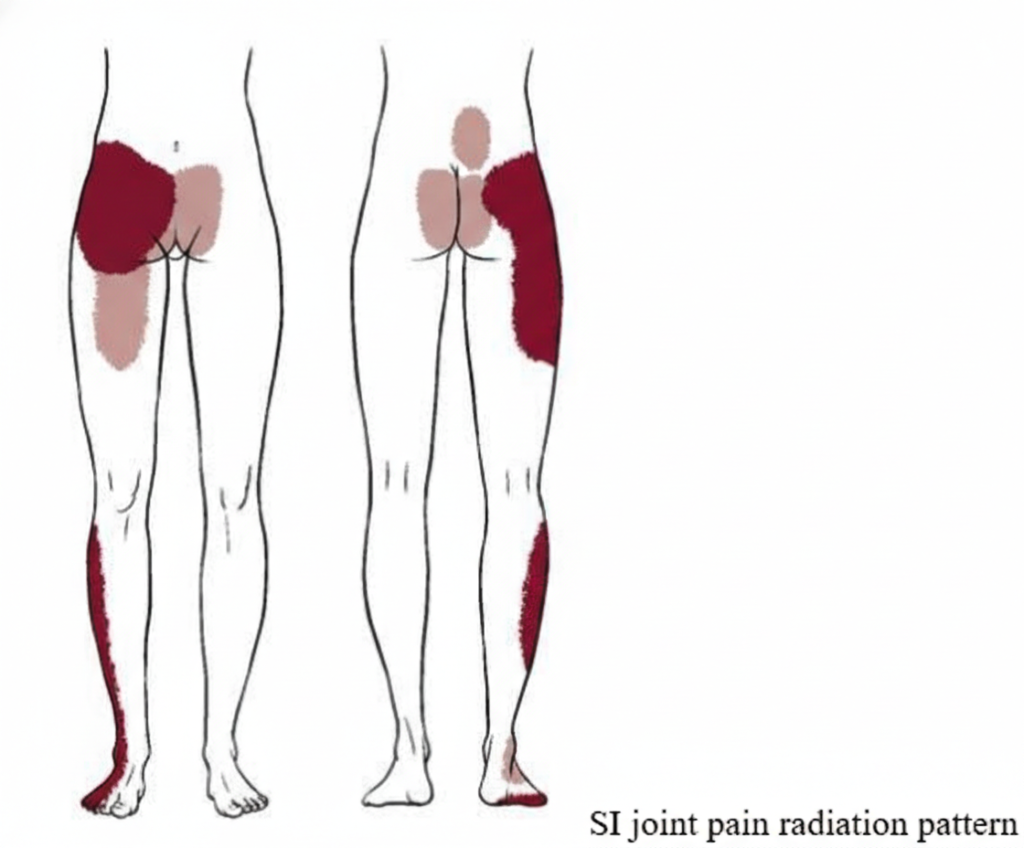
What is the SI joint?
The sacroiliac joint connects the spine to the pelvis and is a major load-transferring joint.
Why it causes right-sided pain
SI joint dysfunction is often one-sided, especially on the right.
Key symptoms
- Pain just below the waistline on the right
- Pain radiating to buttock, groin, or thigh
- Worse with standing, walking, climbing stairs, or turning in bed
- Pain while getting up from sitting
Common causes
- Pregnancy
- Trauma or fall
- Leg length difference
- Degenerative arthritis
Frequently misdiagnosed as disc pain or sciatica
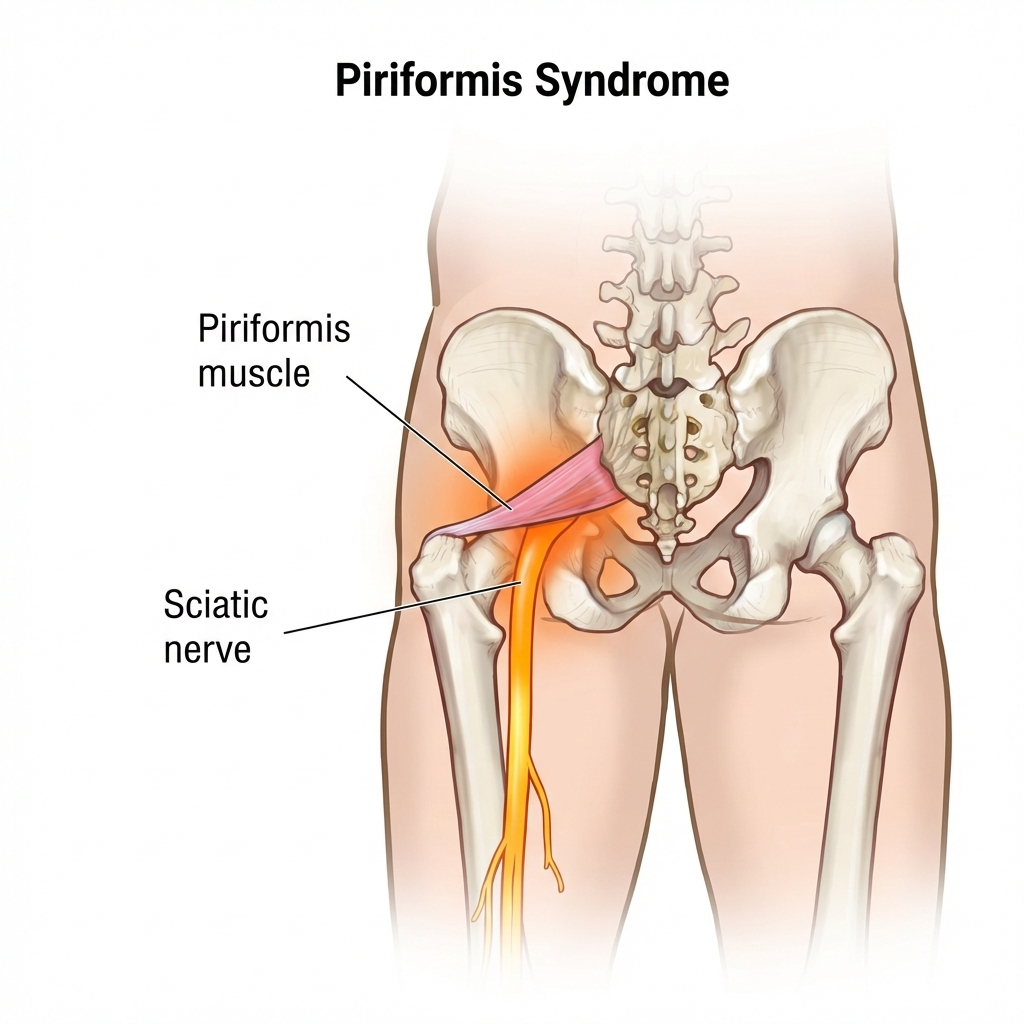
Piriformis Syndrome
What is the piriformis?
A deep muscle in the buttock that lies directly over the sciatic nerve.
What happens
When the piriformis tightens or spasms, it compresses the sciatic nerve, mimicking disc-related sciatica.
Key symptoms
- Deep buttock pain on the right
- Pain radiating down the leg
- Pain worsens with sitting or driving
- Minimal or normal MRI findings
Why it’s missed
Standard scans may appear normal—diagnosis is largely clinical.
Spinal Stenosis
What it is
Narrowing of the spinal canal or nerve exit points.
Key features
- Pain while walking or standing
- Relief on bending forward
- Leg heaviness or weakness
Organ-Related Causes of Right-Sided Lower Back Pain
Kidney Stones or Kidney Infection
- Sharp flank pain
- Fever, nausea, urinary symptoms
- Pain unrelated to movement
Appendicitis
- Progressive pain with fever and vomiting
- Medical emergency
Digestive Issues
- Gas or constipation
- Pain improves after bowel movement
Endometriosis (Women)
- Cyclical pain
- Pelvic pain with right-sided back pain
Pregnancy-Related Pain
- Hormonal ligament laxity
- Altered posture and biomechanics
Treatment Options for Lower Right Back Pain
Home Remedies & Self-Care
Rest
Short-term only—avoid prolonged inactivity.
Ice & Heat Therapy
- Ice for acute inflammation
- Heat for muscle stiffness
Over-the-Counter Medications
Short-term symptom control only.
Gentle Stretching
Improves mobility and reduces spasm.
Posture & Sleep Adjustments
Lumbar support, side-sleeping with pillow.
Lifestyle Changes
Weight control, core strengthening, ergonomic correction.
Medical Treatments
Physical Therapy
- Core stabilization
- SI joint and hip mechanics
- Posture retraining
Advanced Non-Surgical Treatments at Alleviate Pain Clinic
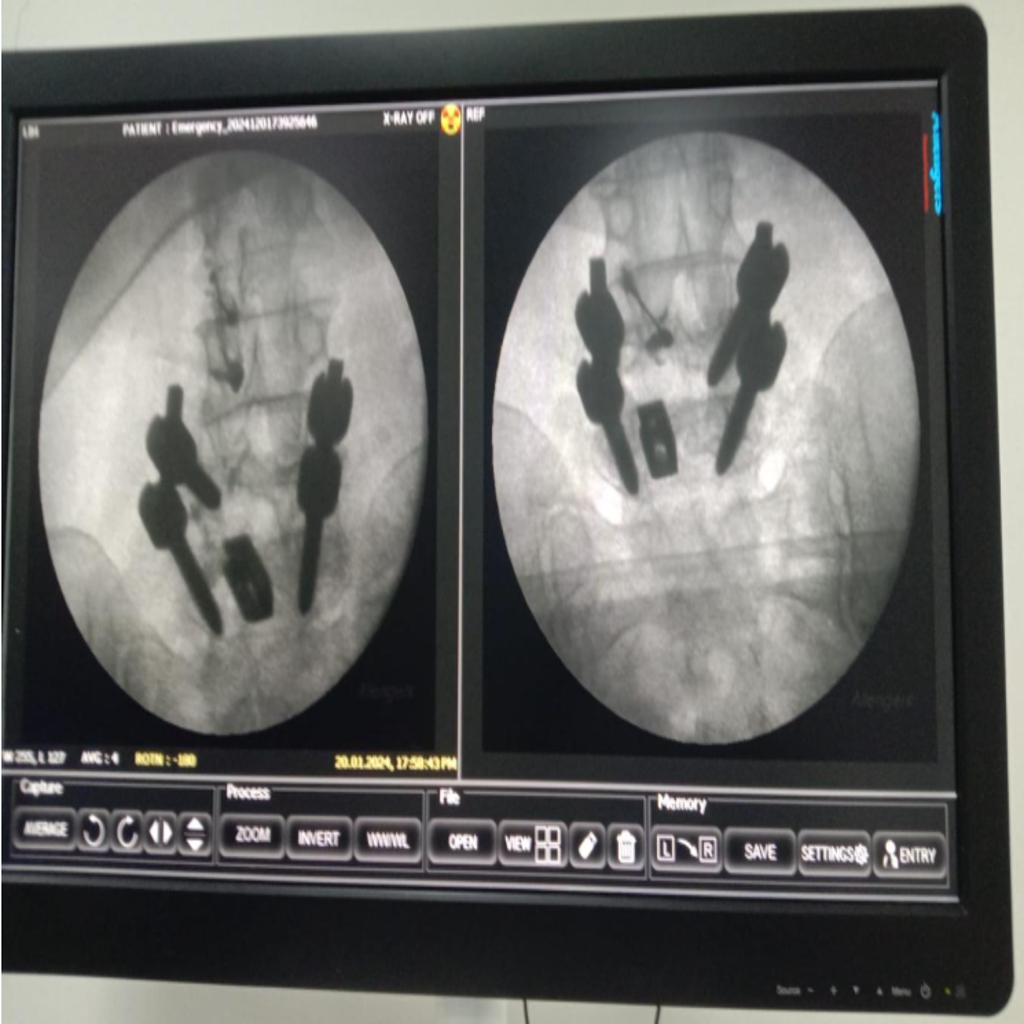
Fluoroscopy guided Intraarticular Facet joint Injection being carried out at Alleviate Pain Clinic, Bengaluru. Image Courtesy- Alleviate Pain Clinic
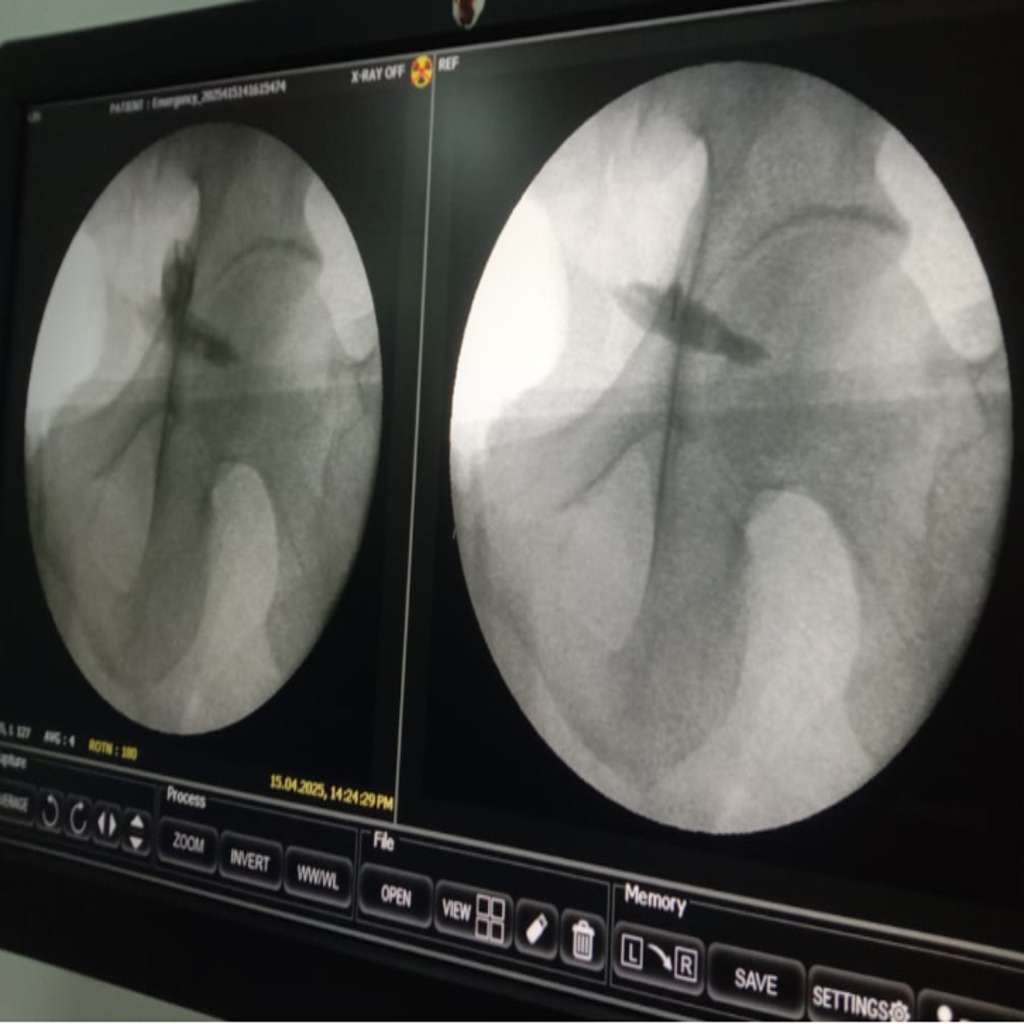
Fluoroscopy guided Injection for Piriformis Syndrome being carried out at Alleviate Pain Clinic, Bengaluru. Image Courtesy- Alleviate Pain Clinic
Image-guided precision treatments include:
- Lumbar facet joint injections for facet arthritis
- Medial branch blocks & radiofrequency ablation for chronic facet pain
- Sacroiliac joint injections for SI dysfunction
- Piriformis muscle injections (ultrasound-guided)
- Epidural or nerve root blocks for disc-related sciatica
These treatments:
- Target the exact pain generator
- Reduce medication dependence
- Avoid surgery in most cases
When to Seek Medical Care
Seek urgent evaluation if:
- Pain lasts more than 7–10 days
- Pain radiates to the leg with numbness or weakness
- Pain worsens at night or with fever
- Difficulty walking or standing
- Bowel or bladder changes
- Pain follows trauma
Conclusion
Lower back pain on the right side is not a single condition—it is a symptom with multiple possible causes, including facet joint arthritis, sacroiliac joint dysfunction, piriformis syndrome, disc disease, and even organ-related problems.
Accurate diagnosis is the key to lasting relief.
At Alleviate Pain Clinic, we specialize in root-cause diagnosis and image-guided, non-surgical pain management, helping patients recover faster and prevent recurrence.
Consult Alleviate Pain Clinic
If right-sided lower back pain is limiting your work or daily life, consult our pain specialists for advanced, non-surgical, evidence-based solutions.
Frequently Asked Questions (FAQs)
Facet joint arthritis, SI joint dysfunction, piriformis syndrome, disc issues, muscle strain, or kidney problems.
Short rest, heat/ice therapy, posture correction, gentle stretching, and activity modification.
Yes, but it is usually temporary and improves quickly.
If pain persists beyond a week, worsens, or causes leg symptoms or systemic signs.
Fast relief comes from accurate diagnosis and targeted treatment, often with image-guided injections when indicated.


