



The coccyx is a small bone at the end of the spine and causes tailbone pain. It may cause difficulty in sitting, walking, and doing ordinary activities. The understanding of its causes, the early detection of symptoms, and proper treatment are essential aspects of providing relief and comfort in the long term.
Understanding Tailbone Pain
Tailbone pain or coccydynia is a condition that occurs when the coccyx or surrounding soft tissues are irritated or inflamed. The pain may be aggravated by sitting, standing up, or any form of pressure on the back of the lower spine. It is necessary to pinpoint the exact cause, as it is a matter of treatment whether the issue is mechanical, inflammatory, or degenerative.
Causes of Tailbone Pain
Following are the causes of tailbone pain.
Trauma or Injury
Bruising, or fracture of the coccyx, can occur in falls on the buttocks, sports injuries, or accidents. Even a small trauma may cause inflammation that may stay for weeks or months without adequate treatment. The pain is typically exacerbated by sitting or bending back.
Prolonged Sitting
Long sitting, particularly on a hard surface puts constant pressure on the coccyx. Especially at risk are office workers, drivers, and those people who sit all the time. This pressure may irritate the area and lead to micro-trauma over time, and thus, one of the common causes of tailbone pain is prolonged sitting.
Poor Posture
When one slouches or even bends backward in a chair, weight distribution is altered, and this increases strain to the tailbone. The improper posture may also cause muscle imbalance and tension of ligaments surrounding the coccyx. Otherwise, these problems may make the pain chronic and slow healing.
Childbirth‑Related Strain
In vaginal birth, the coccyx will be able to lengthen or move aside to enable the baby to pass. The strain may cause inflammation or damage to the ligaments, resulting in postpartum tailbone pain. Unless rehabilitation and support are delivered, symptoms can persist.
Degenerative or Joint Changes
Aging of the joints of the caudal parts or the tissues around the joint can decrease the shock absorption capacity and increase sensitivity. In combination with prolonged sitting or repetitive strain, arthritic changes are likely to cause stiffness and chronic pain.
Symptoms of Tailbone Pain
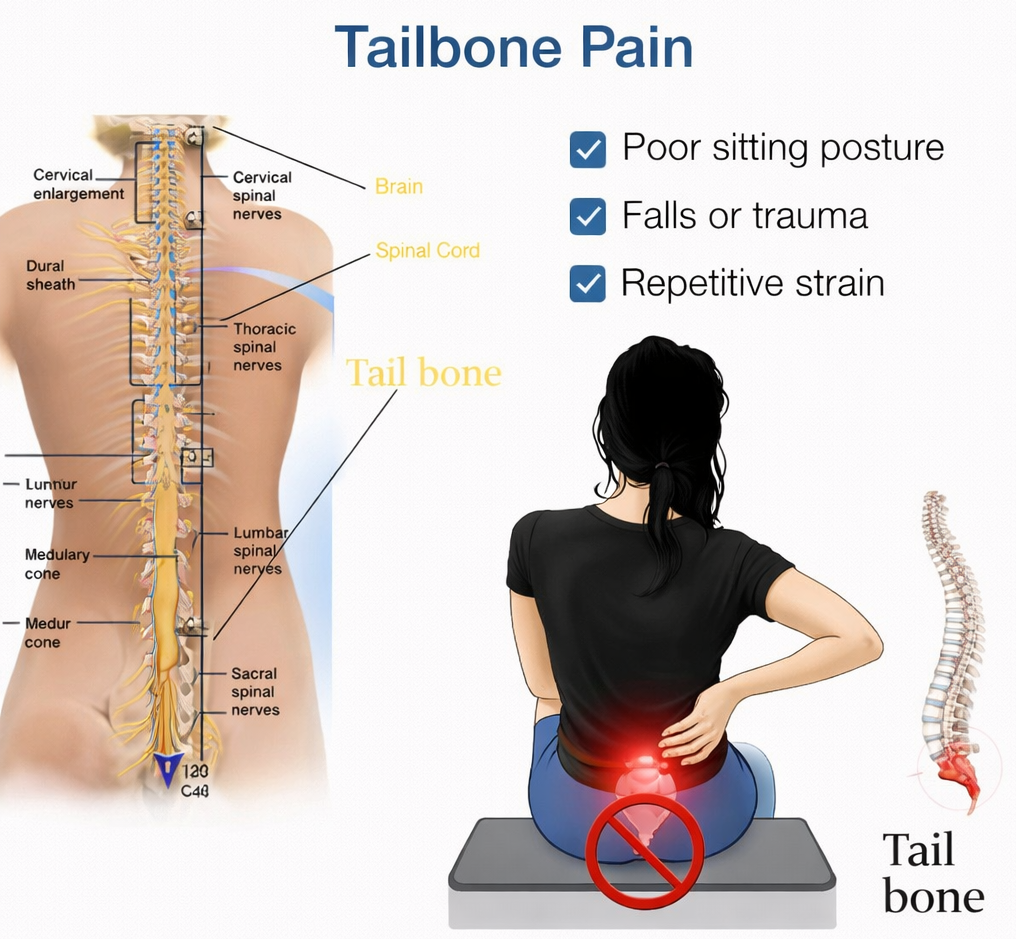
Following are some of the most common symptoms of tailbone pain.
Localized Pain at the Base of the Spine
The pain is most commonly located in the very lower part of the spine and may either be sharp, aching or throbbing. The most common symptom is tenderness, and in most cases, it is more painful when you sit or put your hand on the affected part.
Pain While Sitting or Standing Up
The pain is usually sharp upon sitting or standing. The shift in pressure on the coccyx causes pain that may take a couple of seconds to a couple of minutes to dissipate.
Tenderness and Swelling
Peri-coccyx inflammation may result in swellings and pain during touch. Patients do not like sitting upright due to the pain and assume compensatory positions that can put strain on other areas of the spine.
Pain During Bowel Movements or Intimacy
Since the coccyx is related to the muscles of the pelvic floor, pain may increase during bowel movement and sexual intercourse because of pressure and additional muscle contraction in the pelvic region.
Radiating Pain
In others, it can extend the pain to the lower back, hips, or buttocks. This may occur when the muscles or ligaments around the area get tight and drag the pain away from the coccyx.
When Should You See a Doctor for Tailbone Pain?
Consult a doctor in case the pain lasts longer than several weeks, gets worse, or causes complications in everyday life. Pain post-trauma, unexplainable weight loss, fever, or sensation or movement changes should not be disregarded, and prompt assessment is required to exclude severe diagnoses.
Diagnosis of Tailbone Pain
The diagnosis of tailbone pain involves both a clinical examination and special tests to locate the basis of pain and guide treatment.
Clinical Examination
The physician will look into the posture, tenderness, and coccyx motions. Palpation is used to locate the location of certain pain, and mobility tests are done to determine the restriction of symptoms by movement.
Medical History Evaluation
A comprehensive history examines recent injuries, birth, working habits, and the duration of the symptoms. Awareness of lifestyle factors is a step towards understanding the causal factors of the pain.
Imaging Studies
In case of severe pain, persistent pain, or associated with trauma, X-rays or MRI can be ordered. Fractures, dislocation or degenerative changes of the coccyx may be demonstrated by these images.
Treatment Options for Tailbone Pain
The objectives of treatment for tailbone pain include the reduction of pain, the cure of underlying causes, and recovery. The majority of individuals respond to conservative treatment and do not undergo invasive surgeries.
Activity Modification and Cushion Support
Limit the amount of time sitting and sit on a cushion to relieve the tailbone. The steps provide rapid relief and contribute to recovery in the process of daily activity.
Physiotherapy and Postural Correction
Physical therapy addresses muscle imbalance, tightness of the pelvic floor, and unhealthy posture. Specific exercises will tighten the counterparts of the coccyx and may lead to long-term relief due to functional restoration.
Pain Management and Medications
Pain can be treated with temporary anti-inflammatory medication. They work better together with physical therapy than when they are used alone.
Interventional Pain Procedures
In case of resistant pain, local inflammation can be reduced by image-guided injections, and pain signals can be broken. These are the least invasive surgeries that help in supporting rehab once conservative care is not effective.
Advanced Non-Surgical Treatments
In chronic cases, the regenerative and neuromodulatory therapies can be useful. They stimulate wound healing and provide surgical pain relief.
Preventing Tailbone Pain
Prevention refers to maintaining a good posture, taking periodic rests after sitting, sitting on a supportive seat, and strengthening core and pelvic muscles. Early pain management prevents the development of chronic pain and promotes the well-being of the spine.
Why Choose Alleviate Pain Clinic for Tailbone Pain Treatment
Alleviate Pain Clinic provides non-surgical knee arthritis treatment of coccygeal pain. Professional assessment, high-tech diagnostics, and individualised treatment options for tailbone pain provide effective treatment without wasting time on unnecessary procedures, and keeping the duration of the downtime minimal.
Frequently Asked Questions (FAQs)
The most common cause is prolonged sitting or minor trauma that irritates the coccyx. Poor posture and repetitive pressure frequently contribute to ongoing discomfort.
Healing time varies from weeks to months, depending on severity and cause. With proper tailbone pain treatment, most patients experience gradual improvement.
Mild cases may resolve with rest and posture correction. Persistent pain usually requires targeted care for lasting relief from tailbone pain.
Tailbone pain is rarely serious but can significantly affect quality of life. Persistent symptoms should be evaluated to exclude underlying pathology.
The best approach combines activity modification, physiotherapy, and targeted interventions. This strategy offers the highest chance of a sustainable tailbone pain cure without surgery.


