




Introduction
Neck and shoulder pain are common complaints experienced by people of all ages. While various factors can contribute to this discomfort, one often overlooked source is trigger points in specific muscles. These localized muscle knots can radiate pain to different areas of the body. In this comprehensive essay, we will focus on trigger points that cause neck and shoulder pain, examining the left and right Temporalis, Sternocleidomastoid (SCM), Upper Trapezius, Suboccipital muscles, Middle Trapezius, Lower Trapezius, Infraspinatus, Supraspinatus, Subscapularis, Teres minor, Teres major, Deltoid, Pectoralis major, Pectoralis minor, Biceps Brachii, Triceps Brachii, Scalene muscles, Subclavius, Masseter, Levator scapulae, Splenius capitis, and Rhomboid minor and major, as well as the Multifidus muscle group.
What are the Trigger Points in the Neck and Shoulders?
Trigger points are hyperirritable spots within taut bands of skeletal muscle fibres that can cause localized and referred pain. In the neck and shoulder region, these points often develop due to factors like poor posture, repetitive strain, stress, or muscle overuse. Commonly affected muscles include the trapezius, sternocleidomastoid, levator scapulae, and suboccipital muscles. When activated, these neck and shoulder trigger points can lead to persistent discomfort, reduced range of motion, and symptoms such as tension headaches or radiating pain into the arms. Identifying and addressing these trigger points is crucial for effective management of neck and shoulder pain.
Types of trigger points
Trigger points are categorized based on their activity and characteristics:
- Active Trigger Points: These are painful at rest and can refer pain to other areas. They are often associated with muscle weakness and restricted movement.
- Latent Trigger Points: These do not cause pain unless stimulated, but can restrict movement and cause muscle weakness.
- Primary Trigger Points: Developed directly from muscle overload or trauma.
- Secondary Trigger Points: Emerge in response to primary trigger points or as a result of compensatory muscle use.
Understanding these types aids in the accurate diagnosis and treatment of neck and shoulder pain related to muscle trigger points.
Common Trigger Points in the Neck and Shoulder Region
Several muscles in the neck and shoulder area are prone to developing trigger points:
- Trapezius Muscle: Trigger points here can cause upper trapezius pain, leading to discomfort in the neck, shoulders, and upper back.
- Sternocleidomastoid (SCM): Trigger points in the SCM can result in neck trigger points that cause pain in the forehead, around the eyes, and sometimes dizziness.
- Levator Scapulae: This muscle, when harboring trigger points, can cause pain along the neck and shoulder blade, often exacerbated by head rotation.
- Suboccipital Muscles: Trigger points in these muscles can lead to suboccipital muscle trigger points, causing headaches at the base of the skull and tension in the upper neck.
Addressing these common shoulder trigger points through targeted therapies can significantly alleviate neck and shoulder pain.
Left Temporalis and Right Temporalis
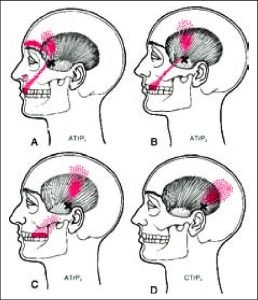
The Temporalis muscles, located on both sides of the head, are responsible for closing the jaw. Trigger points in these muscles can cause referred pain into the neck and shoulders. Left Temporalis trigger points may produce pain that radiates to the left side of the neck and upper shoulder, while Right Temporalis trigger points can refer pain to the right neck and shoulder regions.
Left SCM(Sternocleidomastoid) and Right SCM
The Sternocleidomastoid (SCM) muscles are involved in neck rotation and flexion. Trigger points in these muscles are often associated with headaches and neck pain. Left SCM trigger points may cause pain radiating towards the left shoulder, while Right SCM trigger points can lead to pain in the right shoulder.

Left Upper Trapezius and Right Upper Trapezius
The Upper Trapezius muscle is a large muscle extending from the neck to the shoulders and upper back. Trigger points in the Upper Trapezius can cause significant neck and shoulder pain. Left Upper Trapezius trigger points often lead to pain in the left shoulder, and conversely, Right Upper Trapezius trigger points can result in right shoulder pain.

Suboccipital Muscles
The Suboccipital muscles are located at the base of the skull and are responsible for head and neck movements. Trigger points in these muscles can generate pain at the base of the skull, which may extend down the neck and into the shoulders.

The Middle and Lower Trapezius muscles
The Middle and Lower Trapezius muscles situated in the upper back, assist in moving and stabilizing the shoulder blades. Trigger points in these muscles can produce referred pain that manifests in the form of upper back and shoulder discomfort.

Left Infraspinatus and Right Infraspinatus
The Infraspinatus muscles, part of the rotator cuff, help in shoulder joint stability. Trigger points in the Infraspinatus can lead to pain in the shoulder region. Left Infraspinatus trigger points often generate pain in the left shoulder, whereas Right Infraspinatus trigger points may cause right shoulder pain.

Supraspinatus
The Supraspinatus muscle is another component of the rotator cuff that plays a crucial role in shoulder movement. Trigger points in the Supraspinatus muscle can cause pain in the shoulder region, especially when moving the arm.
Subscapularis
The Subscapularis muscle is the largest muscle of the rotator cuff and aids in shoulder joint function. Trigger points in this muscle can contribute to shoulder pain and discomfort, particularly in the front of the shoulder.
Teres Minor and Teres Major
The Teres Minor and Teres Major muscles also play a role in shoulder movements. Trigger points in these muscles can produce shoulder pain, with the location of the pain corresponding to the affected muscle.
Left Deltoid and Right Deltoid
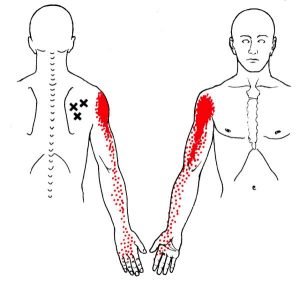
The Deltoid muscles are responsible for arm abduction and play a vital role in shoulder mobility. Trigger points in the Deltoid muscles can lead to pain and discomfort in the shoulder region, with different parts of the muscle causing pain in specific areas.
Pectoralis Major and Pectoralis Minor
The Pectoralis Major and Pectoralis Minor muscles are found in the chest area. Trigger points in these muscles can contribute to chest and shoulder pain, especially in the front of the shoulder.
Biceps Brachii and Triceps Brachii
The Biceps Brachii and Triceps Brachii muscles are located in the upper arm and play essential roles in arm movements. Trigger points in these muscles can lead to referred pain in the shoulder and upper arm.
Left Scalene and Right Scalene
The Scalene muscles are located on the sides of the neck and assist in neck and ribcage movements. Trigger points in these muscles can generate pain in the neck, which may radiate to the shoulder region.
Subclavius
The Subclavius muscle is located beneath the clavicle (collarbone) and aids in stabilizing the clavicle and shoulder joint. Trigger points in this muscle can cause pain in the clavicle area and potentially refer pain to the shoulder.
Left Masseter and Right Masseter
The Masseter muscles are involved in chewing and jaw movements. Trigger points in these muscles can lead to jaw, face, and neck pain, which may extend to the shoulder area.Referred pain pattern from the rhomboid (A), levator scapulae (B), trapezius (C), iliocostalis thoracic (D), scalene (E), and infraspinatus (F) muscles


Left Levator Scapulae and Right Levator Scapulae
The Levator Scapulae muscles assist in elevating the shoulder blades. Trigger points in these muscles can cause pain at the base of the neck, which may radiate to the shoulder region.
Splenius Capitis
The Splenius Capitis muscle is located in the upper neck and is involved in neck movements. Trigger points in this muscle can generate pain in the upper neck, which may radiate to the shoulders.
Rhomboid Minor and Rhomboid Major
The Rhomboid Minor and Rhomboid Major muscles are positioned between the shoulder blades and are responsible for retracting the shoulder blades. Trigger points in these muscles can result in pain between the shoulder blades.
Multifidus
The Multifidus muscle group runs along the spine and assists in stabilizing the vertebral column. Trigger points in the Multifidus can produce localized back pain, which may extend to the shoulder area.
Treatment Approaches at Alleviate Pain Clinic
At Alleviate Pain Clinic, we employ a comprehensive, non-surgical approach to manage neck and shoulder pain associated with trigger points. Our treatment strategy begins with a meticulous clinical assessment to accurately identify active and latent trigger points. We then utilize image-guided trigger point injections, ensuring precise delivery of therapeutic agents to the affected areas, thereby enhancing efficacy and minimizing discomfort.


